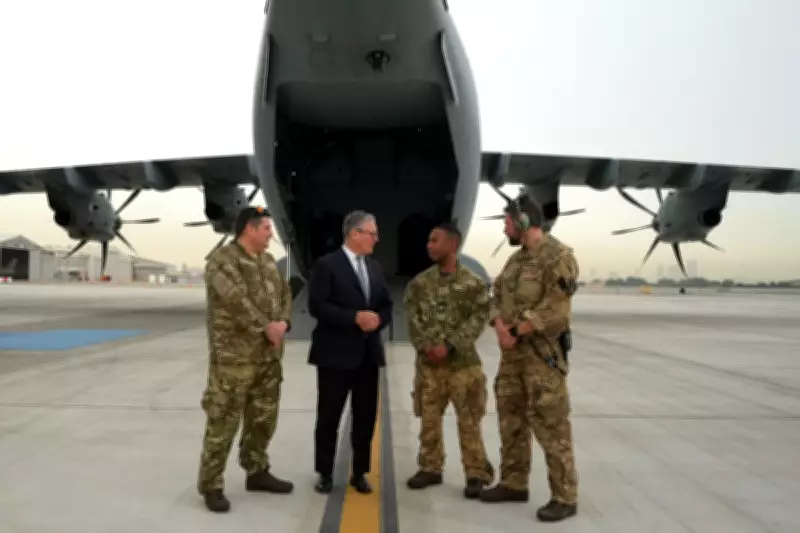
Prime Minister Keir Starmer Condemns Israeli Military Actions in Lebanon
Prime Minister Sir Keir Starmer has declared Israeli strikes on Lebanon following the announcement of a US-Iran ceasefire as "wrong" and insisted they "should stop." The Labour leader made these remarks during a diplomatic tour of Gulf nations, including Bahrain, Saudi Arabia, and the United Arab Emirates, where he addressed escalating tensions in the region.
Ceasefire Under Strain as Attacks Intensify
Israeli bombardment of Beirut has raised serious concerns about the stability of the two-week truce brokered by US President Donald Trump. The attacks, targeting the Hezbollah militant group, resulted in Wednesday being the deadliest day in Lebanon since the conflict began. There is ongoing disagreement over whether Lebanon was included in the ceasefire terms, further complicating the situation.
In response to the strikes, Tehran has once again closed the Strait of Hormuz, a critical oil shipping channel, exacerbating regional instability. Sir Keir acknowledged the complexity, stating it was "hard to say" if the strikes constituted a breach of the US-Iran agreement, citing limited access to all ceasefire details.

Starmer's Firm Stance on Principles and Values
During an interview with ITV's Talking Politics podcast in Bahrain, the Prime Minister was unequivocal in his criticism. "Let me be really clear about it – they're wrong," he said, when asked about Israel's actions in Lebanon. He emphasised that the issue transcends technicalities of ceasefire breaches, framing it as a matter of principle.
"The question is actually a matter of principles as far as I am concerned," Sir Keir explained. "My argument would be it should be included in a ceasefire, and that's the important part of the overall approach." He also asserted that navigation through the Strait of Hormuz must remain toll-free for safe passage, reinforcing the UK's commitment to open seas.
UK-US Relations and Monitoring of Military Bases
The Prime Minister addressed the UK-US relationship amidst tensions, following mocking comments from President Trump about UK military support. In a video from a private Easter White House lunch, Trump impersonated Sir Keir and referenced requesting "two old broken-down aircraft carriers" from the UK. The US president's social media posts during the war, including phrases like "praise be to Allah" and warnings that "a whole civilisation will die," were also highlighted.
Sir Keir distanced himself from such language, stating, "They're not words I would use or would ever use because I come at this with our British values and principles foremost and uppermost in my mind." He stressed the importance of lawful military engagement, saying, "If you're going to commit our service personnel to risk their lives, they need to know they're doing so on a lawful basis."
Additionally, the Prime Minister confirmed that the UK is "monitoring" the use of its bases by Washington to ensure they are solely utilised for collective self-defence, not offensive operations against Iran. "From the get-go we've been monitoring this situation," he said, underscoring lessons learned from past conflicts like Iraq. "We need to be clear where we stand as a country, and I'm the British Prime Minister, I make decisions on what's in the British national interest – and that is my focus."
Regional Diplomacy and Future Implications
Sir Keir's trip to the Gulf comes at a critical juncture, with the ceasefire showing signs of strain. His comments reflect a cautious approach, prioritising UK values and national interest over entanglement in foreign conflicts. The situation in Lebanon and the broader Middle East remains volatile, with international observers closely watching developments.
As tensions persist, the Prime Minister's firm stance on principles and lawful engagement sets a clear direction for UK foreign policy, emphasising diplomacy and restraint in a region fraught with conflict.