Starmer's Gulf Diplomacy: UK Focuses on Reopening Strait of Hormuz After Fragile Ceasefire
Prime Minister Keir Starmer has embarked on a crucial visit to the Gulf region, asserting that the United Kingdom has a vital "job" to assist in reopening the Strait of Hormuz. This strategic shipping route, a key conduit for global oil transport, was reportedly closed again by Iran shortly after a ceasefire agreement between the US and Iran, casting doubt on the stability of the truce.
Meeting with Saudi Leadership and Military Personnel
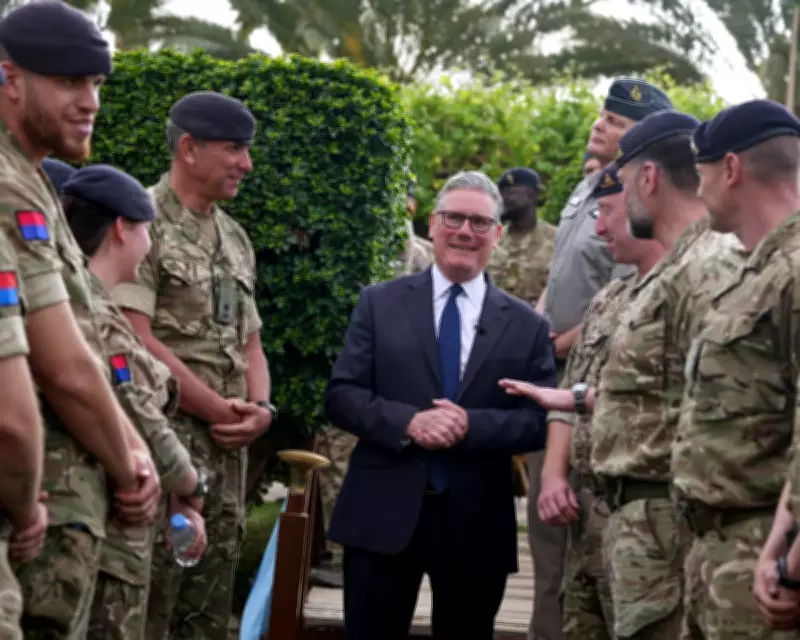
During his trip, Starmer met with Crown Prince Mohammed bin Salman in Jeddah, following an earlier engagement with British and local military personnel at an airbase in Taif, Saudi Arabia. In discussions, the Prime Minister welcomed the ceasefire but stressed the urgency of transforming it into a lasting peace. He highlighted the UK's commitment to supporting Saudi Arabia as a steadfast ally, including through recent deployments such as the Sky Sabre air defence system.
Starmer's visit is seen as a strategic effort to bolster regional alliances, with Gulf states potentially viewing him as a more predictable and reliable partner compared to a US administration led by Donald Trump. The trip mirrors his previous diplomatic efforts in Ukraine, aiming to coordinate practical steps for peace and security.

Practical Challenges in Reopening the Strait
The reopening of the Strait of Hormuz involves complex logistical and security considerations. UK officials are working with regional partners to address issues such as Iranian mines and insurance for tankers. As one official noted, "This isn't the sort of thing that happens at the flick of a switch," underscoring the intricate nature of the task.
Speaking at the King Fahd airbase, Starmer acknowledged the relief brought by the ceasefire but cautioned that it is "early days" in restoring full shipping traffic. He emphasised the impact on energy prices, stating, "It's our job to make sure that the strait is open, that we're able to get the energy that the world needs out and stabilise the prices back in the United Kingdom."
UK's Stance on Regional Conflict
Reiterating his position, Starmer insisted that the UK is not "getting drawn into this war." He clarified that British actions have been in collective self-defence, focused on protecting UK lives and national interests. This stance has previously drawn criticism from Trump, particularly over Starmer's refusal to support initial US-Israeli attacks on Iran and restrictions on US use of UK bases.
The Prime Minister's itinerary for the remainder of his Gulf visit remains undisclosed, but it is expected to include meetings with other regional allies. A government source likened Starmer's role to his efforts in Ukraine, describing it as an opportunity to "show that we stand with them" and ensure the strait's full reopening to mitigate domestic economic impacts.
As tensions persist, with Iran's Fars news agency citing ceasefire breaches by Israel, Starmer's diplomatic mission underscores the UK's proactive approach in navigating Middle Eastern crises while safeguarding global energy stability.