Starmer Confronts Parliamentary Fury Following Controversial China Visit
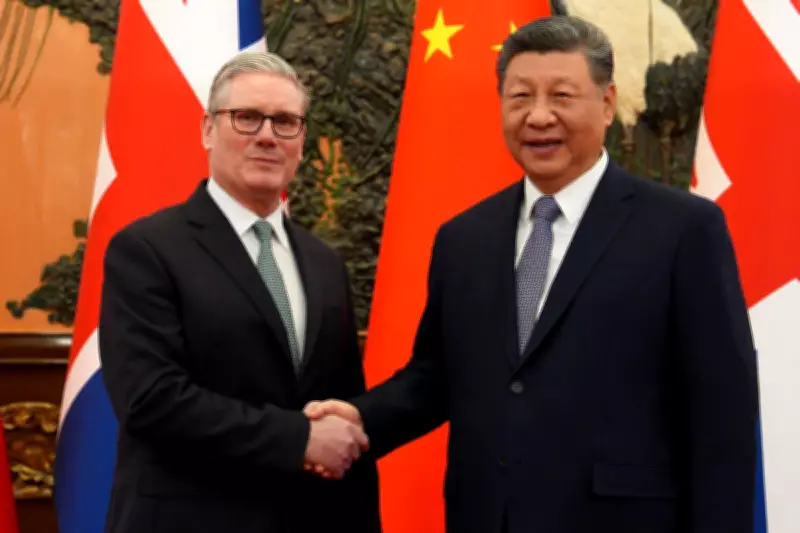
Prime Minister Sir Keir Starmer is facing significant political backlash following his recent diplomatic trip to China, with Conservative opponents accusing the government of being "tricked" by Beijing and adopting what they describe as a "supine and short-termist approach" to international relations.
Sanctions Controversy Sparks Commons Confrontation
The controversy centres on China's decision to lift sanctions against current British parliamentarians while maintaining restrictions on former MPs, lawyers, advisers and academics. Conservative former security minister Tom Tugendhat led the criticism in the House of Commons, highlighting what he called "a direct affront to the democracy of this place."
Mr Tugendhat told Commons Speaker Sir Lindsay Hoyle: "Do you not find it as surprising as I do that the Prime Minister has come back with a deal that lifts the sanctions on those six of us who are still in this House, but not the one who isn't, nor the lawyers, advisers and academics who support the work of this House. Is this not a direct affront to the democracy of this place, an attempt to divide and conquer that we've seen China play against the European Parliament, and sadly has tricked our Government too."

Opposition Leaders Launch Scathing Attacks
Conservative leader Kemi Badenoch delivered particularly harsh criticism, accusing Sir Keir of returning from China with "next to nothing" apart from what she described as "a Labubu doll" while adopting what she characterised as an overly deferential stance toward Beijing.
Mrs Badenoch told the Commons: "Of course Britain should engage with China - even though the Chancellor wasn't allowed to go, even though they are an authoritarian state who seek to undermine our interests. Even though they spy on us, sometimes within the walls of this building, even though they fund regimes around the world hostile to our country. They are a fact of life, a global power and an economic reality. So let me be clear, it is not the Prime Minister engaging with China that we take issue with. What we are criticising is his supine and short-termist approach."
The Conservative leader added pointed criticism about the sanctions issue: "The worst thing was the Prime Minister claiming a glorious triumph with the lifting of sanctions on four Conservative MPs, as if he'd done us a favour. Let me tell him, those MPs were sanctioned because they stood up to China. They stood up against human rights abuses. They stood up against the country spying on our MPs in a way that he wouldn't dare. Those people don't want to go to China. The Chinese know that. They know that they are giving him something that costs absolutely nothing. Why can't the British Prime Minister see that?"
Prime Minister Defends Diplomatic Engagement
In his response, Sir Keir defended his approach to China relations while acknowledging the need for further progress on sanctions. The Prime Minister emphasised the importance of leader-level engagement in addressing complex international issues.
Sir Keir stated: "I did raise it directly, and that got the response that restrictions do not apply to parliamentarians. I accept the challenge, the point, that we need to go further. That doesn't mean that what we've achieved should be put to one side. In order to go further, we have to engage, and we have to engage at the leader level."
The Prime Minister offered a sharp rebuttal to Mrs Badenoch's criticism, characterising her approach as ineffective isolationism: "Her reply this afternoon seems to be that we should engage with China but not engage with China, that what we should do, instead of leader-to-leader discussions where we raise all the opportunities and the difficult issues, each and every one of them, instead of those leader-to-leader meetings, should get a bag of sand and put her head in it and influence absolutely nothing."
Cross-Party Concerns Emerge
Liberal Democrat leader Sir Ed Davey offered qualified support for the China visit while expressing concerns about the government's negotiating position. He suggested the Prime Minister had approached the talks "from a position of weakness instead of a position of strength."

Meanwhile, Labour MP Liam Byrne, chairman of the Business and Trade Committee, called for greater strategic clarity from the government regarding China policy. He emphasised the need for a comprehensive approach to managing the complex relationship with Beijing.
Mr Byrne stated: "The complexities of China require from Britain a whole of society approach, which is completely impossible until the Government publishes a clear China strategy to explain what is off limits and how we're going to rebalance competition with Chinese industry that is six times over-subsidised compared to our firms."
The heated parliamentary exchanges highlight the ongoing political tensions surrounding UK-China relations and the challenges facing the government in balancing diplomatic engagement with national security concerns and human rights considerations.