Prime Minister Sir Keir Starmer has proclaimed that Britain and Japan will respond with "strength and clarity" as geopolitical, economic, and technological shocks continue to "literally shake the world." Speaking during a significant visit to Tokyo, Starmer emphasised the deepening alliance between the two nations at a time of increasing global volatility.
A Historic Partnership Strengthened
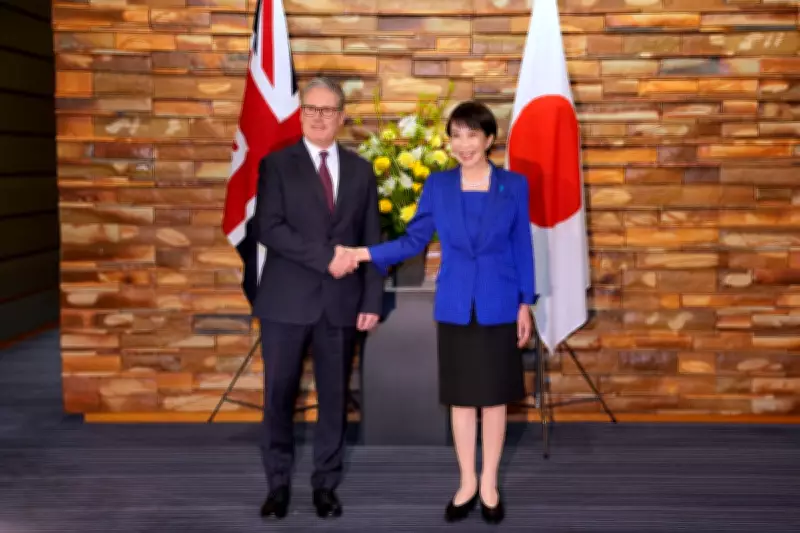
Sir Keir Starmer, meeting with Japanese Prime Minister Sanae Takaichi, declared that the relationship between Britain and Japan is now the strongest it has been in decades. The meeting, which lasted approximately twenty minutes, took place at the end of Starmer's four-day diplomatic trip to China, highlighting the UK's strategic pivot towards key Asian partners.
The Prime Minister extended a formal invitation for Ms Takaichi to visit Chequers, the British country house retreat, symbolising the elevated status of bilateral talks. "I look forward to our dinner in a moment, and to the meeting that I hope we will have in Chequers," Starmer stated, underscoring the personal and political commitment to this reinvigorated partnership.

Shared Ambitions and Concrete Cooperation
During their discussions, the two leaders focused on several critical areas for enhanced collaboration:
- Cybersecurity initiatives to protect national infrastructure and data
- Bolstering supply chains for critical minerals, essential for technology and defence sectors
- Joint development work on a new generation of fighter jet planes, a significant defence project
Prime Minister Takaichi confirmed these priorities, adding that dinner conversations would also address "co-operation towards the realisation of a free and open Indo-Pacific," alongside ongoing conflicts in Ukraine and the Middle East.
Responding to Global Shocks
Sir Keir Starmer articulated a clear vision for why this strengthened alliance matters directly to British citizens. "My visit here today comes at a time when geopolitical, economic and technological shocks are literally shaking the world," he said, connecting international instability to domestic realities.
He elaborated on this connection with tangible examples:
- When war overseas drives up fuel prices at home, it is families who feel the impact first
- When supply chains fracture, small businesses and working people absorb the shock
- When instability rises, the most vulnerable in society become exposed
"So, our response together must be one of strength and clarity," Starmer asserted, "deepening our resilience, our powers and our alliances to better serve our people." This statement frames the UK-Japan partnership not merely as diplomatic formality, but as a practical shield against global turbulence.
Political Context and Future Uncertainties
The meeting occurs against a complex political backdrop. Prime Minister Sanae Takaichi, who assumed power in October of the previous year, is preparing to fight a snap general election she called to secure a parliamentary majority, buoyed by strong approval ratings. This political calendar introduces an element of uncertainty, as there remains an outside possibility that Ms Takaichi may not be Japan's prime minister when the planned Chequers meeting takes place.
Meanwhile, Britain's relationship with the United States appears to have reached a notable low point, with former President Donald Trump openly mocking the UK prime minister regarding the Chagos Islands deal and threatening tariffs over the UK's support for Denmark concerning Greenland. This context makes the strengthening of ties with other major democracies like Japan particularly strategic for the Starmer government.
The China Precedent and Broader Strategy
Sir Keir Starmer's visit to Japan concludes a controversial four-day trip to China, part of his ongoing effort to reset the UK's relationship with Beijing. Travelling with a delegation exceeding fifty business and cultural leaders, Starmer secured tangible concessions from China, including:

- A reduction in tariffs on Scotch whisky
- The introduction of visa-free travel to China for British citizens
- An agreement from Beijing to lift sanctions on British parliamentarians
This dual approach—engaging with China while simultaneously fortifying alliances with democratic partners like Japan—illustrates the Starmer government's nuanced foreign policy strategy in an era of multipolar competition.
Prime Minister Takaichi echoed the sentiment of strengthened ties, stating, "In order to build a new era of Japan–UK relations amid the complex crises facing the international community in the 21st century, I would like to work ever more closely with prime minister Keir." This mutual commitment suggests a partnership poised to navigate the challenges of a shaken world with renewed vigour and shared purpose.