NATO Chief's 'Daddy' Nickname Haunts Him After Tense Trump Meeting
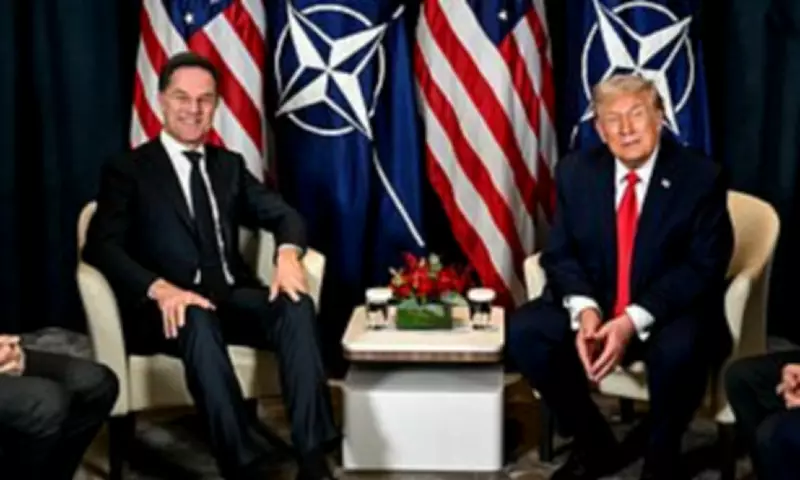
In a high-stakes encounter that laid bare the ongoing tensions within the transatlantic alliance, NATO Secretary-General Mark Rutte was cornered by the Daily Mail with a blunt and awkward query. The confrontation came just hours after Rutte's closed-door meeting with former President Donald Trump at the White House, where Trump reportedly expressed deep disappointment over NATO allies' perceived lack of support in securing the Strait of Hormuz during his administration's conflict with Iran.
The Viral Nickname That Won't Go Away
The Daily Mail directly asked Rutte whether he genuinely believes Trump will maintain America's commitment to NATO and if he still views the President with the affectionate nickname 'Daddy' – a term that went viral after their joint appearance last June. The question clearly caught the NATO chief off guard, leaving him visibly flustered and nervous as he scrambled to find his words while attempting to walk back the odd moniker.
While trying to project confidence about the alliance's future, Rutte's shaky explanation suggested the leader is still struggling to live down one of his most cringeworthy public moments. Through nervous laughter, the politician tried to explain what he meant by 'Daddy,' attributing it to a 'language problem' on his end.

'It follows me a little bit, I can assure you,' Rutte explained further, saying the nickname weighed on him. 'You make mistakes, and this is when you are not a native speaker – sorry for that.'
Lost in Translation
Rutte continued his linguistic clarification: 'In Dutch, you would say – the translation of your father is daddy – and I said, 'sometimes Daddy has to be angry.' He clarified emphatically: 'So I was not calling him my Daddy… But of course, Daddy has all sorts of special connotations, and now I have to live with it for the rest of my life.'
The NATO chief eventually laughed it off, saying that he 'owns it' and that 'the President owns it.' He even noted that Trump had embraced the nickname in his own way: 'He brought out t-shirts, he made a movie, 'Daddy is home', when he returned to the United States. This is why I like him so much.'
Behind Closed Doors: Trump's Frustration Boils Over
Following their private sit-down at the White House on Wednesday night, the atmosphere seemed anything but settled. Rutte revealed today that he sensed the President's disappointment that many allies weren't with him during critical moments.
'I explained to him that Mr. President, clearly, the overwhelming majority of Europeans have done what the US has asked of him. I understand his disappointments to a certain extent,' Rutte remarked diplomatically.
While the specifics of their exchange remained behind closed doors, Trump took to TruthSocial to vent his frustrations publicly, claiming the alliance hadn't been 'there when we needed them.' According to reports, Trump told Rutte that he can no longer support mere statements of support from NATO allies, instead requiring concrete material action to be taken.
Damage Control and Diplomatic Praise
Rutte has been working overtime to dismiss rumors of a significant rift between the United States and its European allies. He maintained that the two engaged in an 'open conversation' between friends, though he could not confirm that Trump made any promises to stay in the alliance when pressed by reporters.
Speaking in Washington on Thursday, Rutte said that member countries are doing everything Trump had requested to strengthen the military alliance, even if some were initially 'a bit slow' to provide support to the United States amid its war with Iran.
'When it came time to provide the logistical and other support the United States needed in Iran, some allies were a bit slow, to say the least. In fairness, they were also a bit surprised,' Rutte admitted candidly.
A Changing Alliance Dynamic
During his public remarks, Rutte heaped praise on Trump while acknowledging that Europe must step up its spending on the alliance. 'We must applaud Trump for his bold leadership and vision,' the NATO chief stated, describing what he called a 'mindset shift' in Europe.

This shift, Rutte claimed, was evidenced by the UK leading a coalition of countries to help reopen the Strait of Hormuz. He also admitted this represents a 'period of profound change in the transatlantic alliance... from that there will be no going back and nor should there be.'
The NATO chief promised the alliance will not be 'unhealthily reliant' on the United States, vowing that America will have allies that are 'capable and ready, willing and able to defend' NATO's security. 'Even with this progress, it is clear we will need more,' he added, signaling ongoing challenges ahead for the military partnership.