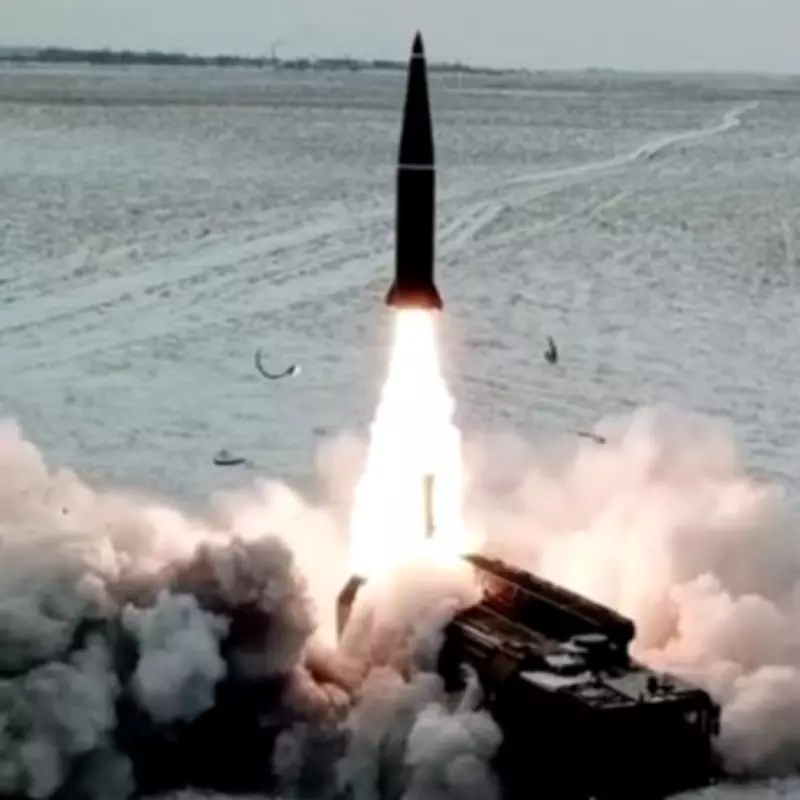
Russian Politician Delivers Chilling Nuclear Warning Amid Treaty Tensions
A prominent Russian nationalist politician and close ally of President Vladimir Putin has issued a stark nuclear warning, declaring that Russia possesses weapons capable of "destroying the entire planet". The alarming statement comes amid escalating tensions and accusations that the United States has been violating a key international arms control agreement.
Claims of US Treaty Violations and Russian Military Superiority
Alexey Zhuravlev, the politician at the centre of the controversy, has publicly accused the United States of "practically non-compliant" behaviour regarding the Strategic Arms Reduction Treaty (START) for several years. He asserted that this fundamental document, which governs international nuclear security, is being undermined, making it difficult to ascertain the true number of American warheads on alert status.
Zhuravlev further escalated his rhetoric by claiming that Russia's military capabilities extend beyond traditional nuclear arsenals. He pointed to advanced weaponry, such as the 9M729 Oreshnik hypersonic missile, as evidence of this formidable power.

The Rise of Hypersonic Weapons and Non-Nuclear Deterrence
In a detailed explanation, the Russian politician argued that the advent of hypersonic missile technology has "diminished the value of nuclear missiles". He stated that these new weapons systems, even when equipped with conventional, non-nuclear warheads, are capable of inflicting devastating damage on an adversary.
"This new type of weapon, even without a nuclear warhead, is capable of inflicting such damage on an enemy that it will be devastating," Zhuravlev declared. He suggested that by adhering to existing treaties and focusing on these advanced non-nuclear capabilities, Russia could paradoxically strengthen the overall power of its armed forces.
The warning underscores a significant shift in strategic military posturing, highlighting how nations are increasingly investing in next-generation technologies that challenge traditional arms control frameworks and global security balances.