Secretary Rubio Conducts Covert Discussions with Castro Family Member
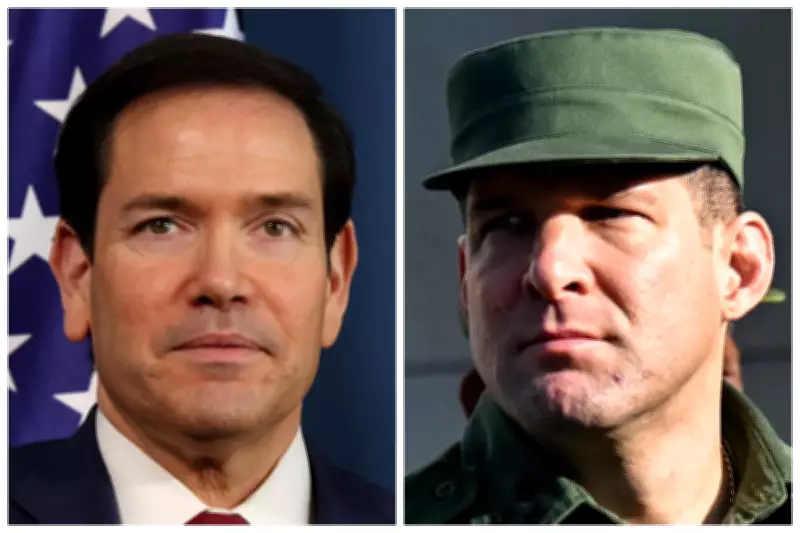
United States Secretary of State Marco Rubio is reportedly engaged in confidential backchannel discussions with Raúl Guillermo Rodriguez Castro, the grandson of Cuba's de facto dictator Raúl Castro, according to exclusive reporting from Axios. These secret talks occur as the Trump administration intensifies its campaign to pressure the Cuban regime into implementing significant political and economic reforms.
Strategic Diplomacy Amid Growing Crisis
The 41-year-old Castro grandson, known colloquially as "El Cangrejo" or "The Crab," has participated in what administration officials describe as friendly conversations about Cuba's future with Secretary Rubio. These discussions represent a calculated diplomatic approach by the United States to influence the 94-year-old Raúl Castro and his inner circle toward rapprochement with American interests.
"Our position — the U.S. government's position — is the regime has to go. But what exactly that looks like is up to [President Trump], and he has yet to decide. Rubio is still in talks with the grandson," revealed a senior Trump administration official to Axios.

Economic Pressure Through Oil Sanctions
These diplomatic maneuvers coincide with Cuba facing a severe energy crisis following the Trump administration's successful capture of Venezuelan leader Nicolás Maduro in January. This action effectively severed Cuba's access to subsidized oil from Venezuela, creating cascading humanitarian consequences across the island nation.
Cuba currently experiences widespread food scarcity, shuttered educational institutions, reduced hospital services, accumulating waste, grounded aircraft, and near-total darkness during nighttime hours. President Donald Trump has further complicated Cuba's situation by accusing the regime of harboring enemies and warning international allies that those providing or selling oil to Cuba will confront substantial tariffs.
Rubio's Personal and Political Stance
Secretary Rubio, whose parents fled Cuba during Fidel Castro's regime, maintains a firm position advocating for comprehensive regime change in his ancestral homeland. He believes the current economic conditions systematically disadvantage ordinary Cuban citizens while consolidating power within the ruling elite.
"It is important for the people of Cuba to have more freedom. Not just political freedom but economic freedom," Rubio declared earlier this month. "And that's what this regime is not willing to give them because they're afraid if the people of Cuba can provide for themselves, they lose control over them, they lose power over them...It has to happen."
Complex Political Landscape
Although Raúl Castro no longer holds formal executive authority in Cuba, he retains a seat in the National Assembly and continues to wield substantial influence behind the scenes. The current Cuban President, Miguel Díaz-Canel, has not engaged in discussions with Secretary Rubio, indicating the administration's strategic focus on alternative channels of influence.
Raúl Guillermo Rodriguez Castro represents a particularly significant figure in these diplomatic efforts due to his familial proximity to the former leader, having served as his grandfather's primary bodyguard while maintaining connections to both military and business sectors within Cuba's power structure.
Historical Context and Future Prospects
The Trump administration reportedly seeks to identify and cultivate new leadership in Cuba, mirroring its approach with Delcy Rodriguez in Venezuela prior to Maduro's capture. Administration officials previously engaged with Venezuelan elites through similar backchannel communications, establishing a precedent for current Cuban diplomacy.
"I wouldn't call these 'negotiations' as much as 'discussions' about the future," clarified the senior Trump official regarding the nature of Rubio's conversations with Castro's grandson.

Despite these efforts, achieving meaningful regime change in Cuba presents formidable challenges given the complex, decades-long history of strained relations between the United States and the Caribbean nation. While diplomatic relations experienced normalization during the Obama administration, subsequent restrictions were reinstated under President Trump's first term, illustrating the persistent volatility in bilateral relations.