Republican Crossfire Over Vance's Iran Peace Talks Role
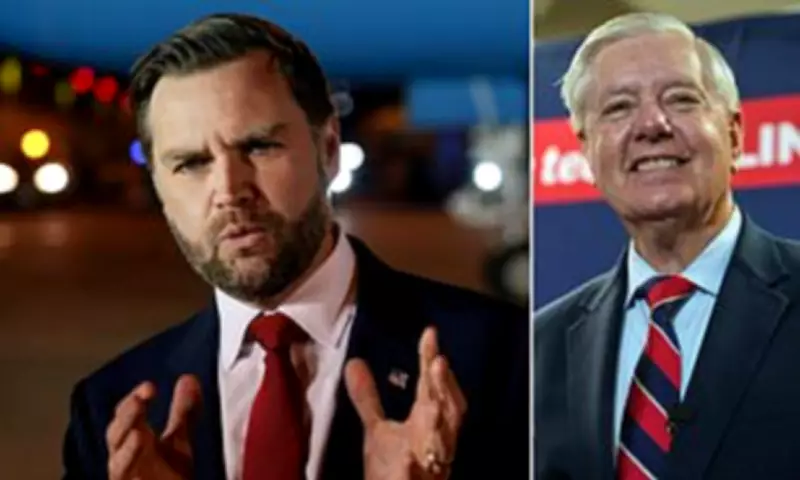
Vice President JD Vance is encountering significant Republican crossfire after being appointed by President Donald Trump to spearhead critical peace negotiations with Iran this weekend. The announcement has ignited internal party tensions, with prominent figures voicing both skepticism and cautious support.
Senator Graham's Skeptical Stance
Republican Senator Lindsey Graham, a staunch supporter of the President's wartime efforts, publicly expressed doubts about Vance's new role in a social media post on Wednesday. The South Carolina senator demanded that the architects of any proposal, including the Vice President, must appear before Congress to justify how a negotiated agreement aligns with national security objectives regarding Iran.
Graham insisted that any viable deal must include a provision requiring all highly enriched uranium to be removed from Iran. "The last thing I’m interested in is for Iran to be able to save face," he declared. "I'm interested in a deal that will stop their maniacal drive to a nuclear weapon among other things."

Vance's Complex Position Revealed
According to a recent New York Times report, Vance was actually the most skeptical voice within the administration regarding the Iran war prior to its escalation. This position aligns more closely with the "America First" principles of Trump's MAGA base. The newspaper characterized Vance as strongly opposed to a full-scale war with Iran, with the Vice President reportedly describing regime change efforts as a "disaster."
During planning phases, Vance reportedly criticized the potential conflict as a "huge distraction of resources" and "massively expensive." When military action seemed inevitable, he advocated for using overwhelming force to ensure a swift conclusion. Vance also warned that war could politically damage Trump by fracturing MAGA support.
Republican Party Divisions Widen
The Iran conflict has exposed deepening fractures within Republican ranks. While some MAGA-aligned lawmakers have expressed dissatisfaction with the war, their criticism has primarily targeted Senator Graham rather than President Trump. Representative Anna Paulina Luna exemplified this dynamic in a March social media post directed at Graham.
"NO BOOTS on the ground. If Senator Graham wants to go fight in a foreign conflict, let him be the first to volunteer," Luna wrote. Her spokesperson did not respond to inquiries about whether she approved of Vance leading negotiations, though Luna did share positive content about the Vice President unrelated to Iran.
Official Confirmation and Negotiation Details
During Wednesday's White House briefing, press secretary Karoline Leavitt formally announced Vance's diplomatic mission. The Vice President will travel to Islamabad, Pakistan to lead negotiations alongside special envoy Steve Witkoff and presidential son-in-law Jared Kushner. Meetings are scheduled to commence Saturday morning.
"And we know we look forward to those in-person meetings," Leavitt stated. The primary objective is to transform the current temporary two-week ceasefire into a more permanent agreement, though achieving this goal remains uncertain given the complex geopolitical landscape.
Vance's Public Defense and Party Dynamics
Two days before Trump and Israeli Prime Minister Benjamin Netanyahu initiated military action against Iran, Vance reportedly stated in the Situation Room that his views were already known and that he would support the President's decisions. When questioned about potential differences with Trump during a March Oval Office session, Vance rebuked reporters.
"Look, I think that I know what you're trying to do," Vance responded. "You're trying to drive a wedge between members of the administration, between me and the president."
Despite his earlier skepticism, Graham later praised Vance's tough rhetoric during the Vice President's recent trip to Hungary, suggesting Iran would "find out that the president of the United States is not one to mess around." Graham posted: "Could not agree more, Mr. Vice President. I hope Iran is listening."

Other MAGA-aligned lawmakers have yet to publicly endorse Vance's negotiation role, indicating ongoing uncertainty within Republican circles about the administration's diplomatic approach to Iran. The weekend negotiations will test both Vance's diplomatic skills and Republican unity on foreign policy.