A Scholar's Journey to Renounce Russian Citizenship After Ukraine Invasion
Renouncing Russian Citizenship: A Scholar's Post-Ukraine Journey

A Scholar's Journey to Renounce Russian Citizenship After Ukraine Invasion

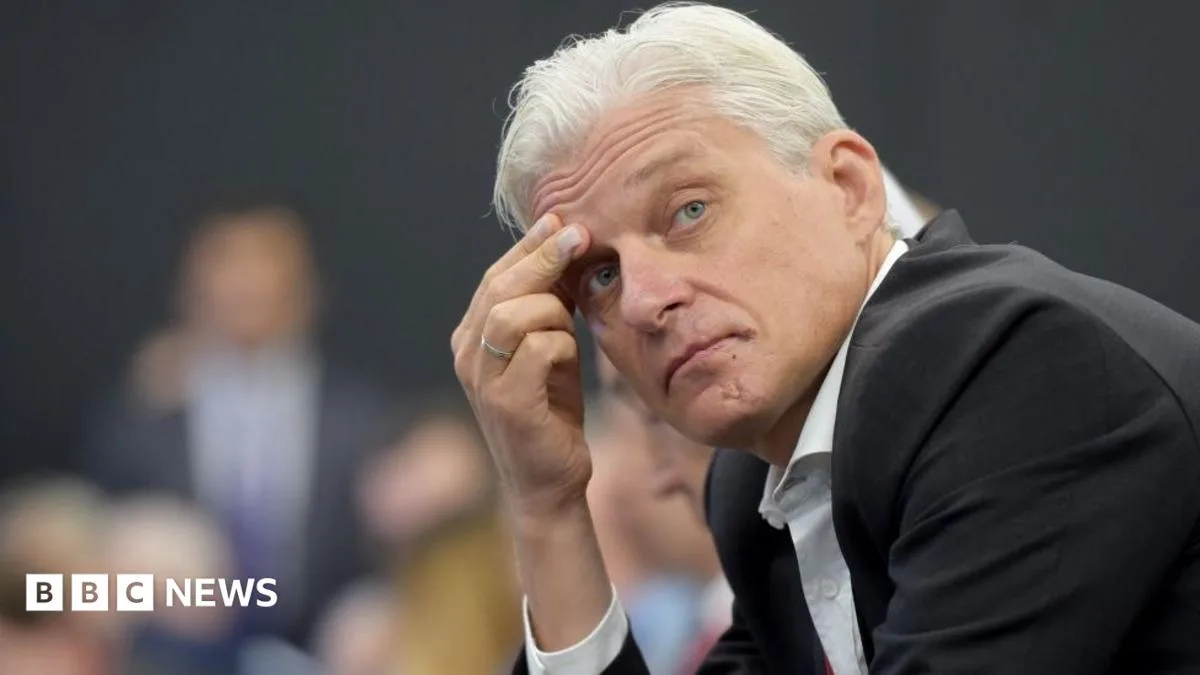
In May 2025, Sergey Radchenko walked briskly down Bayswater Road in London, heading towards the Russian embassy. The formidable outer wall, topped with razor wire and crowd control barriers, stood as a stark symbol of the regime he sought to leave behind. Unlike the early days of the war, when protesters besieged the embassy, only a lone man feebly protested across the street. Radchenko felt uneasy as he was ushered inside by a guard who patted him down and checked his backpack. This visit was not for renewing his passport or voting, as in the past, but to renounce his Russian citizenship.

Early Life and Global Nomadism

Born in 1980 to parents of Ukrainian descent on the island of Sakhalin, Radchenko grew up in a gloomy, crumbling Soviet-era environment reminiscent of Chekhov's descriptions. At 15, he secured a place on a US-funded exchange programme that took him to east Texas, where he immersed himself in American culture. Unlike fellow participant Margarita Simonyan, who became a key propagandist for Putin, Radchenko did not return to Russia. Instead, he became a post-Soviet nomad, exploring cultures and learning languages, yet always tied to Russia through his passport.

He moved to the UK to study international relations at the London School of Economics during a period of optimism about globalisation. However, financial constraints and restlessness led him to Mongolia, where he lived among herdsmen, wearing traditional deel and speaking Mongolian fluently, yet always remaining an outsider. This sense of not belonging anywhere persisted as he moved to China, teaching at the University of Nottingham's campus there.

Wide Pickt banner — collaborative shopping lists app for Telegram, phone mockup with grocery list

The Turning Point: Putin's Tyranny and Personal Guilt

When mass protests erupted in Moscow in 2011 following fraudulent elections, Radchenko took interest but remained a young academic, not an activist. He identified as Russian to curious Chinese taxi drivers, often hearing praise for Putin without argument. However, the full-scale invasion of Ukraine on 24 February 2022 changed everything. Radchenko woke up in a cold sweat, horrified by images of cities in ruins, dead civilians, and refugees. He felt a deep sense of guilt, questioning whether he was complicit by association due to his Russian passport.

In the run-up to the invasion, he had refrained from public comments, misjudging Putin's willingness to raise murder to the level of national policy. He tweeted his shock and later posted in Russian, accepting collective responsibility for the bloodbath. Yet, doubts crept in: was collective responsibility illiberal? These questions became practical when he faced sanctions as a Russian citizen while opening a bank account in Italy, highlighting the real-world implications of his identity.

Philosophical Reflections and Practical Decisions

Radchenko turned to philosophy, reading Karl Jaspers' On the Question of German Guilt, which distinguished between criminal, political, moral, and metaphysical guilt. He also considered Hannah Arendt's ideas on collective responsibility, recognising that he could not evade responsibility as a member of a political community. Unlike most Russians, he had options: in 2020, he acquired British citizenship after years of living in the UK, settling in Wales with his Mongolian wife and children, and embracing British habits.

Initially, he saw dual citizenship as a statement of interconnectedness, but Fukuyama's warning about conflicting allegiances in war resonated after the invasion. Radchenko realised his loyalties lay with the West, and he would fight to protect his adopted homeland if necessary. This led to the painful decision to renounce his Russian citizenship, a process that required years of painstaking work to collect official documents, or spravkas, from Russian authorities without risking arrest by traveling to Russia.

Pickt after-article banner — collaborative shopping lists app with family illustration

The Bureaucratic Battle and Emotional Toll

At the embassy, an unsmiling official sarcastically remarked on his decision, and Radchenko handed over a pile of documents. The procedure was arduous, involving proof of tax payments, no criminal convictions, and non-residency in Russia. He paid a £150 fee in cash, suspecting it funded espionage. His parents reproached him, seeing it as a form of treason, echoing the lone protester's shout about Judas. Radchenko viewed renunciation as liberation from a toxic relationship, akin to removing kidney stones.

He understood Putin's logic of using citizenship as control within the Russkiy mir, but rejected it. After submitting his documents in May 2025, he waited months for approval. In October 2025, he visited Ukraine, studying Ukrainian and planning a global history of the invasion. Standing at Maidan Square, he received an email confirming his request had been satisfied. However, a final step required handing over his passports in exchange for a spravka.

Final Steps and Liberation

On 15 October, Radchenko brought his passports to the embassy, including his first Soviet-era one from 1995. As a prank, he wrote "Goodbye, and thanks for all the fish!" in his last passport, causing bureaucratic delays. After months of correspondence, he was summoned back in January 2026. At the embassy, he flipped through a memoir by spy Maria Butina, disgusted by its nationalist rhetoric. Finally, he received the spravka, officially ending his citizenship.

Exiting the building, he waved goodbye to the Nepali guard, referencing Mount Everest by its Tibetan name, Qomolangma. Standing on the street, he felt a sense of freedom, having crossed a metaphorical death gully. Radchenko reflected that he still had to learn who he was, but at least he knew who he wasn't: a citizen of Putin's Russia. This journey highlighted the complexities of identity, guilt, and the cold bureaucracy of the state, offering a poignant narrative of personal and political transformation in the shadow of war.