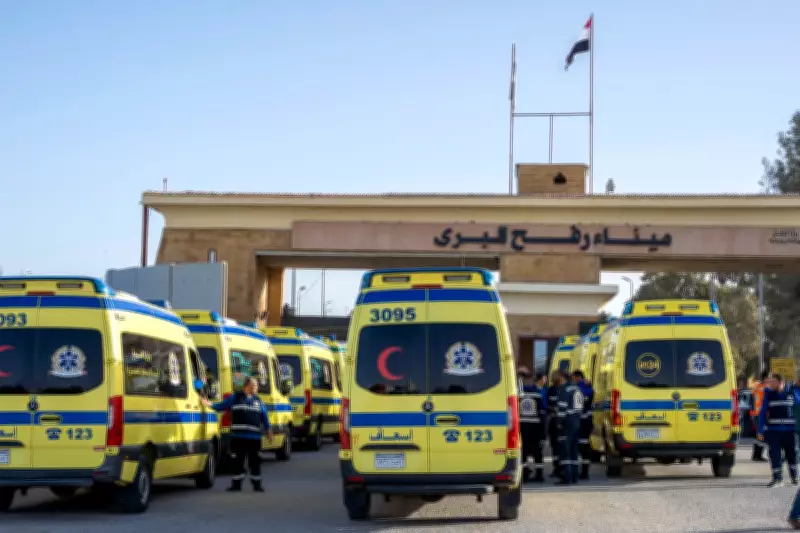
Security officials from both Egypt and Israel have confirmed that the crucial Rafah border crossing between the Gaza Strip and Egypt has been reopened for limited traffic. This development represents a key procedural step as the fragile ceasefire in the region continues to advance.
Initial Operations and Passenger Numbers
An Egyptian official, who is directly involved in talks concerning the implementation of the ceasefire agreement, provided specific details regarding the initial operations. Speaking anonymously to The Associated Press due to the confidential nature of the discussions, the official stated that on the first day of the crossing's renewed operation, a total of 50 Palestinians would be permitted to cross in each direction.
Official Confirmation and Media Reports
The reopening has been formally acknowledged through multiple channels. State-run Egyptian media outlets have independently confirmed the resumption of limited traffic at the Rafah crossing, lending official weight to the reports from security sources.

This controlled reopening is viewed by regional observers as a confidence-building measure within the broader ceasefire framework. The careful management of passenger numbers underscores the tentative nature of the current diplomatic progress, with authorities on both sides proceeding cautiously to maintain stability.
The Rafah crossing serves as Gaza's primary gateway to the outside world that is not controlled by Israel, making its operational status a critical indicator of humanitarian and diplomatic conditions in the territory. Its limited reopening, while modest in scale, provides a tangible signal that the ceasefire arrangements are being implemented on the ground, potentially paving the way for further normalisation of movement and aid flows in the coming days.