Pakistan's Diplomatic Triumph: How Army Chief Brokered Iran Ceasefire
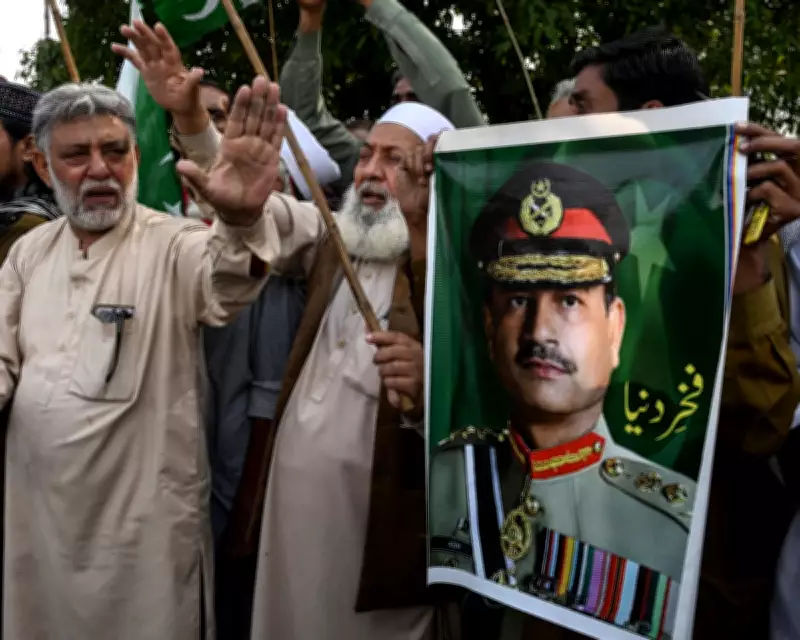
In what analysts are hailing as Pakistan's most significant diplomatic victory in years, the nation's leaders orchestrated a fragile ceasefire between the United States-Israel coalition and Iran, narrowly averting a catastrophic regional escalation. The breakthrough, achieved after more than two weeks of intense negotiations, was spearheaded by Pakistan's powerful army chief, General Asim Munir, whose unique personal connections proved pivotal.
A Desperate Situation
By Tuesday afternoon, hope had nearly evaporated. Prime Minister Shehbaz Sharif convened his cabinet with a grim assessment, stating that the situation had become "very bleak" and that Pakistan should brace for the impact of war. Earlier that day, Israeli strikes had devastated an Iranian gas facility, while Iranian retaliatory attacks hit a critical Saudi petrochemical complex, raising fears that Riyadh might be drawn into the conflict.
Pakistan's military leadership issued an unusually strong public rebuke of Tehran, accusing Iran of "spoiling" peace efforts. Meanwhile, in Washington, former President Donald Trump's rhetoric reached new heights of intensity, threatening the destruction of Iran's "whole civilisation" if a ceasefire wasn't agreed by day's end.

The Stakes for Pakistan
For Pakistan's government and military establishment, mediating an end to this conflict was far more than a matter of international prestige. The nation's economy, national security, defence posture, and delicate sectarian balance all hung in the balance. A recently signed defence pact with Saudi Arabia meant that if Riyadh entered the war, Pakistan would be obligated to follow.
"We were in a very fragile situation and desperate for negotiations to begin," revealed one Pakistani official, speaking on condition of anonymity. This desperation fueled relentless behind-the-scenes efforts by General Munir and Asim Malik, the head of army intelligence who also serves as national security adviser.
The Munir Advantage
General Munir occupied a uniquely advantageous position as a potential peace broker. He maintained both a strong personal rapport with Donald Trump and a longstanding relationship with Iran's Revolutionary Guards. This dual connectivity allowed him to communicate effectively with both sides when trust was at its lowest ebb.
While US Defence Secretary Pete Hegseth would later claim in a White House briefing that Iran had "begged" for the ceasefire, Pakistani officials present a different narrative. They assert that both sides genuinely wanted an end to hostilities, but that the primary push came from Trump, who found himself "trapped" in a war he had initially believed would conclude within three days.
The Negotiation Marathon
For several critical hours, calls crisscrossed the globe. General Munir and Asim Malik engaged with Trump, Secretary of State Marco Rubio, Vice President JD Vance, and US special envoy Steve Witkoff on one side, while simultaneously communicating with senior Iranian officials including parliamentary speaker Mohammad Bagher Ghalibaf and Foreign Minister Abbas Araghchi. Prime Minister Sharif also made personal appeals to Iranian leaders and Saudi Crown Prince Mohammed bin Salman.
Despite these efforts, Iran remained "reluctant" to commit to any ceasefire agreement as Tuesday evening approached. Tehran's leadership harboured deep suspicions that the Trump administration might be using negotiations as a tactical pause to regroup before launching renewed strikes.
China's Crucial Intervention
The decisive turning point came with China's unexpected entry into the diplomatic fray. Previously hesitant to become entangled in a conflict that was visibly weakening Trump, Beijing shifted its position as the economic toll of the war began affecting its own interests.
Just over a week earlier, Pakistan's Foreign Minister Ishaq Dar had flown to Beijing specifically to discuss Middle East peace prospects and request greater Chinese involvement. Pakistani officials claim that "friendly countries" ultimately persuaded China to take a pivotal role in Tuesday's negotiations.

"Pakistan had to involve China to convince Iran to go for a ceasefire," explained one official. China directly encouraged Tehran to accept a ceasefire arrangement, offering to serve as a guarantor of Iran's security during subsequent talks. Among the specific assurances provided was a promise that Iranian leaders would not face assassination if they travelled for negotiations.
Breakthrough and Aftermath
By 8pm Tuesday, Prime Minister Sharif's cabinet meeting had transformed from despair to cautious optimism. "A ray of hope has emerged for negotiations and a ceasefire," Sharif announced, crediting General Munir with leading the breakthrough.
"We were the mediator, not the guarantor," clarified a Pakistani official. "The main role was played by China. They became a guarantor of the ceasefire and pledged that the US would standby the agreement and that talks would go smoothly in Islamabad."
By 4am Wednesday in Islamabad, the seemingly impossible had been achieved: a temporary, fragile ceasefire agreement between the United States and Iran. Michael Kugelman, South Asia fellow at the Atlantic Council, described the accomplishment as Pakistan's "biggest diplomatic win in years."
Prime Minister Sharif hailed the ceasefire as a "shining moment" in Pakistan's history and a "first step" toward lasting peace. He confirmed that peace talks involving both American and Iranian representatives would proceed in Islamabad on Friday, with preparations underway at the city's Serena Hotel. Iranian sources indicated that Tehran planned to send Ghalibaf and Araghchi as its negotiating team.
Fragile Peace and Future Challenges
Despite the diplomatic achievement, Pakistani officials privately express concerns that Israel and the United Arab Emirates might attempt to "sabotage" the peace process. Complications persist, including Israel's declaration that Lebanon remains outside the ceasefire agreement and the continued blockage of most trade through the Strait of Hormuz.
Kugelman noted that Pakistan had "defied many skeptics and naysayers that didn't think it had the capacity to pull off such a complex, high-stakes feat," adding that "what matters the most is it helped avert a potential catastrophe in Iran." The nation now faces the formidable challenge of transforming this fragile ceasefire into a sustainable peace agreement, with the eyes of the international community firmly fixed on Islamabad's diplomatic capabilities.