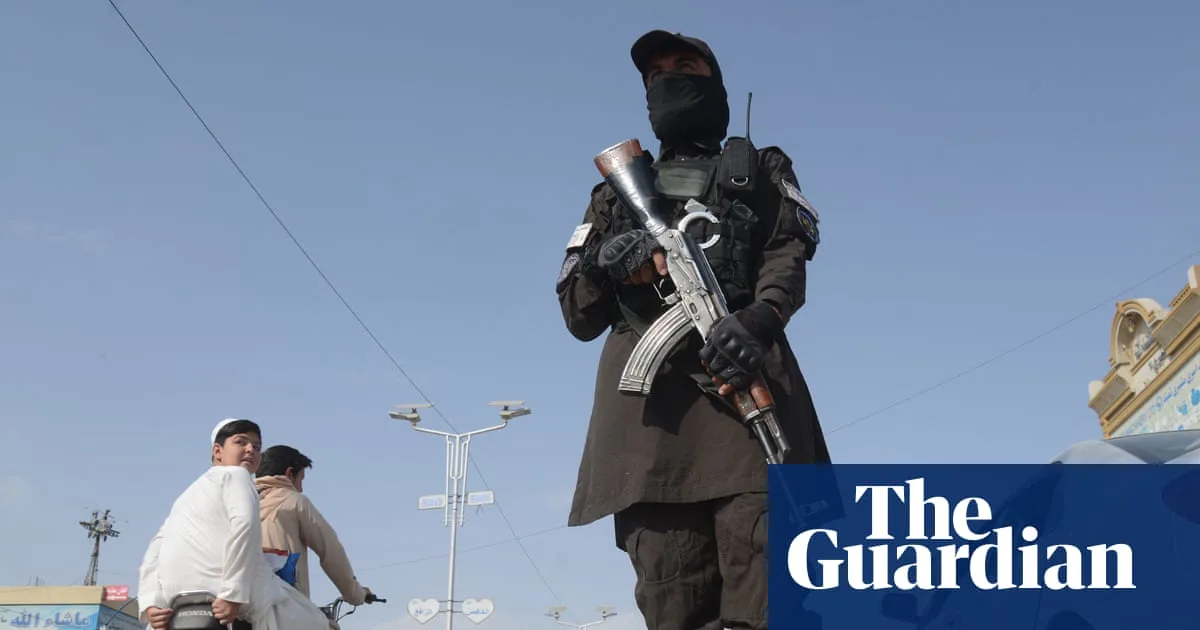
Pakistan's President Defends Cross-Border Strikes, Urges Taliban to Disarm Militants
Pakistan Defends Strikes in Afghanistan, Urges Taliban Action

Pakistan's President Asif Ali Zardari has publicly defended his nation's ongoing military strikes into neighbouring Afghanistan, asserting that Islamabad exhausted all diplomatic avenues before resorting to targeted operations against militants operating from Afghan territory. In a speech to lawmakers on Monday, Zardari called directly on the Taliban government in Kabul to disarm groups responsible for attacks within Pakistan, emphasising that "no state accepts serial attacks on its soil."

Escalating Tensions and Military Claims

The border region between Pakistan and Afghanistan remains a volatile stronghold for militant organisations, including al-Qaida and the Islamic State group. Pakistan recently declared it is in an "open war" with Afghanistan, a statement that has alarmed the international community. Since Afghanistan launched retaliatory attacks last Thursday in response to Pakistani airstrikes the previous Sunday, Pakistan has conducted further operations along the border.

Information Minister Attaullah Tarar claimed these operations resulted in the killing of 435 Afghan forces and the capture of 31 Afghan positions. However, Kabul has firmly denied these assertions, highlighting the contentious nature of the conflict.

Wide Pickt banner — collaborative shopping lists app for Telegram, phone mockup with grocery list

Civilian Casualties and Counter-Claims

In Afghanistan, deputy government spokesman Hamdullah Fitrat reported that Pakistani military forces fired mortar shells at a refugee camp in eastern Kunar province, killing three children and injuring three others. Meanwhile, Afghanistan's defence ministry stated that Afghan forces carried out strikes targeting a Pakistani military facility near Paktia province, inflicting "substantial losses and heavy casualties."

Pakistan's military has not responded to specific questions but maintains that its operations are solely aimed at Afghan military installations to avoid civilian casualties. This claim is disputed by Afghan officials, who point to the incident in Kunar province as evidence of harm to non-combatants.

Roots of the Conflict: TTP and Safe Havens

Pakistan has experienced a significant surge in violence in recent months, which it attributes to the outlawed Pakistani Taliban, known as Tehreek-e-Taliban Pakistan (TTP). This group operates both inside Pakistan and from Afghan territory. Islamabad accuses Afghanistan's Taliban government of providing safe havens for the TTP, an allegation that Kabul consistently denies.

The latest cross-border fighting has effectively ended a ceasefire that was brokered by Qatar and Turkey in October. Subsequent talks in Istanbul failed to produce a permanent agreement, leaving the region in a state of renewed hostilities.

Diplomatic Overtures and Regional Tensions

Despite the military escalation, President Zardari reiterated Pakistan's call for dialogue, stating, "We have never walked away from dialogue." He urged the Afghan Taliban to "choose to dismantle the terror groups that survive on conflict and its war economy."

Zardari also levelled accusations that Afghanistan is acting as a proxy for India by sheltering militant groups, warning Kabul to "stop being used by another country as a battlefield for their ambitions." He cited a recent report from the United Nations Security Council's monitoring team, which described the presence of militant groups in Afghanistan as an extra-regional threat, underscoring the broader security implications of the conflict.

The situation remains fluid, with both sides trading accusations and military claims while the international community watches closely. The breakdown of the ceasefire and failed talks highlight the deep-seated tensions and complex geopolitical dynamics at play in the region.

Pickt after-article banner — collaborative shopping lists app with family illustration




