North Korea's Succession Crisis: Kim Yo Jong vs. Kim Ju Ae Could Spark Bloody Purge
Experts are warning that a potential battle for control of North Korea between Kim Jong Un's sister and his teenage daughter could result in executions and brutal purges within the ruling family. The escalating tension highlights the precarious nature of the Kim dynasty's grip on power as it potentially prepares for a fourth-generation transition.
Spy Agency Reveals Succession Plans
Last week, South Korea's National Intelligence Service (NIS) informed parliament that Kim Ju Ae, Kim Jong Un's young teenage daughter, appears to be approaching designation as the country's future leader. This move would extend the family dynasty to a fourth generation, but faces significant opposition from within the regime.
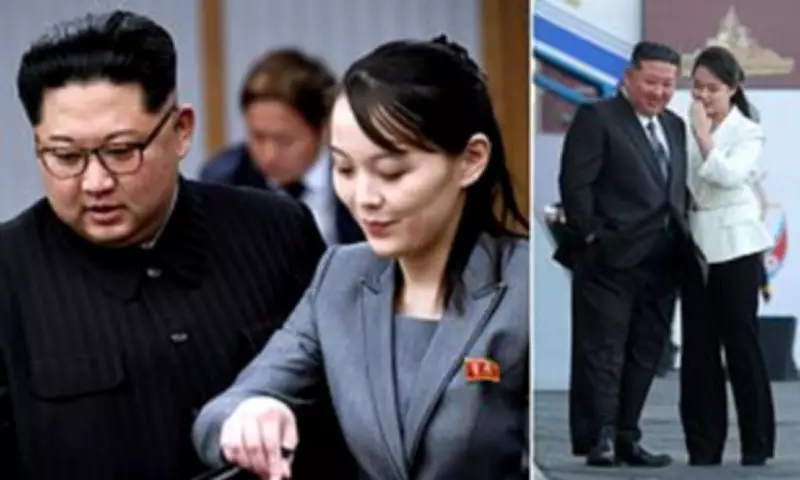
Kim Yo Jong, the 38-year-old sister of the North Korean leader, is reportedly positioning herself to seize control should her brother die or become incapacitated. As a key figure in the ruling party's propaganda department, she commands substantial respect within political and military circles and is widely regarded as the second most powerful person in North Korea.

Historical Precedents Suggest Bloody Outcome
Fyodor Tertitskiy, a Russian and South Korean historian at Korea University, told the Daily Mail that an uncertain succession line could lead to extreme violence. "The losing side could be purged with extreme prejudice, which will mean labour camps, which will mean executions, potentially even public executions or punishments for relatives," he warned. "North Korea is a very, very cruel and very, very brutal place."
Dr. Edward Howell, a North Korea expert at the University of Oxford, echoed these concerns, stating: "We cannot rule out the prospect of a power struggle between aunt and niece, not least because there is precedent for this. One of the things we've learned from North Korean history is that no one, even if you are tied to the precious Kim dynasty, is safe."
Experience vs. Dynastic Ambition
Kim Yo Jong's years of experience and accumulated political capital had previously positioned her as the de facto successor. She was rumored to have assumed decision-making responsibilities during Kim Jong Un's illness in 2020, demonstrating her capability to govern.
However, Kim Ju Ae's increasing public visibility mirrors her father's own path to power before being named Kim Jong Il's successor. The young teenager has accompanied her father to numerous high-profile events including weapons tests, military parades, factory openings, and even a summit with Chinese leader Xi Jinping in Beijing last September.
Brutal Family History of Eliminations
The Kim family has a well-documented history of eliminating relatives perceived as threats. Just two years after assuming power in 2011, Kim Jong Un had his uncle and mentor, Jang Song Thaek, arrested and executed by firing squad in 2013 on various charges including "anti-party, counter-revolutionary factional acts."
In 2017, Kim Jong Nam, Kim Jong Un's older half-brother, was assassinated with VX nerve agent at Kuala Lumpur airport, an attack widely believed to have been ordered by the North Korean government.
Critical Weeks Ahead for Succession Clarity
All eyes are now on the upcoming Workers' Party Congress in late February, which could provide a platform for Kim Jong Un to formalize his succession plans. The congress, last held in 2016 and 2021, represents a crucial opportunity for the North Korean leader to outline the country's strategic direction.
Dr. Howell emphasized the importance of the coming weeks: "If we see any displays of Kim Ju Ae with her father on the fringes of this Congress, or if there's any announcement pertaining to Kim Ju Ae, then this will be an important thing to watch."
Structural Incentives for Conflict
Sanghun Seok, a former South Korean diplomat now working as a Senior Associate Fellow at RUSI, explained the structural dynamics that could fuel conflict: "A consistent pattern has been that internal power struggles, when they occur, tend to end with one side decisively purging the other. If a contest were to unfold, it would likely revolve around control of the military, the security services and the party's organisational and propaganda organs."

He added: "In a system where political authority is closely tied to regime survival, both figures could be perceived as potential threats to one another. In such contexts, succession is not simply about prestige but about security and survival. This creates structural incentives for key actors to secure control rather than rely on mutual accommodation."
Intelligence Assessment Shifts
South Korean intelligence has notably shifted its assessment of Kim Ju Ae's status. Lawmaker Lee Seong Kweun, who attended the NIS briefing, noted: "In the past, (NIS) described Kim Ju Ae as being in the midst of 'successor training.' What was notable today is that they used the term 'successor-designate stage,' a shift that's quite significant."
The agency cited her growing presence at high-profile military events, her inclusion in family visits to sacred sites like the Kumsusan Palace of the Sun, and indications that Kim Jong Un was beginning to seek her input on certain policy matters.
Despite North Korea's traditionally conservative, male-dominated leadership culture, Kim Ju Ae's increasingly prominent appearances in state media have prompted a reassessment of her potential role. South Korea's spy agency will be closely monitoring whether she appears with her father before thousands of delegates at the upcoming Workers' Party Congress, as this would strongly indicate his succession intentions.