North Korea's Latest Ballistic Missile Test Ends in Failure After 10 Minutes
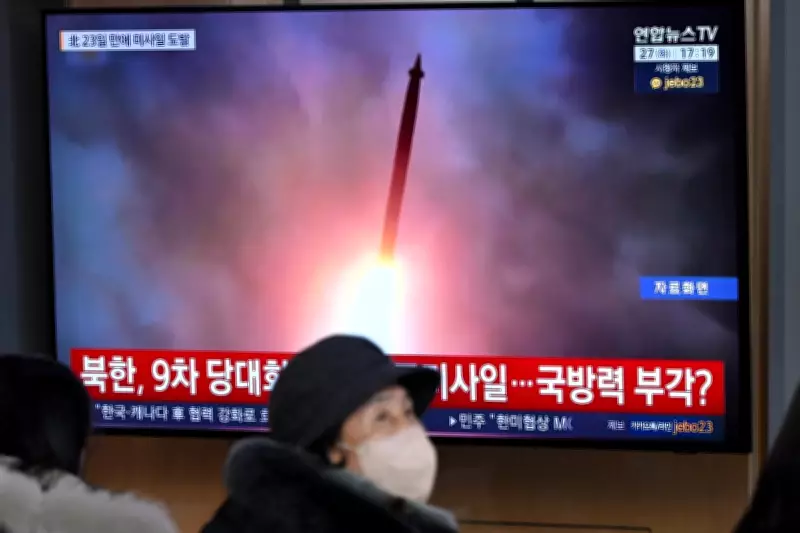
North Korea has launched multiple ballistic missiles towards waters off its east coast, according to reports from South Korea and Japan on Wednesday. This latest test extends a series of recent launches that have raised international concerns.
Details of the Failed Missile Launch
South Korea's Joint Chiefs of Staff confirmed that North Korea fired an additional unidentified missile at approximately 2.20pm local time from the Wonsan area. The projectile was directed towards the eastern coastal waters. However, the Japan Coast Guard reported that the missile fell into the sea only about 10 minutes after launch, with no entry into Japanese territorial waters or exclusive economic zone.
South Korea's Yonhap news agency cited military officials stating that the missile flew eastwards before showing signs of "abnormality" in the early stage of its flight, ultimately disappearing. This incident follows a previous day's test where Pyongyang fired several short-range ballistic missiles from near the same area, which travelled approximately 240 kilometres.

International Condemnation and Security Concerns
Japan's chief cabinet secretary Minoru Kihara strongly condemned the test-launch, asserting that Pyongyang's actions "threaten peace and security in the region and the international community." Shortly after the missile launch, South Korea's presidential Blue House convened an emergency National Security Council meeting. The council described the earlier launches as provocations that violate United Nations Security Council resolutions and urged North Korea to cease such tests immediately.
These launches represent North Korea's fourth, fifth, and sixth ballistic missile tests this year, following two recorded in January and a third in March. Experts monitoring these activities suggest they have become a routine component of Kim Jong Un's weapons development programme.
Expert Analysis on Weapons Development
Kim Dong-yup, a professor at the University of North Korean Studies in Seoul, indicated that specific tests could be linked to "ongoing engine and propulsion testing, including work on solid-fuel systems." This continuous development underscores North Korea's persistent efforts to advance its military capabilities despite international sanctions and diplomatic pressure.
Mixed Messages from Pyongyang
The missile launches occur amidst a series of confusing mixed signals from North Korea towards South Korea. Just two days earlier, Kim Yo Jong, the influential sister of Kim Jong Un, praised South Korean president Lee Jae Myung's efforts to crack down on civilian drone incursions into North Korean territory as "very fortunate and wise." She commended his remorse over private drone launches, describing him as an "honest and bold person."
However, barely 24 hours later, Jang Kum Chol, a senior official at North Korea's foreign ministry, stated that South Korea was engaging in wishful thinking if it believed Pyongyang viewed Seoul as anything other than an enemy. According to a report by state media KCNA, Jang declared, "The identity of the ROK, the enemy state most hostile to the DPRK, can never change with any words or conduct," using the acronyms for the formal names of South and North Korea.
Historical Context and Ongoing Tensions
Both Koreas remain technically at war, as their 1950 to 1953 conflict concluded with a truce rather than a permanent peace treaty. This historical backdrop amplifies the significance of recent missile tests and diplomatic exchanges, highlighting the fragile security dynamics on the Korean Peninsula. The international community continues to monitor these developments closely, with South Korean and US authorities conducting detailed analyses of each launch to assess potential threats and implications for regional stability.