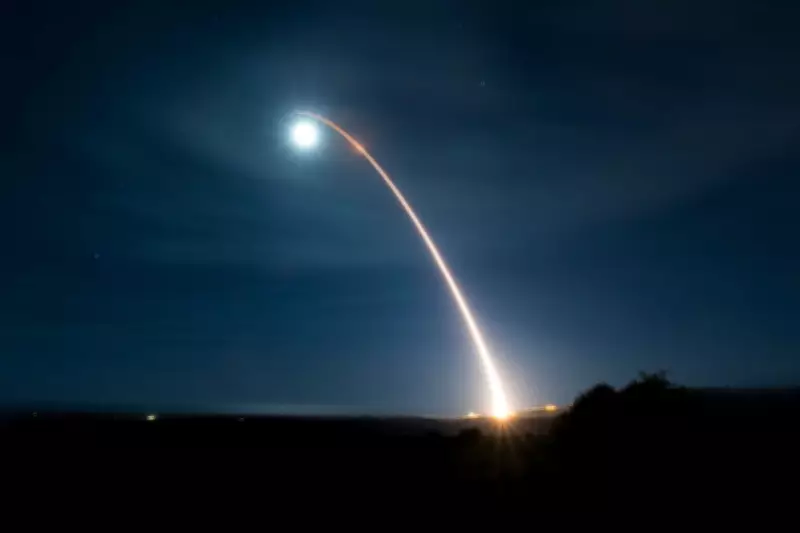
New START Treaty Expiration: A Major Guardrail Dismantled
The Strategic Arms Reduction Treaty, widely known as New START, officially expired on Thursday, removing a critical barrier that had prevented the United States and Russia from expanding their nuclear arsenals. This landmark agreement, originally signed in 2010, mandated both nations to limit their deployed strategic nuclear warheads to 1,550 and restrict missiles and bombers capable of delivering them to 700. Together, these two global powers possess nearly 85 per cent of the world's strategic nuclear weapons, making the treaty's lapse a significant event with potential global repercussions.
Potential for Escalation Amid Global Tensions
The expiration threatens to ignite an unconstrained arms race reminiscent of the Cold War era, a scenario that could destabilise international security. At a time when the world is grappling with multiple escalating conflicts and heightened geopolitical tensions, the absence of New START may encourage other nuclear-armed or nuclear-aspiring nations to bolster their own arsenals. This development raises concerns about a new wave of proliferation and increased strategic competition on a global scale.
Diplomatic Efforts and Political Posturing
Despite the treaty's end, diplomatic channels remain active, with both the White House and the Kremlin indicating a willingness to explore some form of arrangement to uphold the treaty's principles. In a statement on his Truth Social platform, US President Donald Trump advocated for a new, modernised treaty, criticising New START as a "badly negotiated deal" that has been "grossly violated." Meanwhile, Kremlin spokesperson Dmitry Peskov expressed Moscow's negative view of the pact's expiration but affirmed readiness for dialogue with Washington.

The Russian foreign ministry added a note of caution, stating that Russia "remains ready to take decisive military-technical measures to counter potential additional threats to national security," hinting at possible nuclear arsenal expansion if deemed necessary.
Existing Guardrails and Industrial Constraints
Experts emphasise that while quantitative caps on warheads are now absent, smaller guardrails around arms control persist, making a sudden, unfettered nuclear arms race unlikely. Ankit Panda, author of The New Nuclear Age: At the Precipice of Armageddon, highlights significant industrial constraints. He notes that the United States currently maintains about 1,900 non-deployed warheads in reserve but faces production limitations, aiming to produce only 30 plutonium pits by 2028—a stark contrast to the 2,000 pits produced annually during the peak of the Cold War in the 1960s.
Panda also points to ongoing agreements that help prevent inadvertent nuclear conflict, such as the 1988 accord on ballistic missile launch notifications and the 1989 deal on strategic exercise notifications. "It's really important to recall that while we are entering, for the first time in five decades, a world where there’s no quantitative caps on the size of the forces or on plans for reductions, the US and Russia are not going back to zero," he asserts.
Historical Warnings and Current Realities
In 2017, former Soviet leader Mikhail Gorbachev warned of a potential new Cold War as tensions between Russia and the West intensified, accusing the US and its allies of abandoning peace agreements on nuclear weapons. However, current analysts like Matt Korda, associate director of the Nuclear Information Project at the Federation of American Scientists, argue that a full-scale arms race is not inevitable. Korda suggests that neither President Trump nor Russian President Vladimir Putin can afford extensive nuclear expansion, citing overtaxed nuclear enterprises in the US and Russia's strained industrial capacity due to the conflict in Ukraine.
"I don't think it's really a surprise that Putin proposed this sort of one-year maintenance deal to maintain the New START central limits. It's not in Russia's interest to dramatically accelerate this ongoing arms race while its current modernisation programmes are going so poorly and while its industrial capacity is tied up in Ukraine," Korda explains.

In summary, while the expiration of the New START treaty marks a pivotal moment in nuclear diplomacy, experts concur that a combination of diplomatic efforts, existing agreements, and practical industrial limitations provides a buffer against an immediate, uncontrolled nuclear arms race. The focus now shifts to whether new frameworks can be established to manage strategic stability in a post-New START world.