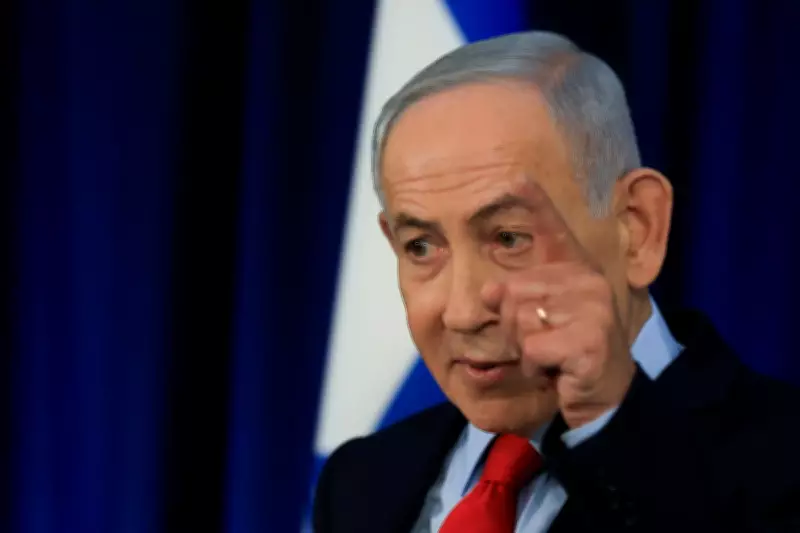
Israeli Prime Minister Benjamin Netanyahu has issued a stark warning that Lebanon is not included in a ceasefire agreement brokered between the United States and Iran, as military strikes continue in the region. This announcement comes despite Hezbollah declaring a halt to its attacks on Israel, with the Israel Defense Forces (IDF) maintaining combat operations.
Ceasefire Details and Immediate Fallout
Washington dramatically announced a "double-sided ceasefire" late on Tuesday, which suspends strikes against the Iranian regime for two weeks. In return, Iran must reopen the Strait of Hormuz and cease all attacks against the United States, Israel, and neighbouring countries in the region. The de-escalation efforts were unveiled in the eleventh hour after US President Donald Trump warned that "a civilization will die tonight, never to be brought back again" unless Tehran capitulated to his demands.
Netanyahu's office released an official statement expressing support for the ceasefire with Iran, but crucially caveated that "the two-weeks ceasefire does not include Lebanon." Shortly after this statement, Israel's military issued repeated urgent warnings to residents of the city of Tyre in Lebanon, instructing them to evacuate their homes immediately and move north of the Zahrani River.

Hezbollah's Response and Regional Impact
Hezbollah, the Lebanese militant group, halted fire on northern Israel and on Israeli troops in Lebanon in the early hours of Wednesday as part of the ceasefire. It is expected to issue a formal statement outlining its position in due course. However, photos showed smoke rising from explosions in the Abbasiyeh neighbourhood of Tyre on Wednesday following an Israeli strike, underscoring the ongoing violence.
More than 1,500 deaths have been recorded in Lebanon since Israel and Hezbollah reignited their conflict at the end of February, with authorities reporting over one million civilians displaced. This accounts for approximately 20 percent of Lebanon's population, highlighting the severe humanitarian crisis.
International Reactions and Diplomatic Efforts
Pakistan, which brokered the ceasefire deal, had stated it extends to Israel and Hezbollah fighting in Lebanon. In contrast, French President Emmanuel Macron welcomed the ceasefire between Iran and the United States but emphasised that the situation in Lebanon remains critical. He called for Lebanon to be included in the deal, noting France's advocacy for the country since the US-Israeli war with Iran began. France has ramped up aid for Lebanon and even suggested Paris as a location for Israeli-Lebanese ceasefire negotiations.
Domestic Criticism in Israel
Israel's opposition leader, Yair Lapid, launched a scathing critique of Netanyahu, asserting that Israel was not even at the table when decisions were made concerning the country's national security. Lapid stated, "There has never been such a political disaster in all of our history. The military carried out everything that was asked of it, the public demonstrated amazing resilience, but Netanyahu failed politically, failed strategically, and didn't meet a single one of the goals that he himself set."
He added that it would take years to repair the political and strategic damage wrought by Netanyahu due to "arrogance, negligence, and a lack of strategic planning."
Future Negotiations and Regional Stability
Iran announced on Wednesday that negotiations with the US would begin on Friday in Islamabad, Pakistan. Netanyahu's statement reiterated Israel's support for President Trump's decision to suspend strikes against Iran for two weeks, subject to Iran immediately opening the straits and stopping all attacks. It also backed US efforts to ensure Iran no longer poses a nuclear, missile, and terror threat to America, Israel, Iran's Arab neighbours, and the world.
The United States has informed Israel that it is committed to achieving these goals, shared by the US, Israel, and Israel's regional allies, in the upcoming negotiations. However, the exclusion of Lebanon from the ceasefire casts a shadow over the prospects for lasting peace in the region, as strikes continue and evacuation orders remain in effect.