NATO Chief's White House Talks Fail to Calm Trump's Anger Over Alliance Response
NATO Secretary General Mark Rutte has failed to quell Donald Trump's simmering anger following what was described as "frank and open" discussions at the White House. The diplomatic encounter, aimed at addressing tensions within the military alliance, saw Rutte highlight the "positive" actions being undertaken by the United Kingdom under Prime Minister Sir Keir Starmer.
Trump's Disappointment and Public Rebuke
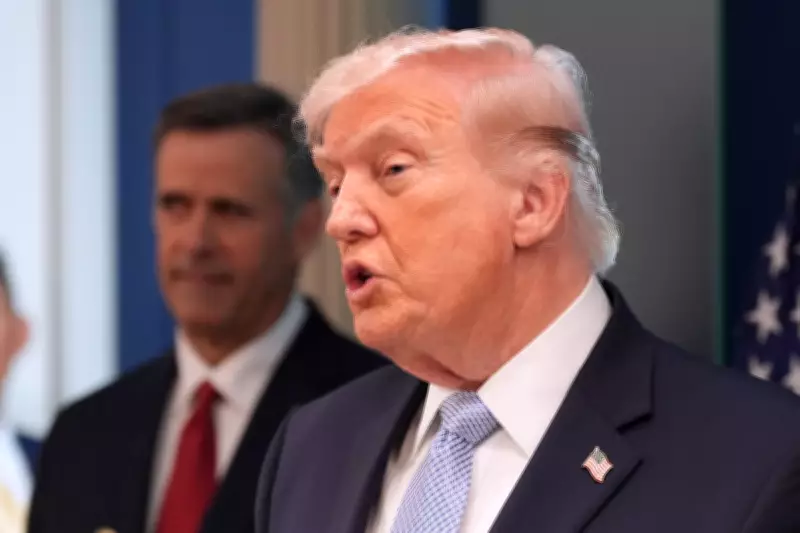
During their meeting, Rutte acknowledged that the US president remained "clearly disappointed" with NATO's collective response to the recent Iran war. This disappointment was later amplified when Trump took to his Truth Social platform to declare: "NATO WASN'T THERE WHEN WE NEEDED THEM, AND THEY WON'T BE THERE IF WE NEED THEM AGAIN."
The White House had previously accused Britain and other NATO allies of having "turned their backs" on the American people throughout the six-week conflict. Trump reinforced this sentiment by arguing that the long-standing security organisation had been "tested and they failed," reiterating his past characterisation of NATO as a "paper tiger" and raising the spectre of potential US withdrawal.

UK's Strait of Hormuz Initiative Highlighted
In his efforts to present a more balanced perspective, Rutte pointed specifically to initiatives led by Sir Keir Starmer aimed at securing the vital Strait of Hormuz shipping lane. Prior to the US-Iran ceasefire announcement, the UK had chaired a virtual conference involving military planners from over thirty nations, examining long-term measures to reopen the strategic waterway.
"Let me be absolutely clear, he is clearly disappointed with many NATO allies, and I can see his point," Rutte told CNN following the White House talks. "But at the same time, I was also able to point him to the fact that the large majority of European nations have been helpful with basing, with logistics, with overflights, with making sure that they lived up to their commitments."
Diplomatic Tensions and Burden-Sharing Concerns
The refusal of the United Kingdom to participate directly in Operation Epic Fury—the US offensive against Iran—and to restrict American use of British bases has placed considerable strain on relations between Starmer and Trump. Additionally, the US president has repeatedly voiced concerns about financial contributions within the alliance, arguing that America has been carrying other nations financially.
White House press secretary Karoline Leavitt echoed these sentiments during a news conference, stating dismissively: "It's quite sad that NATO turned their backs on the American people over the course of the last six weeks, when it's the American people who have been funding their defence."
Post-Ceasefire Developments and Ongoing Discussions
Following the truce, a joint statement from world leaders including Sir Keir Starmer pledged to "contribute to ensuring freedom of navigation in the Strait of Hormuz." However, this commitment did little to assuage American frustrations.
Rutte emphasised that "Europe as a platform of power projection for the United States was in full play over the last six weeks," while conceding that not all European nations had fulfilled their commitments. He described the discussion with Trump as "between two good friends" but acknowledged the president's lingering disappointment.
Earlier in his visit, Rutte met with US Secretary of State Marco Rubio to discuss "burden shifting" within NATO. According to US State Department principal deputy spokesman Tommy Pigott, the leaders addressed Operation Epic Fury, ongoing efforts to negotiate an end to the Russia-Ukraine war, and increasing coordination among NATO allies.
Despite Rutte's diplomatic efforts to highlight European contributions and UK-led initiatives, the fundamental rift over NATO's performance during the Iran conflict remains unresolved, with Trump's public criticisms underscoring the persistent tensions within the transatlantic alliance.