DHS Secretary Advocates for State-Led Disaster Management in North Carolina Visit
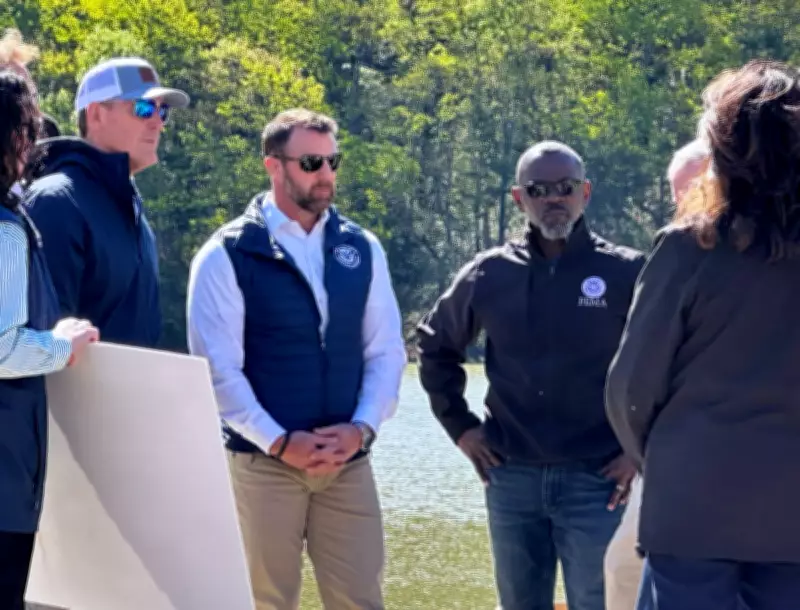
Markwayne Mullin, the United States Homeland Security Secretary, has publicly advocated for a significant transformation in the Federal Emergency Management Agency's operational framework. During a roundtable discussion in Asheville, North Carolina, Mullin emphasized that states and local governments should take the lead in disaster response, with FEMA acting in a supportive capacity rather than as a primary responder.
Mullin's First Major Public Engagement Since Confirmation
This visit to western North Carolina marks Mullin's inaugural major public appearance following his Senate confirmation last month. The trip focused on assessing federal recovery initiatives after Hurricane Helene, which caused extensive damage across the region in September 2024. Mullin's remarks come at a critical juncture, as the Department of Homeland Security, which oversees FEMA, enters its eighth week of a government shutdown.
"We shouldn't look at Fema as being a first responder, but look at Fema as supporting the first responders you already have," Mullin stated to reporters. He elaborated that states, neighbors, local mayors, and emergency response teams are often better equipped than the federal agency, highlighting a need for restructuring rather than elimination of FEMA.

Addressing Backlogs and Policy Changes
Earlier this week, Mullin took steps to address administrative hurdles within FEMA. He cleared a backlog of home buyout requests that had been "severely stalled" by bureaucratic red tape and rescinded a rule requiring personal approval for contracts exceeding $100,000. This policy, implemented by his predecessor Kristi Noem, had been criticized for impeding the agency's efficiency and delaying recovery funds to areas like Asheville.
During his confirmation hearing, Mullin pledged to revoke Noem's micromanagement approach, stating, "That's called micromanaging. I'm not a micromanager." He also responded to concerns about Noem's proposal to eliminate FEMA entirely, asserting that the agency should be restructured to better support state-led efforts.
Criticism and Scrutiny Over Disaster Management
Mullin's background and stance on climate issues have drawn criticism from recovery experts. Notably, he has previously questioned the existence of the global climate crisis, despite scientific consensus linking human activity to dangerous warming trends. An analysis post-Hurricane Helene indicated the storm was made 200 to 500 times more likely due to climate change and was 10% wetter.
The agency's handling of Helene recovery has faced intense scrutiny. North Carolina Senator Thom Tillis accused the Homeland Security Department of violating federal law by enacting the $100,000 approval policy, which restricted FEMA funds. "It begs the question: why? Why would you be involved in that? Why would that be a policy?" Tillis questioned during a Senate judiciary committee hearing.
Future Directions and Federal Support
Mullin assured that North Carolina has not been forgotten amidst recovery delays, pointing to the disaster backlog as a primary issue. He mentioned ongoing daily conversations with federal delegations and outlined FEMA's role in providing initial support for rebuilding efforts. "Fema can be there to get them past the first heavy lift, to let them start rebuilding, and then we can just be, hopefully, help fund the recovery after that," he explained.
Looking ahead, Mullin plans to brief the president on 22 other disasters nationwide, reinforcing his commitment to a collaborative approach between federal and state entities in disaster management.