Milan Protesters Rally Against ICE Presence at Winter Olympics, Decry US 'Fascism'
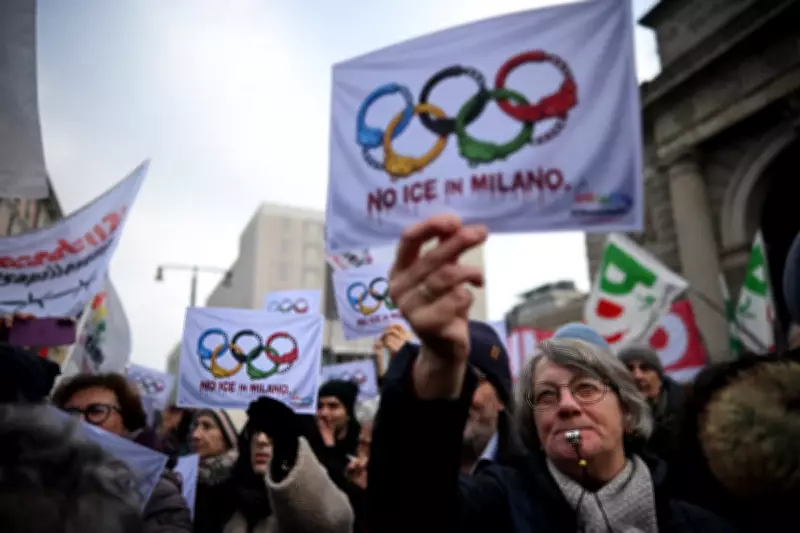
Hundreds of demonstrators gathered in Milan's Piazza XXV Aprile on Saturday to protest the deployment of US Immigration and Customs Enforcement (ICE) agents during the upcoming Milano Cortina Winter Olympic Games. The protest, which took place in a square symbolically named for Italy's liberation from Nazi fascism in 1945, targeted both the operational role of ICE personnel and broader concerns about what organisers described as creeping fascism in the United States.
Political and Historical Symbolism
The demonstration drew participants from across Italy's left-leaning political spectrum, including members of the Democratic Party, the CGIL trade union confederation, and the ANPI organisations dedicated to preserving the memory of Italy's partisan resistance during World War II. Organisers distributed plastic whistles to attendees, who blew them energetically as music played from a nearby van, creating a cacophonous atmosphere of dissent.
Protest banners carried pointed messages that blended political critique with cultural references. One sign declared, No thank you, from Minnesota to the world, at the side of anyone who fights for human rights, while another stated, Never again means never again for anyone. A more lighthearted banner read, Ice only in Spritz, referencing the popular Italian aperitif while making a clear distinction between acceptable and unacceptable forms of ice in Italian society.

Official Backlash and Political Fallout
The announcement of ICE involvement in Olympic security has sparked significant political controversy in Italy. Milan's mayor, Giuseppe Sala, has publicly stated that the American agents are not welcome in the city. Meanwhile, Italy's interior minister, Matteo Piantedosi, has been summoned to Parliament to provide testimony about the deployment arrangements this week, indicating the seriousness with which Italian authorities are treating the matter.
Among the protesters was Silvana Grassi, who held a sign equating ICE with the Gestapo. She expressed profound distress about reports of ICE agents' actions in Minneapolis, including shootings of protesters and the detention of children. It makes me want to cry to think of it, Grassi said. It's too terrible. How did they elect such a terrible, evil man?
Clarifying the ICE Deployment
It's important to note that the ICE agents scheduled for deployment to Milan are not from the same unit involved in controversial immigration enforcement operations in Minnesota and other US cities. The personnel being sent belong to Homeland Security Investigations, an ICE division that focuses on cross-border criminal activities such as human trafficking and drug smuggling. This unit regularly provides security assistance at major international events like the Olympics.
The more controversial Enforcement and Removal Operations arm of ICE, which handles immigration detention and deportation within the United States, has no indication of sending officers to Italy for the Games. Despite this distinction, protester Paolo Bortoletto remained adamant in his opposition. Even if it's not the same ones, we don't want them here, he stated, while acknowledging the agents would have an investigative rather than street-level role.
Broader Ideological Concerns
For many protesters, the issue extended beyond operational details to fundamental ideological objections. Bortoletto elaborated, We don't want them in our country. We are a peaceful country. We don't want fascists. It's their ideas that bother us. This sentiment reflects how the protest has become a platform for expressing broader anxieties about American political developments and their perceived global implications.
The Milano Cortina Winter Olympics are scheduled to begin on 6 February with an opening ceremony expected to be attended by US Vice-President JD Vance and Secretary of State Marco Rubio, ensuring continued political attention on American involvement in the Games. The protest in Milan serves as a potent reminder of how international sporting events can become flashpoints for geopolitical tensions and ideological debates.