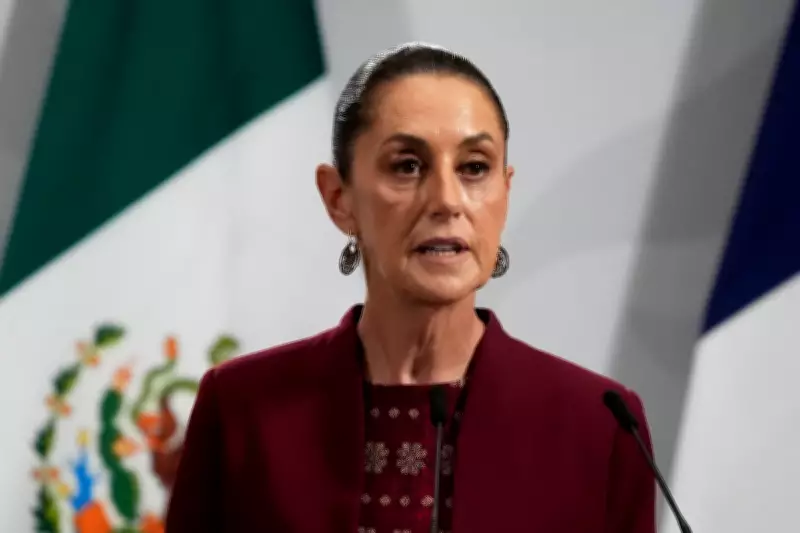
Mexican President Claudia Sheinbaum has pledged to dispatch humanitarian assistance to Cuba this week, a move that underscores Mexico's independent foreign policy stance in the face of mounting pressure from the United States. The aid package is set to include essential food supplies and other critical humanitarian resources, aimed at alleviating hardships on the Caribbean island.
Diplomatic Standoff Over Cuban Affairs
Sheinbaum's announcement, made during a public event in the northern state of Sonora on Sunday, comes directly after US President Donald Trump publicly stated that he had urged the Mexican leader to suspend oil shipments to Cuba. In a firm rebuttal, Sheinbaum clarified that Cuban affairs were not discussed in a recent phone conversation with Trump on Thursday, distancing her administration from US directives.
"We seek to diplomatically solve everything related to the oil shipments to Cuba for humanitarian reasons," Sheinbaum emphasised, highlighting Mexico's commitment to a peaceful and principled approach in international relations. This statement reflects a broader strategy of maintaining cordial ties with Cuba while navigating complex geopolitical dynamics.

Mexico's Crucial Role as Cuba's Oil Supplier
The context of this aid pledge is deeply intertwined with energy politics in the region. Following a US military operation in early January that led to the removal of Venezuela's President Nicolás Maduro, Venezuela suspended its oil shipments to Cuba. These shipments had already been in decline over recent years, creating a significant supply gap.
In response, Mexico stepped in to become the primary supplier of crude oil and refined products to Havana, with state-owned oil company Pemex reporting shipments of nearly 20,000 barrels per day to Cuba from January through September 30, 2025. However, data from Jorge Piñon, an expert at the University of Texas Energy Institute who monitors shipments via satellite technology, indicates a sharp drop to about 7,000 barrels per day by September, following a visit to Mexico City by US Secretary of State Marco Rubio.
This reduction underscores the delicate balance Mexico must strike between its economic interests and diplomatic pressures. Mexican oil has long served as a vital lifeline for Cuba, supporting its energy needs and economic stability, making any disruption a matter of regional significance.
Implications for Regional Diplomacy and US Relations
The decision to send humanitarian aid, rather than directly addressing the oil shipment issue, allows Sheinbaum to assert Mexico's sovereignty while addressing humanitarian concerns. It signals a nuanced approach to foreign policy, where Mexico prioritises humanitarian assistance over geopolitical alignments, potentially easing tensions with the US by focusing on aid rather than energy exports.
This development highlights the ongoing complexities in Latin American diplomacy, where nations like Mexico navigate between US influence and regional solidarity. As Cuba faces economic challenges exacerbated by reduced oil imports, Mexico's aid could provide crucial support, reinforcing its role as a key player in Caribbean affairs.
Observers will be watching closely to see how this aid delivery unfolds and whether it leads to further diplomatic discussions between Mexico, the US, and Cuba. The situation remains fluid, with potential impacts on trade, energy markets, and international relations in the Western Hemisphere.