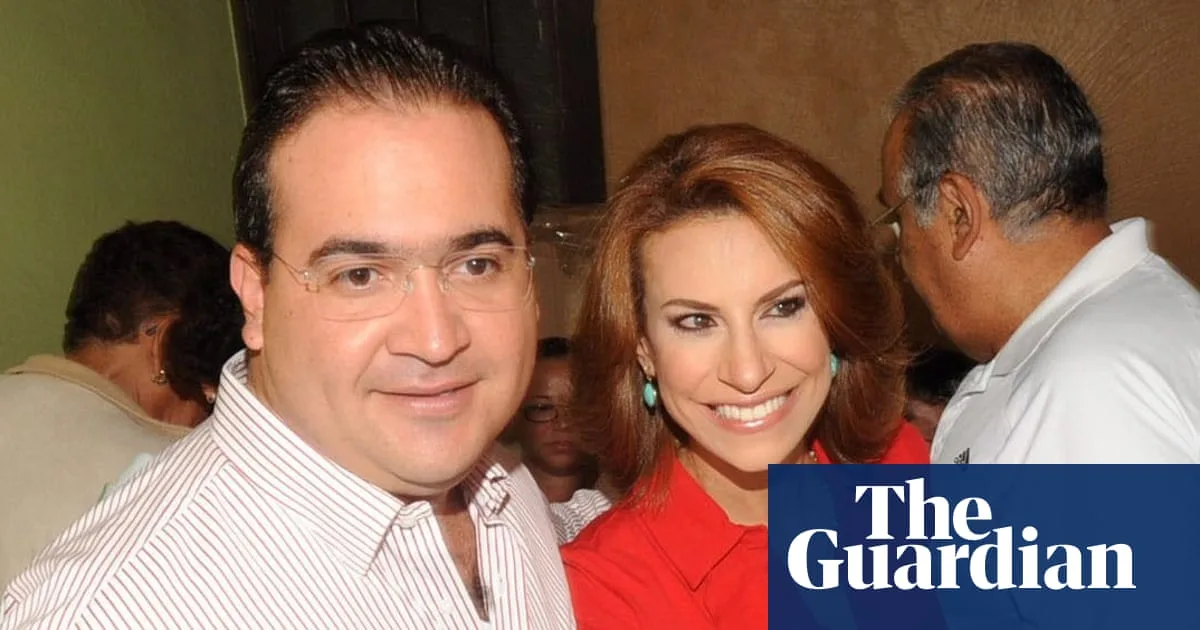
Mexican President Claudia Sheinbaum has announced her government will send a formal letter of complaint to UK officials after Karime Macías, the ex-wife of a former governor wanted for allegedly embezzling nearly £5 million of public money, was granted asylum in Britain.
Macías, who was first lady of Veracruz from 2010 to 2016, is wanted for extradition to Mexico for allegedly siphoning millions from the state welfare office. She has reportedly lived in London for several years. “How can a woman accused of fraud and corruption be granted asylum?” Sheinbaum asked during a press conference on Tuesday.
The Home Office declined to comment on the case, and neither the British embassy nor Macías’ lawyer responded to requests for comment. Macías’ asylum was first reported by Mexican news outlet N+.
Macías’ husband, former Veracruz governor Javier Duarte, was jailed in Mexico on money laundering and criminal conspiracy charges after fleeing to Guatemala. Prosecutors recently sought to extend his sentence for embezzling £215,000 from a state fund for children and the elderly.
While first lady, Macías allegedly used a $9.7 million ranch and awarded contracts to shell companies. She disappeared after Duarte’s capture. In 2018, a Mexican judge issued an arrest warrant for embezzlement, and Interpol issued a red notice. She was detained in the UK in 2019 but released on bail with an ankle monitor. In 2022, a UK court ruled for extradition, but appeals halted the process.
President Sheinbaum also questioned how Macías could afford to live in London. “This person, who has been living in the UK for quite some time now, who knows where they got the money?” she said.