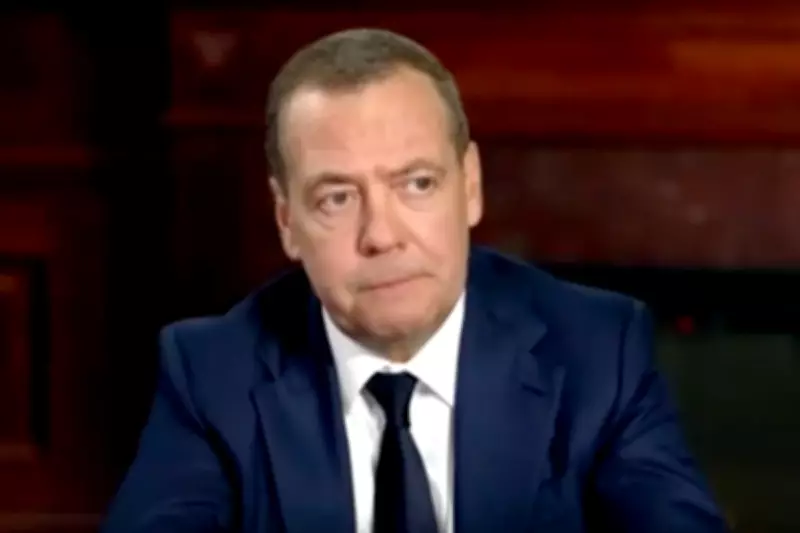
Ex-Russian President Medvedev Issues Stark Nuclear Treaty Warning
Dmitry Medvedev, the deputy chairman of Russia's Security Council and former president, has issued a chilling warning regarding the impending expiry of a crucial nuclear arms control treaty between Russia and the United States. The senior Kremlin official stated that the lapse of the New START agreement without a replacement would trigger significant global alarm.
Treaty Expiry Looms Without Last-Minute Deal
The New START treaty, which was originally signed in 2010 by Medvedev and then-US president Barack Obama, is scheduled to expire on Thursday, 4 February 2026. This pivotal agreement was designed to limit strategic nuclear warheads, serving as a cornerstone of international security for over a decade. Medvedev emphasised that if the treaty expires without a successor, it would mark the first time since the early 1970s that the world's two largest nuclear powers operate without any formal limits on their arsenals.
A last-minute diplomatic agreement between Washington and Moscow is now urgently required to prevent this potentially dangerous scenario. The absence of such a deal could destabilise global nuclear deterrence frameworks, raising concerns among allies and observers worldwide.

Historical Context and Current Implications
Medvedev's warning underscores the high stakes involved as the deadline approaches. The New START treaty has been instrumental in maintaining transparency and predictability between Russia and the US, with both nations periodically verifying compliance through inspections and data exchanges. Its potential collapse comes amid ongoing geopolitical tensions, adding urgency to diplomatic efforts.
Experts note that the treaty's expiry could lead to an unconstrained nuclear arms race, with both countries potentially expanding their strategic capabilities without oversight. This development highlights the fragile state of international arms control agreements in the current political climate.
As the clock ticks down, international communities are closely monitoring negotiations, hoping for a resolution that preserves stability and prevents a return to the unchecked nuclear proliferation of past decades.