US Vice President JD Vance Campaigns for Hungary's Orbán in Tight Election Race
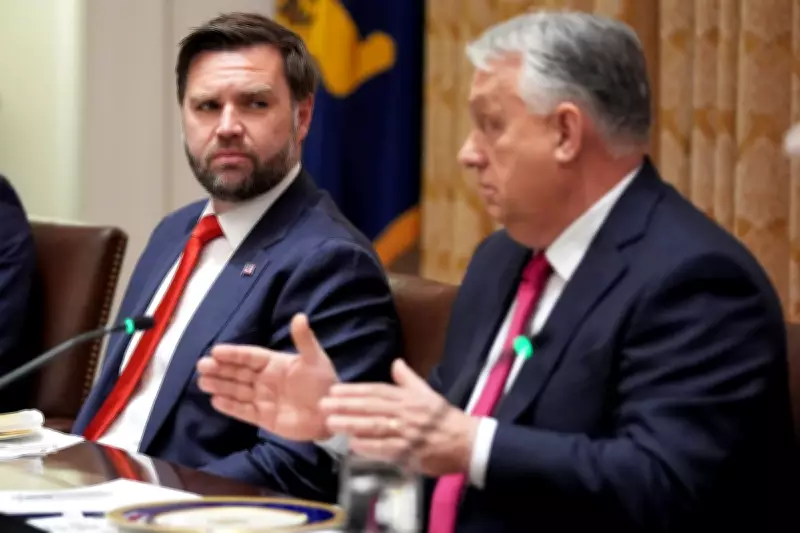
US Vice President JD Vance has travelled to Budapest in a last-minute effort to bolster the re-election campaign of Hungarian Prime Minister Viktor Orbán, a key European ally of the Trump administration. The parliamentary elections, scheduled for Sunday, see Orbán's Fidesz party trailing significantly in opinion polls.
Polling Gap and Political Context
Recent polling data indicates a substantial lead for the opposition Tisza party, led by former Fidesz insider Péter Magyar, which stands at 58% compared to Orbán's 35%. Orbán, a populist right-wing leader, is fighting to extend his 16-year tenure in power, a period during which he has transformed Hungary into what he describes as an "illiberal democracy." Vance, a longtime supporter of Orbán, aims to rally undecided voters through a joint press conference and a flag-waving rally at a 24,000-seat football stadium in the capital.
Vance's Strong Endorsement and Criticism of the EU
During the press conference on Tuesday, Vance launched a sharp critique of EU "bureaucrats in Brussels," accusing them of election interference in what he termed "one of the worst examples of foreign election interference" he has witnessed. He alleged that these officials are attempting to "destroy the economy of Hungary" by undermining energy independence and increasing costs for consumers, actions he attributed to their animosity toward Orbán. Vance expressed confidence in Orbán's victory, praising the Hungarian leader for "ferociously advocating" for his nation and upholding "the values of western civilisation."

Orbán's Record and International Alliances
Over his 16 years in office, Orbán has implemented policies that restrict the judiciary, suppress free press, and curtail LGBTQ+ rights, while framing Hungary as a "Christian democracy" under threat from refugees and the LGBTQ+ community. He is also a close ally of Russia, having vetoed a €90 billion EU aid package for Ukraine in February and expressing that Hungarians should "fear the EU more than Russia." The Trump administration has sought to cultivate Orbán as part of a network of hard-right European allies, including Germany's AFD and Marine Le Pen's Front National, to extend conservative influence. Former President Trump has previously lauded Orbán as "one of the strongest" world leaders.
Opposition Surge and Economic Discontent
Despite Vance's support, Orbán's grip on power appears precarious. Péter Magyar's centre-right party leads by at least 10 percentage points in polls, fueled by voter frustration over a stagnant economy, cronyism, and perceptions of Orbán as part of a "corrupt ruling elite." Magyar, 45, has gained popularity by promising to combat corruption and improve living standards. This sentiment is reflected in a February survey by the Publicus Institute Hungary, where 48% of respondents believed a Trump presidency would negatively impact Hungary.
Previous US Efforts and Their Impact
Vance's visit follows a similar trip by US Secretary of State Marco Rubio in February, which backfired as independent polls showed the opposition's lead widening afterward. Vance's own controversial speech at the Munich Security Conference last year, where he attacked European leaders for suppressing free speech and blamed the continent for mass migration, has drawn criticism. As the EU's longest-serving head of government, Orbán faces a formidable challenge from Magyar's rising appeal, suggesting that Vance's intervention may not be enough to secure a victory in Sunday's vote.