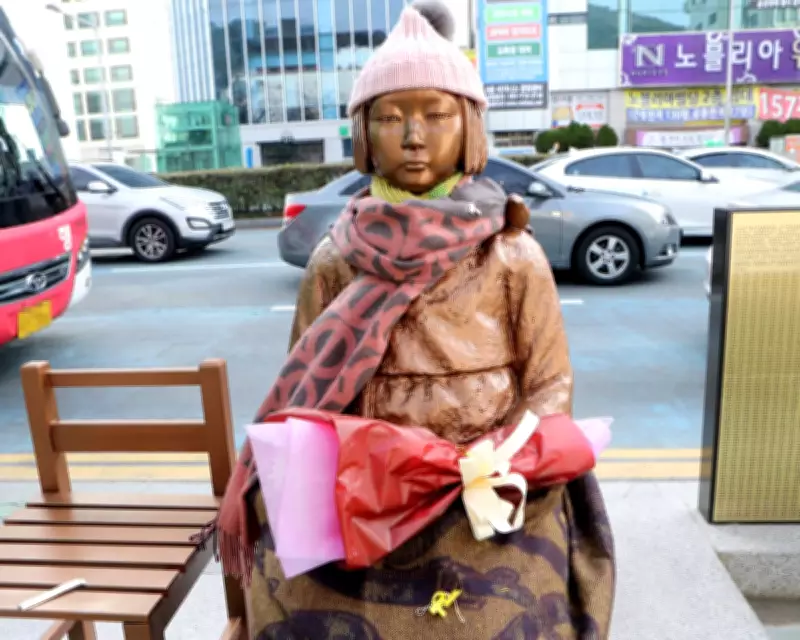
Japan Warns New Zealand 'Comfort Women' Statue Could Harm Diplomatic Ties
The Japanese embassy in New Zealand has issued a stark warning that diplomatic relations between the two nations could be jeopardised if a statue symbolising the thousands of women forced into sexual slavery by Japan during the Second World War is erected in Auckland. The bronze statue, depicting a seated girl next to an empty chair, was gifted by the Korean Council for Justice and Remembrance, a non-governmental organisation, to commemorate survivors of wartime sexual violence.
Plans for Installation and Historical Context
If local authorities approve the proposal at a meeting on 28 April, the statue will be installed in the Korean cultural garden at Barry’s Point reserve in Auckland. Historians estimate that as many as 200,000 women—primarily from Korea, but also from China, Southeast Asia, and a small number from Japan and Europe—were coerced or deceived into working in military brothels between 1932 and 1945. These women, euphemistically referred to as "comfort women," endured horrific conditions, including forced sex with 10 to 30 soldiers daily in dimly lit rooms, reused condoms, infrequent medical check-ups, and forced abortions.
Japanese Embassy's Concerns and Diplomatic Fallout
In a submission to Auckland council, Japanese ambassador Makoto Osawa argued that "needlessly stirring up interest" in this issue could burden not only Japan-South Korea cooperation but also Japan-New Zealand relations. He expressed concern that government funding for the garden's development in 2015 might imply New Zealand's support for the statue. A spokesperson from the Japanese embassy, who wished to remain anonymous, added that the statue could create division within communities and lead Japanese cities to sever ties with New Zealand cities.

International Precedents and Ongoing Tensions
The relationship between Japan and South Korea has been strained since the first survivor went public in the early 1990s. The first "peace statue" honouring these women was erected in Seoul in 2011, with dozens more appearing overseas, prompting Japan to call for their removal. In 2018, Osaka ended its 60-year sister-city relationship with San Francisco after the city recognised a similar statue as public property. Japan insists the issue was settled "finally and irreversibly" by a 2015 agreement, but South Korea's subsequent dissolution of the related fund in 2018 has reignited tensions.
Community Response and Support for the Statue
According to Auckland council, the proposal received 672 submissions, with 51% of individuals strongly opposing it and 13 out of 21 organisations also against it. Submitters were 36% Japanese and 34% Korean based in New Zealand. Supporters believe the statue appropriately highlights sexual violence, while opponents view it as overly politicised. The Aotearoa New Zealand Statue of Peace committee, working with the Korean Garden Trust, stated the project aims to acknowledge the violence and remember survivors' humanity. Chairperson Rebekah Jaung criticised Japan for trying to "silence a monument honouring women on the other side of the world."
Japan maintains it does not deny the women's experiences but argues the statue is part of an "anti-Japan" movement. The embassy emphasised that such statues have caused division rather than reconciliation in other countries. The Guardian contacted the Korean embassy and New Zealand's foreign affairs minister for comment, with no immediate response.