Israel's Escalating Attacks on Lebanon Jeopardise US-Iran Ceasefire Agreement
In a critical development, Israel's intensified military strikes on Lebanon are threatening to dismantle a fragile ceasefire brokered between the United States and Iran. This truce, announced by Pakistan's Prime Minister Shehbaz Sharif, was intended to apply universally, including in Lebanon. However, the Israeli government has explicitly rejected this provision, insisting that its operations in Lebanon remain unaffected.
Massive Israeli Assault Unleashes Chaos in Lebanon
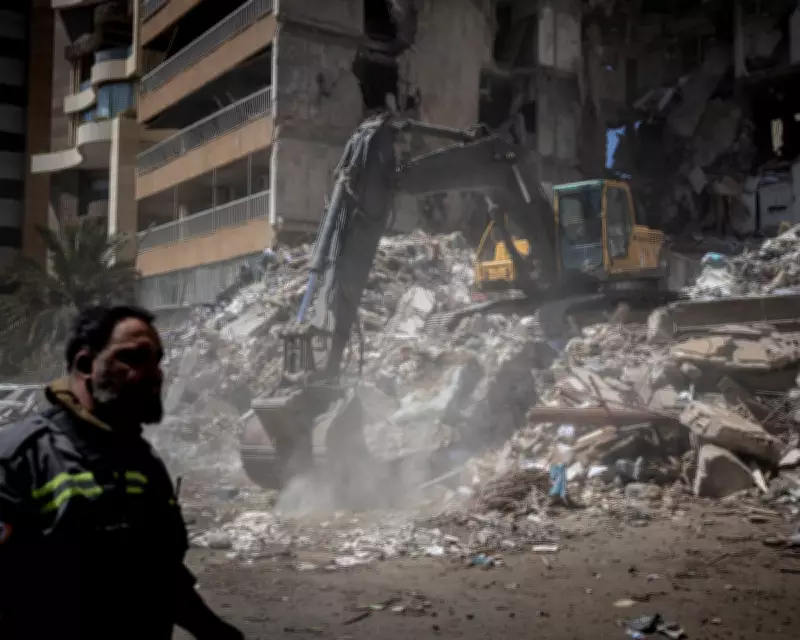
On Wednesday, Israel executed its most significant attack on Lebanon in years, deploying dozens of warplanes to bomb over 100 targets within a mere ten minutes. Dubbed "Eternal Darkness," this operation resulted in at least 300 fatalities and more than 1,100 injuries. Residential areas in Beirut were devastated, causing widespread panic and overwhelming local hospitals with casualties. Additionally, Israel destroyed key infrastructure, severing the last bridge connecting southern Lebanon to the rest of the nation.
These actions have prompted sharp criticism from Iranian officials. Foreign Minister Abbas Araghchi warned on social media that the US must choose between upholding the ceasefire or allowing continued warfare through Israel. He emphasised that the world is closely monitoring Washington's commitment to its diplomatic promises.

Historical Pattern of Sabotage Under Netanyahu's Leadership
This scenario echoes past instances where US administrations have permitted Israeli Prime Minister Benjamin Netanyahu to undermine negotiations and ceasefire agreements. By prolonging conflicts, Netanyahu has historically bolstered his political standing. Currently, former President Donald Trump risks squandering a ceasefire that serves broader US and global interests to support an unreliable ally.
Netanyahu has publicly declared that there is no ceasefire in Lebanon, even as he initiates talks on disarming Hezbollah. His government's history of obstructing peace efforts is well-documented. For over two years following the October 2023 attacks, he repeatedly sabotaged ceasefire discussions with Hamas in Gaza by introducing new conditions or altering terms at critical moments. Assassinations of Hamas leaders and airstrikes on diplomatic meetings further stalled progress.
Unwavering US Support Fuels Israeli Impunity
Despite Netanyahu's obstinance, Israel has continued to receive unconditional political backing and substantial military aid from the United States under both the Biden and Trump administrations. This support has emboldened Israel to conduct attacks across the Middle East, including in Iran, Syria, Qatar, and Yemen, without facing significant consequences. The genocidal war in Gaza, which resulted in at least 70,000 Palestinian deaths and triggered a famine, set a precedent for flouting international law.
Netanyahu's motivations extend beyond regional strategy. By expanding conflicts, such as the war with Hezbollah in Lebanon, he aims to maintain power and avoid accountability for intelligence failures linked to the October 2023 Hamas attacks. Additionally, he seeks to evade a long-delayed corruption trial from a previous term in office.
Hezbollah's Miscalculations and Escalating Conflict
Hezbollah, Iran's powerful proxy in Lebanon, initially miscalculated by launching rockets into northern Israel in solidarity with Palestinians. While the group attempted to calibrate its strikes to prevent a wider war, Netanyahu's threats and aggressive actions, including a massive bombardment in September 2024 that killed over 550 people, escalated hostilities. Israel's ground invasion and targeted assassinations significantly degraded Hezbollah's leadership and arsenal.
Although the Biden administration criticised some Israeli tactics, it largely supported the war and continued weapons shipments, implicating the US in Israel's campaigns. Pressure from Western leaders eventually led to a ceasefire in late November 2024, but Israel persisted with violations, documented by the UN as exceeding 10,000 incidents by November 2025.

Trump's Role and the Future of Ceasefire Efforts
Upon returning to office, Trump faced lobbying from Netanyahu to escalate regional conflicts, culminating in a joint US-Israeli attack on Iran in February. This quickly spilled over into Lebanon, with Hezbollah retaliating for the killing of Iran's Supreme Leader Ali Khamenei. The renewed war has displaced over 1.1 million people and seen fierce resistance from Hezbollah, challenging assumptions about its weakness.
Trump's recent statement that the Israel-Hezbollah conflict is a "separate skirmish" not covered by the ceasefire deal risks unraveling the entire agreement. His failure to restrain Netanyahu underscores the precarious nature of diplomatic efforts in the region. As negotiations between the US and Iran are set to begin in Islamabad, the stability of the ceasefire hangs in the balance, with global observers awaiting decisive action from Washington.