Israeli Military Actions Cripple Healthcare in Lebanon, Mirroring Gaza Blueprint
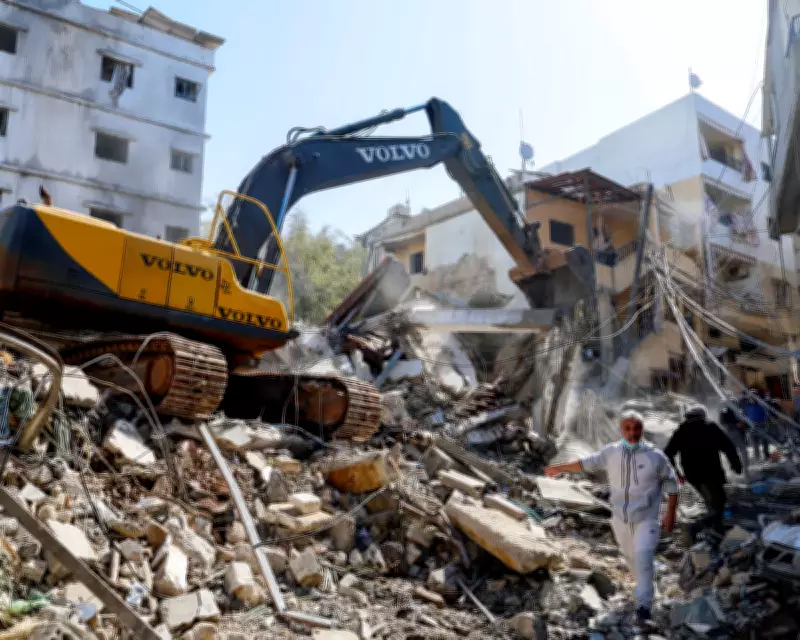
Easter weekend witnessed one of the most intense escalations in Israel's ongoing conflict with Lebanon. At approximately 2pm on Sunday, 6 April 2026, Israeli Defense Forces conducted a devastating strike on a densely populated residential area adjacent to Rafik Hariri University Hospital, Lebanon's premier public medical facility. The attack resulted in at least five fatalities and left fifty individuals wounded, marking a severe escalation in hostilities.
Systematic Targeting of Medical Infrastructure
This incident aligns with what human rights organizations and medical professionals describe as Israel's deliberate strategy to dismantle healthcare systems in conflict zones. Reports indicate that Israeli forces are systematically targeting hospitals, medical workers, and even ambulances, creating an environment where seeking medical treatment becomes perilous. The World Health Organization has documented over ninety separate attacks on healthcare facilities in Lebanon since 2 March alone, resulting in fifty-three deaths and 137 injuries.
Israeli Prime Minister Benjamin Netanyahu has explicitly stated that the recent two-week ceasefire with Iran does not extend to Lebanon, suggesting prolonged military engagement. This declaration, combined with the pattern of attacks, indicates a calculated approach to render parts of Lebanon uninhabitable through forced civilian displacement and infrastructure destruction.

Gaza Precedent Establishes Dangerous Framework
The tactics currently employed in Lebanon bear striking resemblance to Israel's operations in Gaza, where healthcare facilities became de facto battlegrounds. According to Save the Children, attacks on medical facilities occur every six hours across the Middle East and surrounding regions, normalizing the destruction of hospitals and medical equipment while deterring civilians from seeking essential care.
Medical professionals who worked in Gaza during 2023 and 2024 describe extraordinary heroism amid impossible conditions. Healthcare workers endured marathon shifts, pronounced colleagues dead in emergency rooms, and faced forced evacuations that left them scavenging for basic necessities. Despite Israeli military assurances that specific hospitals would remain "deconflicted," the war inevitably encroached upon these supposedly protected spaces.
Unverified Claims and Humanitarian Consequences
The Israeli military asserts that Hezbollah systematically exploits medical facilities for "terrorist activity," though no evidence has been provided to substantiate these claims. Medical professionals counter that even if such allegations were proven, attacking hospitals remains unequivocally criminal under international law. The fundamental principle of medical neutrality requires that doctors treat patients without consideration of political affiliations or military considerations.
The psychological impact extends beyond physical destruction. Patients now question whether healthcare systems remain safe, creating impossible dilemmas for families. The calculus shifts dangerously: is seeking treatment for a child's asthma attack worth the risk of potential Israeli bombardment?
Historical Context and Future Implications
For stateless Palestinians in Lebanon, already excluded from private hospital care, the targeting of ambulances creates additional lethal barriers to medical treatment. Their potential deaths become mere statistics in high-level briefings that rarely translate into accountability for war crimes perpetrators.
The precedent established in Gaza and now replicated in Lebanon distorts the fundamental rules of engagement for future conflicts. When even ambulances become legitimate targets, the very framework of humanitarian protection collapses. This normalization of healthcare facility attacks represents a dangerous escalation that threatens medical neutrality principles worldwide, creating a blueprint that could be replicated in future conflicts with devastating consequences for civilian populations everywhere.