Israeli forces have successfully targeted and eliminated Ali Larijani, Iran's paramount security chief, in a precision strike that represents the most significant assassination since the conflict began. The operation, confirmed by Israel's defence minister yesterday morning, removes one of the Islamic Republic's most intelligent and powerful figures from its war command structure.
A Calculated Provocation Meets a Fatal Response
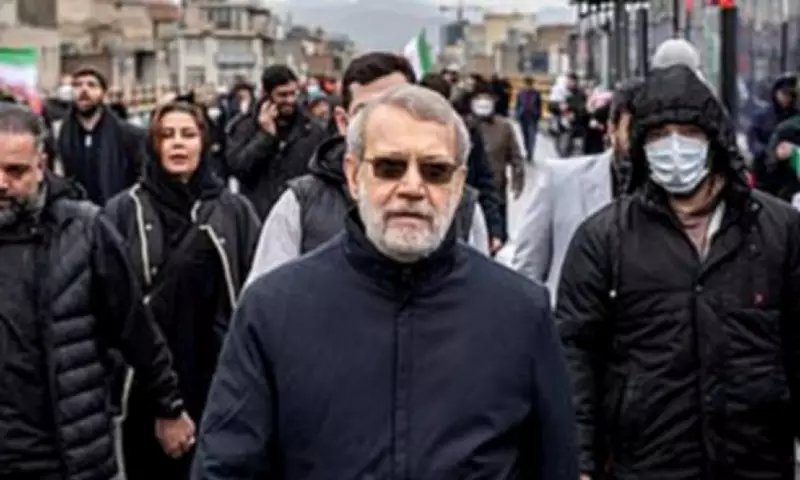
Last week, Larijani made a public appearance at Iran's Quds Day march, surrounded by civilians including numerous children. This calculated provocation gambled correctly that neither Washington nor Tel Aviv would strike him in such a crowded setting. However, his survival proved temporary, with less than a week remaining before Israel's military action ended his life at age 67.
The Architect of Iran's Security Strategy
Larijani occupied a central position within Iran's leadership hierarchy, serving as Speaker of Parliament for twelve years, former chief nuclear negotiator, and most recently as Secretary of the Supreme National Security Council. His role placed him at the heart of the regime's military strategy, intelligence coordination, and contingency planning for regime survival.
Following the death of former Supreme Leader Ayatollah Khamenei on February 28th, figures like Larijani became indispensable to maintaining the system's integrity. His loss creates a seismic void in Iran's command structure that cannot be easily filled.
A Philosophical Mind in a Military System
Larijani represented something of an anomaly within Iran's leadership circles. While many senior figures possess advanced education, few combined a background in mathematics with specialized study in Western philosophy, particularly the works of Immanuel Kant. This unique perspective informed his approach to both warfare and negotiation.
"To defeat Western ideas, you first have to understand them," was Larijani's guiding logic. His calm, methodical personality contrasted sharply with the more vocal clerics and Revolutionary Guard commanders typically featured on Iranian state media. He served as a crucial bridge between factions and a fixer when tensions threatened to unravel the system.
Strategic Implications of the Assassination
From a cold strategic standpoint, eliminating Larijani delivers a direct blow to Iran's military capability and accelerates the steady decapitation of its leadership. This conflict has already significantly degraded Iran's command structure, and Larijani's removal further thins the ranks of experienced decision-makers.
These strikes follow a deliberate logic of hollowing out the regime itself, degrading it to the point where, when hostilities eventually conclude, the system emerges weaker, fractured, and more vulnerable to internal pressures. Washington and Jerusalem hope this weakening will empower Iran's populace to challenge the system that has governed them for nearly five decades.
Psychological Warfare and Internal Fractures
The assassination carries profound psychological consequences. When someone as senior as Larijani can be successfully targeted, the message becomes clear: no one is untouchable. This realization forces leadership inward, amplifying existing paranoia and diverting energy from projecting power to ensuring personal survival.
Without Larijani's mediating influence, rival factions become more likely to pull in opposing directions, weakening cohesion and making governance increasingly difficult. For adversaries, such internal friction represents invaluable strategic advantage.
The Succession Question and Escalation Risks
The most probable candidate to assume Larijani's security responsibilities is Mohammad-Bagher Ghalibaf, a former Revolutionary Guard commander and police chief who represents more of an enforcer than a philosopher. His likely ascension suggests the regime will double down on anti-American defiance, at least in the short term.
This creates a dangerous paradox: leadership decapitation simultaneously slows decision-making while increasing impulsivity. Retaliation becomes more probable, escalation harder to control, and volatility more pronounced. In a region already on edge, such volatility could either collapse the system or spark a wider, more dangerous conflict.
The brutal trade-off remains clear: weakening Iran's system in the immediate term also makes it more unpredictable and potentially explosive. As rescuers continue searching through rubble in central Tehran, the strategic landscape has shifted fundamentally, with implications that will reverberate throughout the region for months to come.