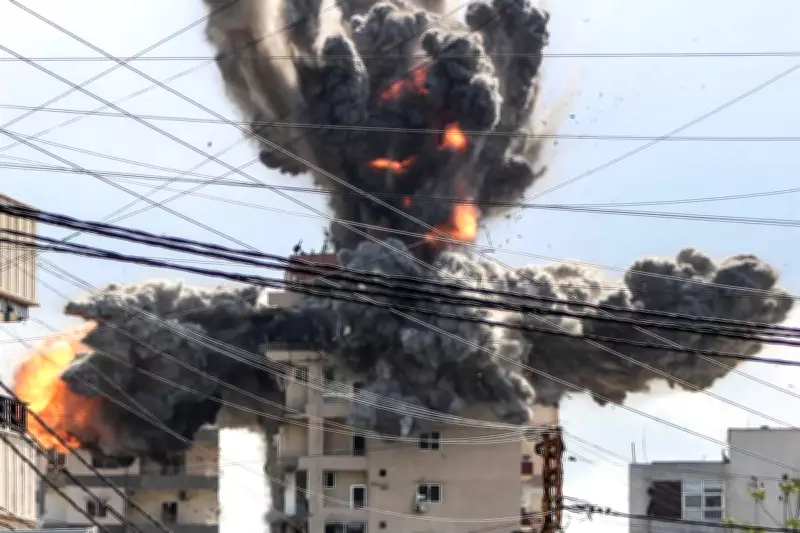
Israeli Prime Minister Benjamin Netanyahu has announced that Israel aims to initiate peace talks with Lebanon "as soon as possible," a move that emerges in the wake of a series of deadly attacks which have jeopardised the fragile ceasefire established during the Iran war.
Focus on Disarming Hezbollah and Building Peaceful Relations
Netanyahu emphasised that the forthcoming negotiations will concentrate on two primary objectives: the disarmament of the Iran-aligned militant group Hezbollah and the establishment of peaceful, stable relations between Israel and Lebanon. This announcement represents a significant diplomatic overture amidst escalating regional tensions.
Recent Escalation and International Condemnation
The decision follows a severe escalation in hostilities, with Israeli strikes on Lebanon reportedly resulting in over 250 fatalities and more than 1,000 injuries within the last 24 hours. These attacks have drawn sharp international criticism.

Iranian President Masoud Pezeshkian condemned the Israeli actions, labelling them a "flagrant violation" of the Iran war ceasefire. Similarly, UK Foreign Secretary Yvette Cooper described the recent escalation as "deeply damaging," urging restraint from all parties involved.
Dispute Over Ceasefire Terms
A contentious point remains the interpretation of the recent 14-day truce. Tehran and Pakistan assert that the ceasefire agreement explicitly included Lebanon, whereas Israel and the United States maintain that it did not. This discrepancy underscores the complex and often conflicting narratives that define the region's diplomatic landscape.
The proposed peace talks, therefore, arrive at a critical juncture, offering a potential pathway to de-escalation but facing substantial hurdles, including the deep-seated issue of Hezbollah's military presence and the broader geopolitical rivalries involving Iran and its allies.