Iranian Regime Expected to Withstand Military Onslaught, US Intelligence Concludes
According to recent assessments from United States intelligence agencies, the Iranian regime is likely to maintain its grip on power despite enduring more than two weeks of sustained attacks from American and Israeli forces. This analysis comes as the conflict enters its third devastating week, with a grim death toll surpassing 2,000 individuals and widespread destruction inflicted upon Iran's military infrastructure and naval capabilities.
Intelligence Reports Contradict Public War Aims
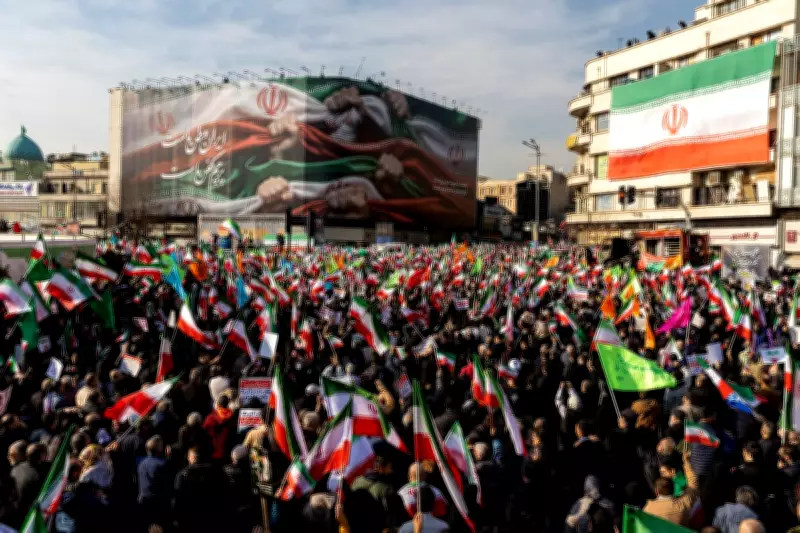
A source with close ties to US intelligence, speaking to The Washington Post, revealed that a multitude of classified reports provide a consistent evaluation: the regime in Tehran is not currently in imminent danger of collapse. These assessments suggest that, despite the loss of dozens of senior military and intelligence figures—including the Supreme Leader Ayatollah Ali Khamenei—the Iranian leadership retains firm control over the domestic population. Officials caution, however, that the situation remains highly fluid and internal dynamics within Iran could shift unexpectedly.
This intelligence stands in stark contrast to the public declarations made by former US President Donald Trump and Israeli Prime Minister Benjamin Netanyahu, who have both vowed to continue missile bombardments until regime change is achieved. The private briefings indicate a significant gap between these public pronouncements and the administration's stated operational objectives.
Senator Reveals Limited War Goals
Connecticut Senator Chris Murphy, following a confidential two-hour briefing on White House strategy, disclosed that the administration's war aims do not include the destruction of Iran's nuclear weapons program or the forced overthrow of its government. In a detailed thread on social media platform X, Murphy expressed surprise at this revelation, noting that Trump frequently cites neutralizing Iran's nuclear ambitions as a primary objective.
"The war goals DO NOT involve destroying Iran's nuclear weapons program," Murphy wrote, adding that this was particularly unexpected given the president's repeated public emphasis on the issue. He further clarified that the administration has explicitly confirmed that regime change is also absent from its official list of military objectives.
Strategy Driven by 'Wishful Thinking,' Analyst Argues
Trita Parsi, co-founder of the Quincy Institute for Responsible Statecraft, argues that the White House is effectively pursuing a policy of "regime implosion." He characterizes this approach as being propelled by the president's "wishful thinking"—the belief that sustained military pressure will create a power vacuum that the Iranian public will spontaneously fill. Parsi notes that this mission aligns with Israel's long-standing strategic desire to remove Iran as a major regional player but contends the Trump administration has failed to articulate a coherent or legitimate rationale for such an ambitious and dangerous undertaking.
Regional Fallout and Gulf Allies Bear the Brunt
The conflict has dramatically escalated tensions across the Persian Gulf, dragging neighboring states into the line of fire. Attacks have forced the temporary closure of regional airspace, and a drone strike hit a critical oil facility in Fujairah, a key port for United Arab Emirates oil exports, for two consecutive days. A senior Arab official from the Gulf region voiced frustration to The Telegraph, stating, "They started this war for Israel and then left us to face the attacks by ourselves."
President Trump expressed surprise at Iran's retaliatory strikes against Gulf Cooperation Council nations, including Qatar, Saudi Arabia, the UAE, Bahrain, and Kuwait. "Nobody expected that. We were shocked. ... They fought back," he remarked on Monday. However, according to a US official and two sources familiar with intelligence reports, the administration had been explicitly warned that an attack on Iran could trigger precisely such retaliatory actions against American allies in the region.
The ongoing conflict presents a complex and volatile scenario, with intelligence assessments suggesting regime stability in Tehran even as military operations and regional destabilization continue unabated.