Iranian Security Forces Open Fire on Tehran Apartments Amid Anti-Regime Protests
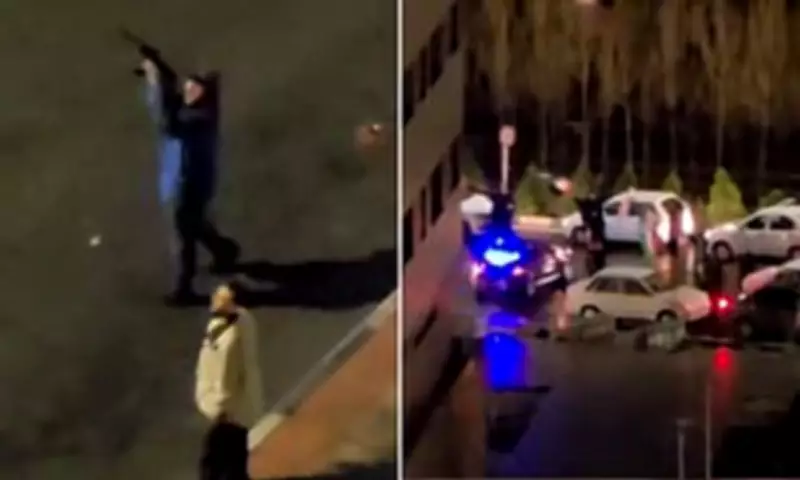
In a disturbing escalation of domestic tensions, Iranian security forces have opened fire on apartment buildings in Tehran after residents were heard chanting anti-regime slogans. Footage shared by the citizen journalism news site Iran Wire reportedly shows residents of the capital's Chitgar neighbourhood chanting 'down with the IRGC' – referring to Iran's powerful security apparatus, the Islamic Revolutionary Guard Corps.
Masked Officers Target Residential Windows
The video evidence appears to show two masked officers pointing guns directly at windows as they fired into the homes of suspected dissidents. This aggressive response came after residents had been chanting anti-regime slogans in response to a pro-government march occurring simultaneously in the area. Additional video shows supporters of the Islamic Republic waving flags as they paraded down the street in what appears to be a coordinated display of regime loyalty.
While the exact timing of the incident remains unclear, it is believed to have occurred in recent days as Iranians report a significant surge in security measures, nighttime patrols, and pro-government rallies. According to London-based broadcaster Iran International, these intensified measures are creating an atmosphere of intimidation amid the ongoing regional conflict.

Atmosphere of Intimidation and Control
Accounts shared with Persian-language news outlets describe the heightened security as a deliberate attempt to control the population. Masked security forces have been seen carrying heavy weapons including machine guns to instil fear, while several checkpoints have been installed across Iranian towns and cities. At these checkpoints, security forces routinely point weapons toward passing vehicles in a show of force.
Iranians have also reported an increase in nightly pro-government gatherings involving convoys of large vehicles, loudspeakers blaring propaganda, and armed escorts. Across multiple locations, supporters of the Iranian regime have been heard chanting 'Death to America' and 'Death to Israel' as the regional war reaches the one-month mark.
Iran Rejects American Ceasefire Proposal
This domestic crackdown coincides with Iran's outright rejection of an American plan to pause the ongoing Middle East conflict. On Wednesday, Iran dismissed the proposal and launched additional attacks on Israel and Gulf Arab states. Iranian Foreign Minister Abbas Araghchi stated unequivocally in an interview on state television that his government has not engaged in talks to end the war and does not plan any negotiations.
This position was reinforced by Iranian state television's English-language broadcaster, which quoted an anonymous official saying Iran rejected America's ceasefire proposal and has its own demands to end the fighting.
Details of the Rejected American Plan
According to officials from Pakistan who transmitted the U.S. plan to Iran, the 15-point proposal addressed several key issues:
- Sanctions relief for Iran
- A rollback of Iran's nuclear program
- Limits on Iran's missile capabilities
- The reopening of the strategically vital Strait of Hormuz
An Egyptian official involved in mediation efforts added that the proposal also included restrictions on Iran's support for armed groups throughout the region. The officials spoke on condition of anonymity to discuss details not yet publicly released.
Strategic Stalemate and Economic Pressure
Iran has consistently maintained that it will not discuss its ballistic missile program or its support for regional militias, which it views as essential to national security. Meanwhile, Iran's ability to control passage through the Strait of Hormuz – through which approximately twenty percent of the world's oil is shipped – represents one of its most significant strategic advantages.
Industry experts note that Iran is implementing what they describe as a 'de facto toll booth regime' at the strait, with some ships reportedly paying in Chinese yuan for safe passage. Iran's attacks on regional energy infrastructure, combined with restrictions on the vital waterway, have sent global oil prices skyrocketing, increasing pressure on the United States to find a diplomatic solution.

Regional Escalation and Military Buildup
The situation remains volatile across the region. On Thursday, sirens sounded across Israel warning of incoming Iranian missile barrages. In the United Arab Emirates, two people were reported killed and three wounded by falling shrapnel from a missile interception over Abu Dhabi.
Meanwhile, military forces continue to mobilize. A strike group anchored by the amphibious assault ship USS Tripoli has drawn closer to the Middle East with approximately 2,500 Marines aboard. Additionally, at least 1,000 paratroopers from the 82nd Airborne Division have been ordered to the region, signaling potential preparation for expanded military engagement.
As the conflict enters its second month, the combination of domestic repression in Iran and regional military escalation creates a dangerous and unpredictable situation with global implications for energy markets and international security.