Iran Issues Stark Warning Over Israeli Strikes on Lebanon
Iran's Revolutionary Guards have issued a severe warning, threatening a "regret-inducing response" if Israeli attacks on Lebanon do not cease immediately. The statement, reported by state broadcaster Islamic Republic of Iran Broadcasting, underscores the escalating tensions in the region, with the Islamic Revolutionary Guard Corps (IRGC) declaring that "any attack on the proud Hezbollah is an attack on Iran."
Devastating Impact of Israeli Airstrikes
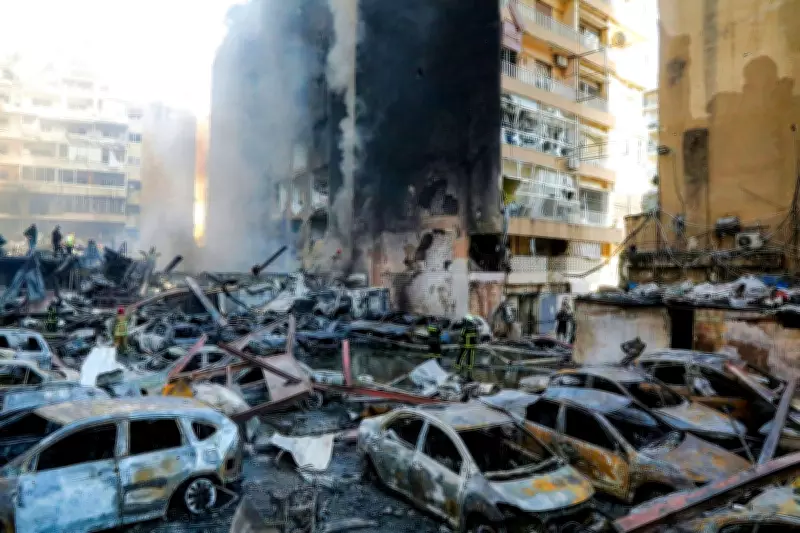
According to Lebanon's Civil Defence, the recent Israeli bombardment has resulted in significant casualties, with hundreds reported killed and injured. Plumes of black smoke engulfed the skies of Beirut as residents sifted through rubble following what the Israeli military described as its "largest strike" on Lebanon since the conflict began. Despite a two-week ceasefire agreement, disputes persist, as the US and Israel contest its application to Lebanon, while Iran and mediator Pakistan assert it should include the country.
Shipping Chaos in the Strait of Hormuz
Independent analysts report that shipping through the critical Strait of Hormuz has not recovered despite the ceasefire. Maritime intelligence firm Windward noted that only 11 vessels transited the strait on 5 April, a figure unchanged from recent days and far below normal levels. Traffic has shifted into a more controlled system, with vessels using two routes: a northern corridor under Iranian oversight and a southern pathway along the Omani coast.

- Access remains restricted, with many ships operating without tracking signals, creating "dark" movements that limit visibility.
- Security risks persist, including recent attacks on vessels, contributing to the volatile environment.
Isaac Levi, a senior analyst at the Centre for Research on Energy and Clean Air, stated, "The situation remains highly volatile, and despite the ceasefire, shipowners are unlikely to rush back into the Gulf to load fossil fuels." Andres Cala, a geopolitical analyst at Montel, added that any recovery hinges on the ceasefire holding, a prospect he described as uncertain.
Hezbollah Retaliates and NATO Tensions Rise
In response to the bombardment, Hezbollah claimed attacks on northern Israel, vowing to continue until aggression ceases. Meanwhile, NATO chief Mark Rutte faces scrutiny from European countries over his support for US President Donald Trump, who has expressed disappointment with allies refusing to join the war effort. Reports suggest the White House is considering relocating US troops from NATO countries deemed unhelpful, further straining international relations.
Casualty Reports and Ongoing Conflict
Initial reports indicate no casualties in Iran in the first 24 hours post-ceasefire, a significant decrease from previous days. However, the overall toll remains high, with Lebanese officials confirming over 250 killed and more than 1,100 injured in the strikes. As the situation develops, the region braces for potential escalation, with Iran's warnings signaling a precarious path ahead.