Iran War Enters Seventh Day as First Government Flight Brings Britons Home
The escalating conflict between the United States, Israel, and Iran has now entered its seventh consecutive day, marking a critical juncture in the regional crisis. In a significant development, the first government-chartered aircraft evacuating British nationals from the volatile Middle East region successfully touched down in the United Kingdom early on Friday morning.
Evacuation Efforts and Passenger Accounts
The Titan Airways flight, which departed from Muscat, the capital city of Oman, at 1.36pm GMT on Thursday, arrived at London Stansted Airport just before 1am on Friday, landing approximately fifteen minutes ahead of its scheduled time. This operation forms part of a broader evacuation initiative as hostilities intensify.
Official figures reveal that more than 140,000 British citizens have registered their presence in the Middle East with the Foreign Office since the conflict erupted. To date, around 4,000 individuals have managed to return home, with further repatriation flights anticipated in the coming days.

Among those evacuated were Amelia Reid and Samuel Sharp, who had travelled to Dubai for a long weekend, arriving last Friday. By Saturday evening, they found themselves seeking shelter in their hotel's basement car park alongside approximately one hundred other people after emergency alarms sounded on their mobile devices.
"We ended up sleeping in a car park in the basement of the hotel," Mr Sharp recounted. "We didn't get told if it was safe to go up or not. We just went up for breakfast and I think we heard a massive bang after that. It's just been on edge, on edge for four days."
Ms Reid, who had been travelling in a wheelchair, described their arduous journey to safety: "We left Dubai yesterday lunchtime, went straight to the Oman border, and went on a coach all the way to Muscat airport in the hope we'd get on the Government plane."
Military Escalation and Diplomatic Tensions
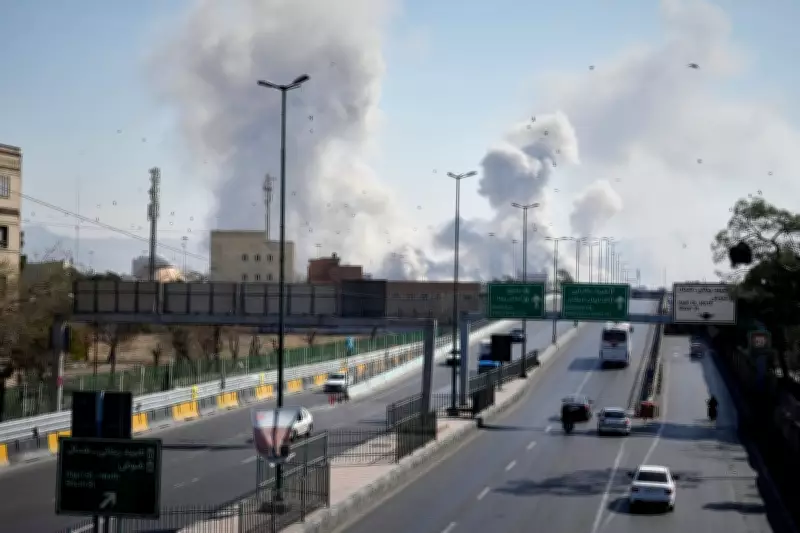
Meanwhile, military operations have continued unabated. The United States and Israel have sustained nationwide strikes against Iranian targets, while Iran has maintained retaliatory attacks on Israel, American bases, and various locations across the region. The human cost is mounting, with reports indicating at least 1,230 fatalities in Iran, over 100 in Lebanon, around a dozen in Israel, and six US troops killed.
Prime Minister Sir Keir Starmer has emphasised that the special relationship between the UK and US remains "in operation right now," highlighting intelligence-sharing on a "24/7 basis" throughout the conflict. On Thursday, he announced the deployment of an additional four British Typhoon fighter jets to Qatar to bolster defensive operations in the region.
However, diplomatic friction has emerged. Former US President Donald Trump has repeatedly criticised Britain's response as "very disappointing," asserting that the UK should permit America to use its military bases "without question or hesitation." In a personal rebuke directed at Sir Keir, Mr Trump remarked, "This is not Winston Churchill that we're dealing with."
Sir Keir has sought to limit British involvement in the conflict but authorised the use of the joint UK-US Diego Garcia site in the Chagos Islands and RAF Fairford in Gloucestershire for "defensive" American strikes aimed at protecting nations targeted by Tehran. This decision followed a conversation between the two leaders on Saturday evening.
Regional Developments and Defence Readiness
In other significant developments, Iran warned that the United States would "come to regret" sinking an Iranian warship in the Indian Ocean on Wednesday. Azerbaijan has accused Iran of conducting drone attacks, though Tehran has denied these allegations. Israel has issued a mass evacuation warning for all of Beirut's southern suburbs as fighting escalates with Lebanon's Iran-allied Hezbollah militants.
On the commercial front, Etihad Airways announced late on Thursday that it would resume a "limited commercial flight schedule" on Friday, including services to Heathrow Airport, offering a glimmer of normalcy amidst the turmoil.

Defence Secretary John Healey, during a visit to Cyprus, declined to rule out the possibility of UK aircraft participating in strikes against Iran. "As circumstances in any conflict change, you've got to be willing to adapt the action you take," he told Sky News. Mr Healey also confirmed that HMS Dragon, a Type 45 warship, would arrive in Cyprus "within the next couple of weeks" to address concerns over drone attacks on the island.
Preparations for deployment have faced challenges. Trade union Prospect highlighted that a renegotiated Ministry of Defence contract for staff at Portsmouth Naval Base, where HMS Dragon is being readied, may be contributing to delays. The union criticised the contract for being based on the "fantasy that conflict only occurs between nine and five," noting that members are volunteering overtime to prepare the warship.
In a controversial statement, Mr Trump suggested he should be involved in selecting Iran's next supreme leader, dismissing potential successor Mojtaba Khamenei as a "lightweight" and drawing parallels to his actions in Venezuela. The Iranian regime has yet to announce a new supreme leader following the assassination of Ali Khamenei.