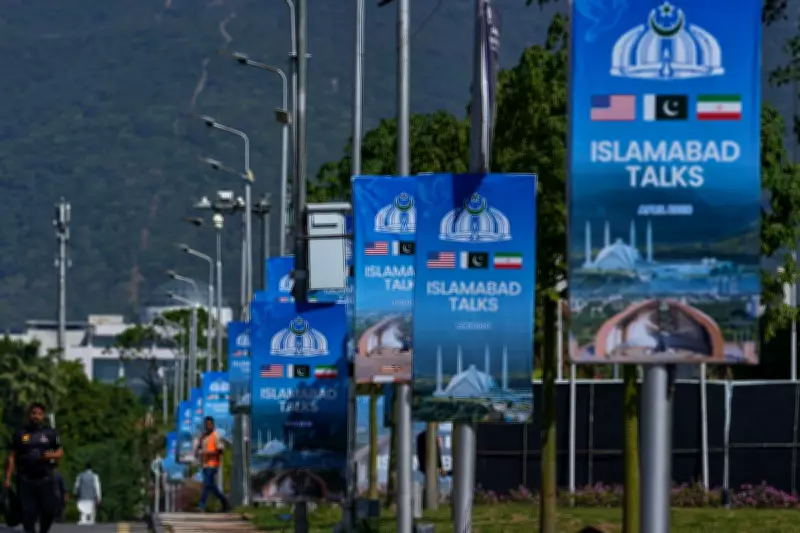
Iran War Ceasefire Nears Expiry as Islamabad Prepares for Crucial Talks
The delicate ceasefire in the ongoing Iran conflict hangs precariously in the balance, with Pakistan's capital city of Islamabad standing prepared to potentially host new high-stakes negotiations between Tehran and Washington. As of Monday 20 April 2026, the two-week truce is scheduled to expire at 0000 GMT on Wednesday (8 p.m. ET Tuesday), creating a tense countdown situation where further delays or sudden diplomatic shifts appear increasingly likely.
The Unstable Truce and Approaching Deadline
This ceasefire, which began on April 8, has broadly held despite some concerning incidents including Iranian attacks targeting Gulf Arab states and Israel after its implementation. Another mysterious attack struck an Iranian oil refinery on an island that same afternoon. The truce between Iran, Israel, and the United States originated following multiple ultimatums from U.S. President Donald Trump that at one point threatened Iran's very "civilization."
Without any formal extension agreed upon by the involved parties—either through overt public messaging or by allowing the deadline to pass without immediately resuming hostilities—the ceasefire will automatically expire on April 22. Significant risks persist, particularly if no diplomatic agreement emerges in the interim period before the deadline.

Potential Islamabad Negotiations Remain Uncertain
An earlier round of negotiations between Iran and the United States took place in Pakistan from April 11 into the early morning of the following day. These talks marked the highest-level diplomatic engagement between America and Iran since the 1979 Islamic Revolution, with U.S. Vice President JD Vance participating. Despite this historic meeting, the discussions concluded without reaching any substantive agreement.
Since this past weekend, authorities in Islamabad have initiated preparations similar to those that accompanied the first round of talks, strongly suggesting another diplomatic session might be imminent. However, as of now, neither Iran nor the United States has officially dispatched a delegation to Pakistan, leaving the possibility of renewed negotiations hanging in uncertainty.
Critical Issues at Stake in Potential Talks
Serious challenges await any discussions that might occur in Islamabad ahead of the ceasefire's expiration. The future of the strategically vital Strait of Hormuz, Iran's controversial nuclear program, and several other contentious issues would likely dominate the agenda. The situation remains particularly volatile, as evidenced by recent military actions in the region.
Over the weekend, Iran targeted ships navigating the Strait of Hormuz, while the United States attacked and boarded an Iranian vessel that attempted to evade the American naval blockade in the same waterway. These incidents signal that a resumption of full-scale hostilities remains a distinct possibility despite the ongoing ceasefire.
The Strait of Hormuz: A Critical Flashpoint
The Strait of Hormuz—the narrow maritime passage through which approximately 20% of the world's natural gas and oil transits—remains effectively closed due to Iranian attacks in the waterway, including some that occurred on Saturday. There are growing concerns that Iran may have mined portions of the strait typically used by commercial vessels during peacetime operations.
Since the conflict began, Iran has reportedly been charging as much as $2 million per vessel for safe passage through these contested waters. Reopening the strait represents a central focus of any potential negotiations and serves as Tehran's strongest leverage against Washington, especially as nations worldwide have begun rationing energy resources and warning of potential jet fuel shortages.
This weekend, the U.S. Navy demonstrated its determination by attacking an Iranian container ship that attempted to breach the American blockade of the strait, with Marines rappelling onto the vessel from helicopters in a dramatic show of force.

Iran's Nuclear Stockpile Remains Within Borders
All of Iran's highly enriched uranium remains within the country's territory, likely secured at enrichment facilities that were bombed by the United States during a 12-day conflict last June. While Iran has not engaged in uranium enrichment activities since that time, the nation maintains its right to pursue nuclear technology for peaceful purposes and continues to deny any intention to develop nuclear weapons.
President Trump, along with Israel, has demanded that Iran completely dismantle its nuclear program and surrender its existing stockpile of enriched materials. Tehran has firmly rejected this position in its 10-point proposal for ending the war, creating a fundamental impasse that any future negotiations would need to address.