Iran's Controversial Call for Youth Human Shields Amid Trump's Strike Threats
In a move that has drawn international condemnation, Iranian authorities have issued a direct appeal to the nation's children and young people to form human chains around critical infrastructure. This controversial directive comes as former US President Donald Trump threatens devastating military strikes against civilian targets in Iran, with action anticipated overnight.
Defying International Humanitarian Law
Officials from Tehran have specifically called upon "all young people, athletes, artists, students and university students and their professors" to gather at power plants and other vital national assets. Alireza Rahimi, identified as secretary of the Supreme Council of Youth and Adolescents, stated that these facilities "belong to the future of Iran and to the Iranian youth" regardless of political viewpoints.
This directive represents a clear violation of the Geneva Conventions, which explicitly prohibit the coercion or direction of civilians to serve as human shields. International humanitarian law maintains that even when civilians are present, infrastructure considered lawful military targets may still be attacked, though such actions must demonstrate proportionality and precaution.

Trump's Escalating Rhetoric and Threats
Donald Trump has intensified his warnings against Iran, threatening to "demolish" civilian infrastructure and advising citizens to avoid train travel ahead of anticipated military action scheduled for 1am BST. In characteristically dramatic language, Trump posted on Truth Social that "a whole civilization will die tonight, never to be brought back again" while simultaneously calling for revolutionary change in Iran.
The former president displayed indifference to accusations of potential war crimes, stating he was "not at all" concerned about such violations. UN Secretary-General António Guterres has explicitly warned that attacks on civilian infrastructure contravene international law, according to his spokesperson.
Iran's History of Child Military Involvement
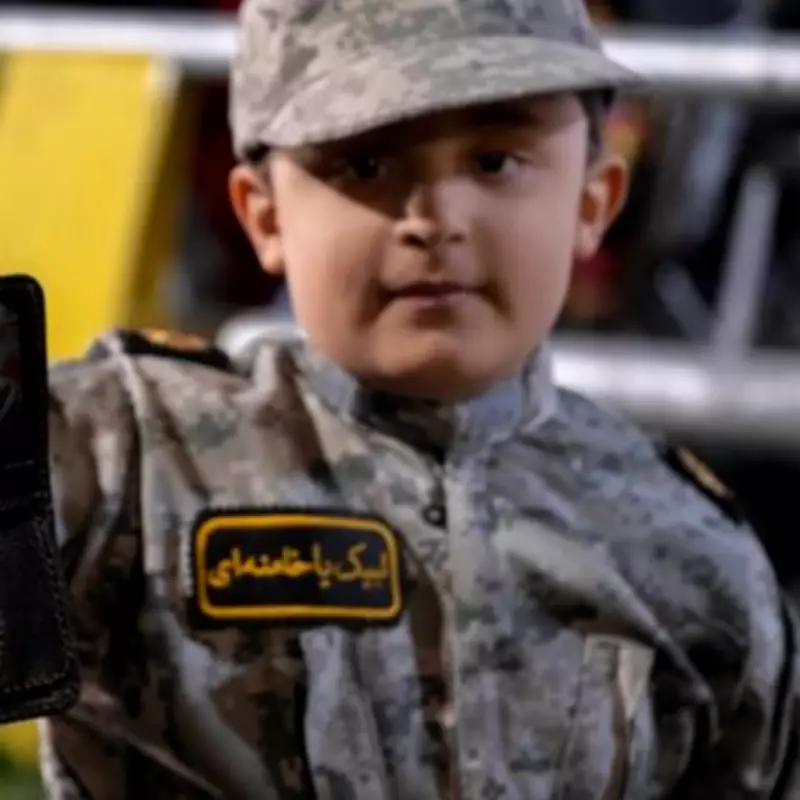
This latest development follows a pattern of Iranian authorities involving children in military activities. Photographic evidence has emerged showing young boys wearing Islamic Revolutionary Guard Corps (IRGC) fatigues during pro-government rallies. On March 26, Rahim Nadali, a deputy of the IRGC Mohammad Rasoul Allah Corps, announced the "Homeland-Defending Combatants for Iran" campaign, openly recruiting volunteers as young as 12 through Basij bases in Tehran mosques.
Amnesty International has documented these children armed with assault rifles at IRGC checkpoints and patrols. Erika Guevara-Rosas, Senior Director for Research, Advocacy, Policy and Campaigns at Amnesty, condemned these practices, stating that authorities are "shamelessly encouraging children as young as 12 to join an IRGC run military campaign, putting them in grave danger and violating international law." She emphasized that recruiting children under 15 constitutes a war crime under international statutes.
Escalating Regional Conflict and Casualties
The conflict has already resulted in significant loss of life, with more than 1,900 fatalities reported in Iran since hostilities began, though the government has not updated this toll for several days. An additional 1,400 people have been killed in Lebanon, highlighting the regional escalation of violence.
Iran has previously organized human chains around nuclear facilities during periods of heightened tension with Western powers. However, legal experts argue that the current directive to use children as protective barriers around infrastructure represents a particularly egregious violation of international norms, placing vulnerable populations directly in harm's way as geopolitical tensions reach dangerous new heights.