
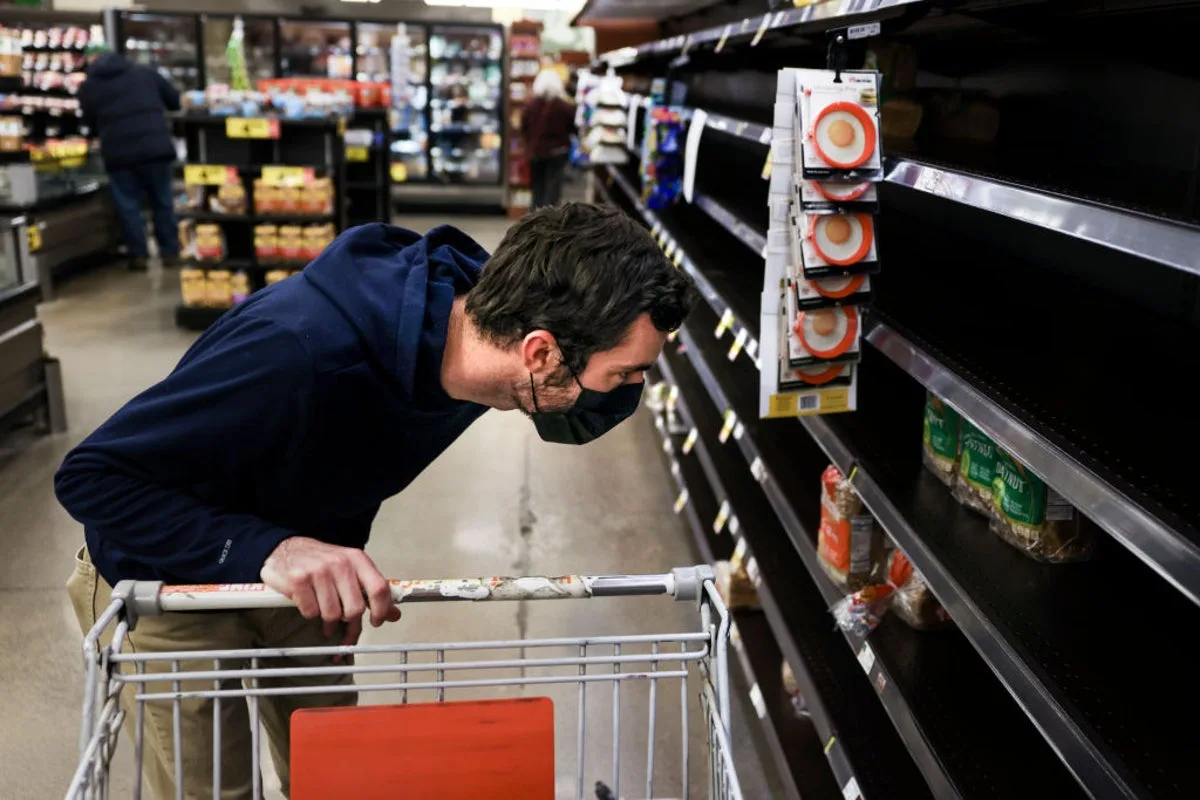
Middle-class Americans are 'squeezing more life out of every dollar' as the affordability crisis deepens, according to a new Federal Reserve report. The Fed's latest 'Beige Book' warns that credit card use has increased, retail visits have declined, and spending is now focused on necessities.
The report highlights a K-shaped economy, where low-income households face greater financial strain while wealthier families remain resilient. The Fed notes that middle-class consumers are struggling with day-to-day costs, while higher earners feel less pain from price increases.
Behind the crisis is the conflict in the Middle East, which the report says is driving up energy costs and spilling over into shipping, packaging, groceries, and fertiliser. Most regions reported prices rising at a 'moderate to strong pace overall'.
Increased credit card use may reflect cash flow troubles, with 73% of credit card debt—around $883 billion—spent on everyday expenses or emergencies, according to a January study. However, total credit card debt fell from $1.28 trillion to $1.25 trillion between January and April, possibly due to tax refunds being used to pay down debt.
The Fed's observations come from data collected by its 12 regional banks, painting a picture of a nation where the middle class is under pressure, and the economic recovery is unevenly distributed.




