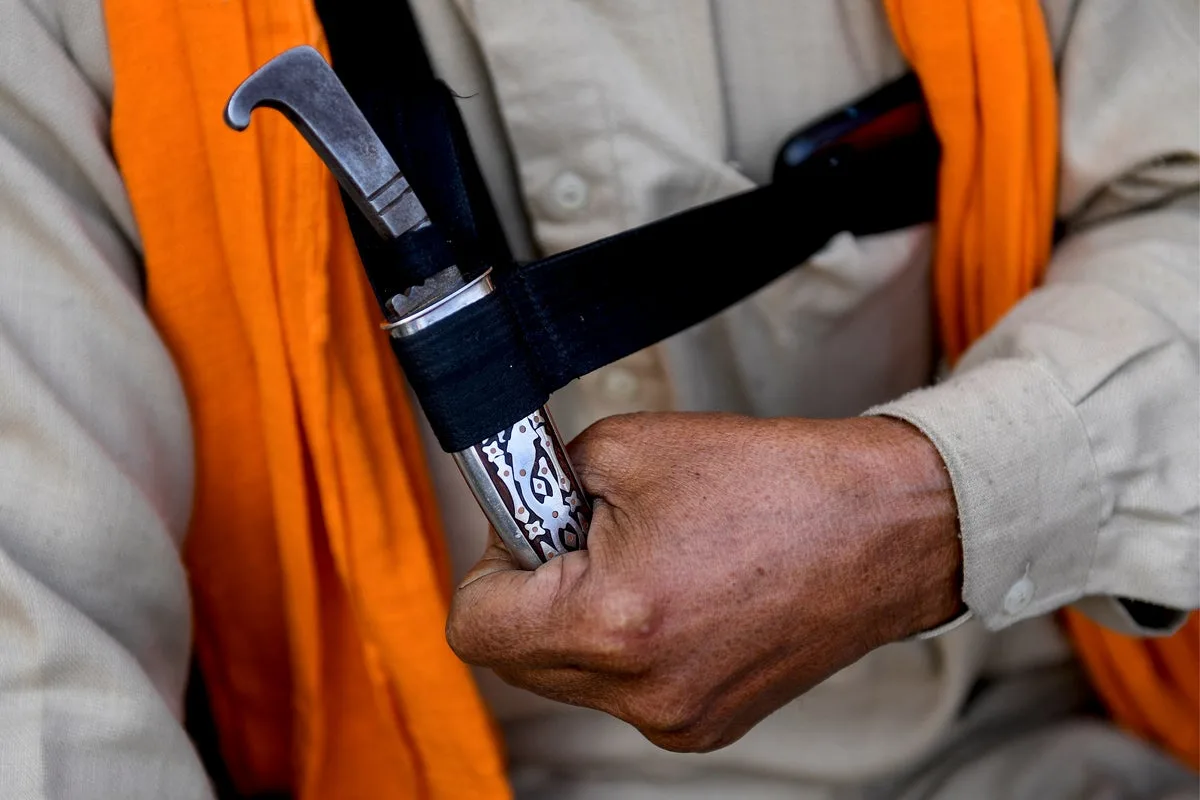
The conviction of Vickrum Digwa for the murder of 18-year-old Henry Nowak has prompted renewed discussion about kirpans, the ceremonial blades carried by some Sikhs as an article of faith. The prosecution told the jury at Southampton Crown Court that while Digwa was wearing a small kirpan under his clothing around his neck, which met his religious obligation, he also chose to carry a much larger knife.
What Is a Kirpan?
A kirpan is a ceremonial sword or dagger that is one of the five articles of faith for practising Sikhs, known as the five Ks because they all begin with the letter K in Punjabi. The other four are kesh (keeping uncut hair, maintained in a turban), kara (a round steel bracelet), kanga (a small wooden comb), and kachera (cotton shorts). The word kirpan comes from two words: kirpa, meaning grace, and aan, meaning defence. Kirpans are typically worn close to the body and are often small with a curved blade. Sikh organisations describe the kirpan as an article of faith that symbolises dignity and a duty to stand against injustice and protect the vulnerable.
What Does the Law Say?
Under UK law, a person can possess a kirpan for religious, ceremonial, sporting, or historical reasons. However, like any bladed article, a kirpan can become an offensive weapon if it is used unlawfully. The government states that it is up to a court to decide whether a person has a good reason to carry a knife or weapon if they are charged with carrying it illegally.
What Happened in This Case?
The Crown Prosecution Service said Digwa carried two ceremonial blades, describing both as kirpans, and noted that the judge, who described the weapon Digwa was carrying as a “large Sikh dagger,” accepted that assessment. However, leaders of the Sikh community, who have unanimously condemned the murder, stated that the blade used by Digwa was not a kirpan. Meanwhile, the Sikh Press Association said plans were under way to ensure every initiated Sikh in the UK would be addressed directly regarding kirpan rules and responsibilities.
Are There Calls for It to Be Banned?
The police and crime commissioner for Hampshire is leading calls for a review of religious exemptions on the carrying of knives after the murder. Donna Jones described the stabbing of the university student as a “national tragedy” and said she was writing to the Prime Minister, Keir Starmer, about the issue. Reform UK has also said the kirpan should be banned.
What Has Been the Response by Political Leaders?
Reform UK leader Nigel Farage has been widely condemned for calling for “pure cold rage” over the case. “An accusation of a racial slur was treated more seriously than an act of murder,” Farage said. Home Secretary Shabana Mahmood has warned of a “dangerous undercurrent” after the murder. Speaking in the Commons, Mahmood said one officer had already been misidentified and had to move out of his home to protect himself and his family after receiving death threats.
What Has Been the Response from the British Sikh Community?
Sikh organisations have strongly condemned the killing. In a joint statement, Sikh groups said: “This isn’t representative of the Sikh community. This was one man.” They warned that the wider Sikh community had faced abuse in the aftermath. Community leaders in the UK have stated that Digwa’s actions should not be taken as representative of Sikh beliefs or practices. The murder comes amid longstanding anxieties within the Sikh community across the country. According to the British Sikh Report 2025 released in January, 49% of surveyed Sikhs said they were worried about rising anti-Sikh sentiment, while 50% were concerned that misinformation on social media could cause hostility towards Sikhs.






