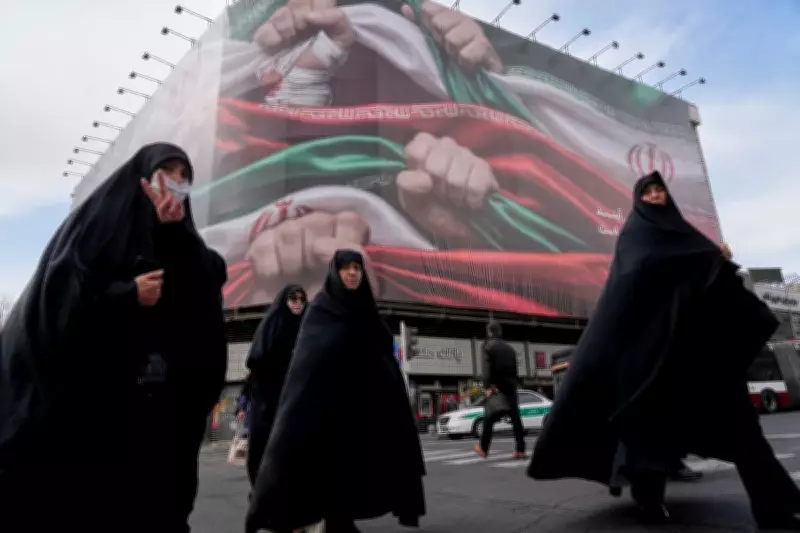
Iran has taken the significant diplomatic step of summoning all European Union ambassadors stationed within the Islamic Republic. This action represents a formal protest against the EU's recent decision to list the country's paramilitary Revolutionary Guard as a terrorist organisation.
Diplomatic Tensions Escalate Over Terror Designation
The European Union formally designated the Revolutionary Guard as a terrorist entity last week. This decision was primarily motivated by the Guard's instrumental role in the violent suppression of nationwide protests that erupted across Iran in January. The move, while largely symbolic in nature, contributes to the mounting economic pressures confronting the Iranian state, particularly given the Guard's substantial influence over the national economy.
International Context and Military Posturing
Other nations, including the United States and Canada, had previously classified the Revolutionary Guard as a terrorist organisation. Concurrently, Iran faces the looming threat of potential U.S. military action. This threat has been amplified in response to the killing of peaceful demonstrators and concerns over possible mass executions. In a show of force, the American military has deployed the USS Abraham Lincoln aircraft carrier, accompanied by several guided-missile destroyers, to the Middle Eastern region. It remains uncertain whether President Donald Trump will authorise the use of military force.

Official Confirmation and Historical Background
Iranian Foreign Ministry spokesman Esmail Baghaei confirmed to journalists that the diplomatic summons occurred on Sunday. The Revolutionary Guard itself has a deep-rooted history within the modern Iranian state. It originated from the 1979 Islamic Revolution, established as a force dedicated to protecting the government overseen by Shiite clerics, and its role was later constitutionally enshrined.
Operating alongside Iran's regular armed forces, the Guard's prominence and power expanded significantly during the protracted and devastating war with Iraq throughout the 1980s. Following the conflict, despite facing potential dissolution, Supreme Leader Ayatollah Ali Khamenei empowered the Guard to diversify into private enterprise, a move that secured its continued growth and prosperity.
The Guard's Role in Recent Unrest
The Guard's Basij force is widely believed to have been central to quelling the recent demonstrations. The crackdown intensified from January 8th, coinciding with authorities severing internet access and international telephone communications for Iran's population of 85 million. Disturbing footage emerging from Iran, transmitted via Starlink satellite dishes and other methods, appears to show individuals likely affiliated with these forces engaging in the shooting and beating of protesters.