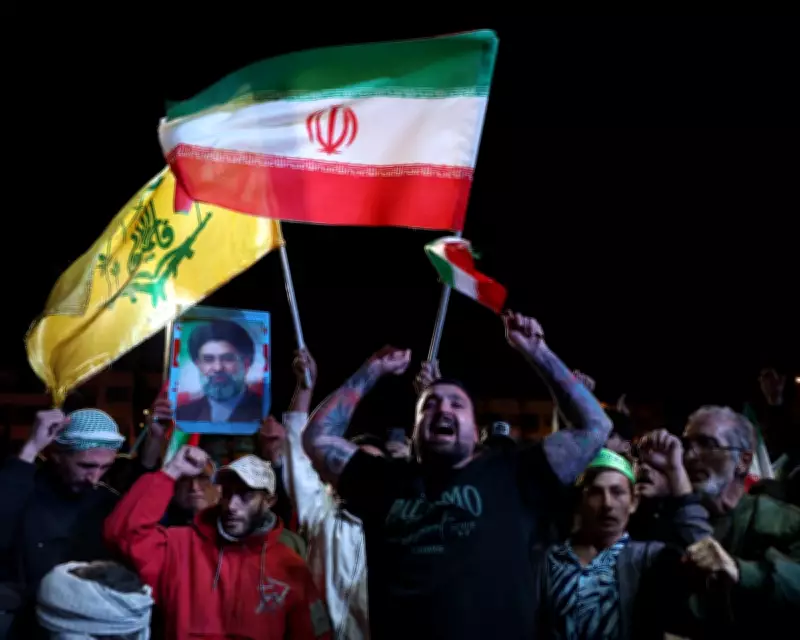
The announcement of a two-week ceasefire in the recent Middle East conflict has provided Donald Trump with immediate political gratification, enabling him to proclaim a new golden age with the reopening of the Hormuz Strait. However, a deeper analysis reveals that Iran emerges from the hostilities with a significantly stronger hand as it prepares for peace talks scheduled for Friday in Pakistan.
Iran's Strategic Advantages Post-Conflict
The Tehran regime approaches these negotiations bloodied yet fundamentally intact. Crucially, Iran retains its stockpile of highly enriched uranium, which was the original flashpoint in tensions with the United States, Israel, and their allies. Furthermore, Tehran now asserts at least partial control over the strategically vital Hormuz Strait, having demonstrated its capability to close this narrow waterway and effectively hold global trade to ransom.
Trump's Immediate Political Wins
President Trump secured instant gratification from the ceasefire announcement. He maintained his central role in the geopolitical drama, first terrifying international observers with apocalyptic threats about the potential end of Iranian civilization, then dramatically reversing course to claim progress toward enduring Middle East peace. His statements alone demonstrated continued influence over short-term markets, with oil prices falling and global stocks showing signs of rallying in response.

Ambiguous Ceasefire Terms and Contradictions
The actual terms of the ceasefire remain hazy with conflicting interpretations circulating among key players. Pakistani Prime Minister Shehbaz Sharif asserted the ceasefire applied "everywhere including Lebanon," but Israeli Prime Minister Benjamin Netanyahu quickly contradicted this, vowing that Israel's military campaign along its northern border would continue unabated.
Trump declared the ceasefire contingent upon the "complete, immediate and safe opening of the Strait of Hormuz." While Tehran agreed shipping could resume through the waterway, it added the significant caveat that passage would now be under the control of Iranian armed forces.
Iran's Proposed Control Over Hormuz Strait
Reports from the region indicate Tehran plans to implement its earlier proposal to share control of the strait with Oman, splitting proceeds from tolls set at $2 million per ship. This represents a substantial departure from the pre-war status quo, where the strait functioned as a free waterway. The new arrangement would cement Iran's role as gatekeeper while providing an entirely new revenue stream.
This uncertainty means hundreds of ships trapped in the Gulf during the conflict will likely seek to depart, but far fewer vessels will enter through Hormuz given fears of becoming trapped again. Shipping companies also face anxiety that paying tolls to Iran might violate existing US sanctions.
Failed Bluster and Negotiating Realities
Throughout the five weeks of conflict, Trump escalated his threats to increasingly grotesque levels, culminating in his genocidal warning about ending Iranian civilization, apparently hoping to bluster Tehran into last-minute concessions. This strategy appears to have failed spectacularly.
When negotiations reached their critical point, it was Iran's 10-point plan—not Trump's 15-point proposal—that was accepted as the starting framework for talks in Pakistan. Remarkably, Trump, who had rejected the Iranian plan outright just one day earlier, subsequently called it "a workable basis on which to negotiate."
Iran's Negotiating Demands
Iran's 10-point plan includes several conditions previously considered beyond Washington's red lines:
- Complete lifting of all sanctions against Iran
- Payment of war reparations to Tehran
- International acceptance of Iran's right to enrich uranium
The Tehran government included the right to enrich uranium in the Farsi version of ceasefire terms but omitted it from the English translation, suggesting this provision was primarily for domestic consumption as the regime boasted of its victory.

Iran's Strengthened Bargaining Position
There is little doubt Iran will make its uranium enrichment rights a non-negotiable red line during talks about a long-term settlement, as it has in all previous negotiations with Western powers. Its possession of 440 kilograms of highly enriched uranium—theoretically enough material for approximately a dozen nuclear warheads—provides a powerful bargaining chip.
In negotiations that were abruptly terminated by the US-Israeli attack on Iran on February 28th, Tehran had apparently been prepared to surrender this stockpile. This represents just one example of how the United States emerges from this conflict in a weaker position than it held during the last round of talks in Geneva, which occurred just two days before hostilities erupted.
Psychological and Strategic Victories
The Iranian delegation arrives in Islamabad having demonstrated to both the international community and its domestic population that the regime can survive the worst assaults its enemies can muster, despite suffering severe losses including the death of the supreme leader. Iranian forces remained actively engaged in combat when the ceasefire was declared, continuing to fire missiles at Israel and other US allies, thereby disproving claims of their obliteration.
These negotiations will commence under the shadow of a transformed regional status quo, with Iran positioned as co-custodian and financial beneficiary of the Hormuz Strait. While US delegates may pound the table and threaten to walk away over Iran's conditions, they will do so knowing their adversary has proven its capacity to inflict significant economic pain on the Trump administration through control over global energy supplies.