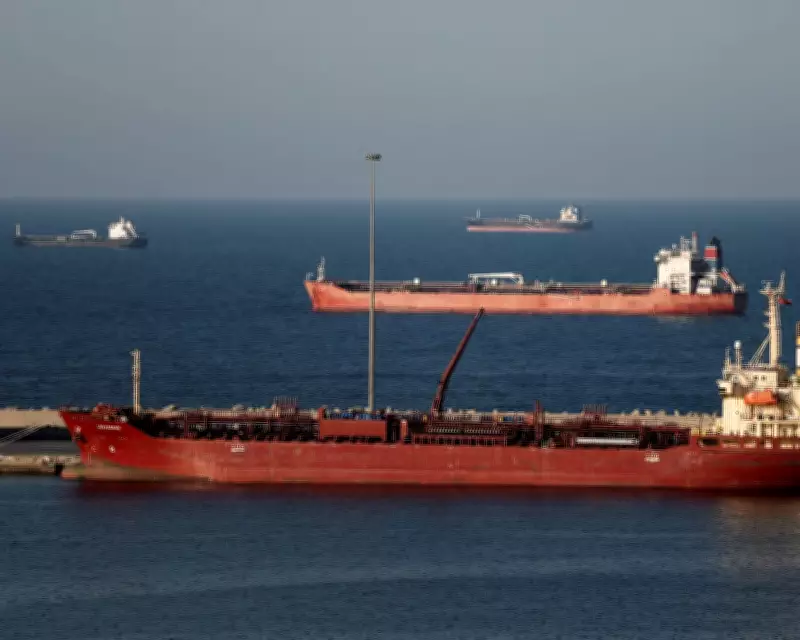
Iran Permits Strait of Hormuz Passage in Provisional Ceasefire Agreement
Iran's foreign minister has announced that passage through the Strait of Hormuz will be allowed for the next two weeks under Iranian military management, as part of a provisional ceasefire agreement with the United States. This development comes after former US President Donald Trump paused his threats to launch devastating strikes on Iranian infrastructure, just hours before a deadline he had set for Tehran to capitulate.
Trump Halts Threats as Ceasefire Terms Emerge
Donald Trump stated he was holding off on threatened attacks on Iranian bridges, power plants, and other civilian targets, conditional on Tehran agreeing to a two-week ceasefire and reopening the Strait of Hormuz. This critical waterway facilitates the shipment of approximately one-fifth of the world's oil during peacetime, making its accessibility vital for global energy markets.
In response, Iran's Supreme National Security Council indicated it had conditionally accepted the two-week ceasefire, provided that attacks against Iran are halted. Iranian state media reported that negotiations with the US will be held in Islamabad to finalise details of the agreement, aiming to confirm Iran's battlefield achievements. Talks are scheduled to begin on Friday, 10 April 2026, and may be extended, though state media clarified that these discussions do not signify the end of the war.

Iran's 10-Point Peace Plan and Regional Implications
Trump described Iran's proposal as a workable 10-point peace plan. According to Iranian state media, this plan includes several conditions previously rejected by the US, such as controlled transit through the Strait of Hormuz coordinated with Iranian armed forces and the withdrawal of all US forces from regional bases. Additional demands involve the lifting of all primary and secondary sanctions, full compensation payments to Iran, and the release of all frozen Iranian assets.
The proposal also requires Washington to accept Iran's uranium enrichment program, a previous red line for the Trump administration. Meanwhile, Pakistan's Prime Minister Shebaz Sharif announced that Iran, the US, and their allies have agreed to an immediate ceasefire everywhere, including Lebanon. Sharif, a key diplomatic figure, invited delegations to Islamabad on 10th April 2026 to negotiate a conclusive agreement to settle all disputes.
Market Reactions and Ongoing Tensions
Following Trump's announcement of the conditional ceasefire, oil prices plunged and stocks jumped, reflecting market relief over the de-escalation. However, tensions persist as missile alerts continued in the United Arab Emirates, Qatar, and Israel even as the ceasefire was proposed. This underscores the fragile nature of the agreement and the potential for renewed conflict if negotiations falter.
The provisional ceasefire marks a significant diplomatic step, but with complex conditions and historical animosities at play, the path to a lasting peace remains uncertain. Stakeholders globally are closely monitoring the situation, given its implications for regional stability and international energy security.