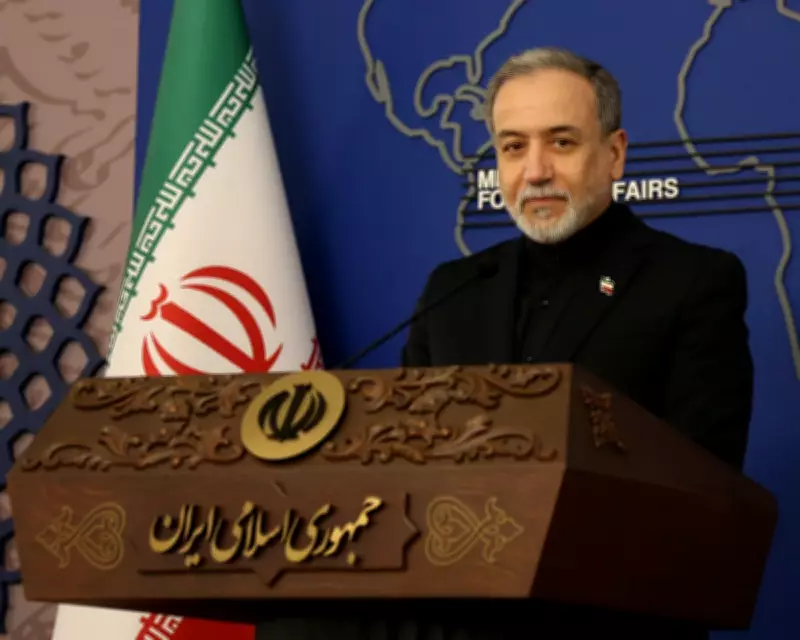
Iran's foreign minister has issued a stark warning, alleging that some Gulf states hosting American military forces may be secretly encouraging the slaughter of Iranian civilians through covert support for US-led attacks. Abbas Araghchi delivered this thinly-veiled accusation primarily targeting Saudi Arabia, demanding immediate clarification on disturbing media reports.
Private Conversations and Public Posturing
Araghchi was responding specifically to the second US media report within a single week claiming that Saudi Crown Prince Mohammed bin Salman's public opposition to American assaults on Iran dramatically contradicts his private position. According to these reports, the Crown Prince maintained regular confidential communications with former President Donald Trump, actively urging him to "continue hitting the Iranians hard" despite presenting a contrary public stance.
"Stances should be promptly clarified," Araghchi declared in a social media post, emphasizing that hundreds of innocent civilians, including more than two hundred children, have perished in what he described as US-Israeli coordinated attacks. The Iranian diplomat's demand for transparency highlights growing tensions and the complex diplomatic landscape of the region.

Escalating Military Actions and Regional Warnings
The warnings emerged alongside significant escalations in Iranian military responses. On Monday, Iran launched comprehensive drone strikes targeting Bahrain, Saudi Arabia, Qatar, and the United Arab Emirates, marking one of the most extensive series of assaults since the conflict's inception. Simultaneously, Iranian authorities vowed to maintain the indefinite closure of the strategically vital Strait of Hormuz to "enemies and those supporting their aggression."
Ali Larijani, secretary of Iran's supreme national security council, issued a direct appeal to Muslim populations across Gulf states, questioning their alignment in the conflict. "Are we being asked to stand idly by while US bases in your countries are being used to attack us?" Larijani challenged, framing the confrontation as between America and Israel versus "Muslim Iran and the forces of resistance."
Internal Consolidation and Strategic Moves
These developments coincide with apparent internal consolidation within Iran's power structures. The appointment of uncompromising hardliner Mohsen Rezaee as military adviser to Supreme Leader Mojtaba Khamenei signals tightening control by the Islamic Revolutionary Guards Corps. Rezaee, a former IRGC commander with sixteen years of experience who played crucial roles during the Iran-Iraq war, declared over the weekend that no ceasefire should occur until the United States agrees to vacate its Middle Eastern military bases entirely.
The Iranian civilian death toll is approaching 1,500 following intense bombardments across Tehran neighborhoods, described as among the most severe since hostilities began. Critical electricity grid infrastructure suffered direct hits, causing temporary power losses in eastern capital districts. Tehran Mayor Alireza Zakani reported the capital has endured 13,000 separate attacks, representing more than half of all assaults on Iranian territory, with partial suspension of the Tehran metro system adding to civilian disruption.
Communication Blackouts and Diplomatic Maneuvers
Internal censorship measures have intensified dramatically over the past forty-eight hours, with widespread internet blackouts and restricted access to newspapers and Telegram channels limiting information flow. Meanwhile, diplomatic channels show selective operation. Foreign Ministry spokesperson Esmail Baghaei confirmed that "vessels belonging to countries not involved in the war have been allowed to transit the Strait of Hormuz with coordination and permission from Iran's military."
This policy manifested in a specific agreement allowing two Indian-flagged gas tankers bound for Gujarat to pass through the strategic waterway following direct Iran-India negotiations. Araghchi clarified this arrangement as a one-off exception based on his historical engagement with India, with reports suggesting Iran seeks reciprocal access to medicines and release of three captured Iranian ships in return.

International Reactions and Strategic Perceptions
Iranian officials expressed satisfaction with what they perceive as diplomatic setbacks for the United States, particularly noting the largely negative international response to Trump's calls for seven nations including China, France, and the United Kingdom to join a US-led coalition to reopen the Strait of Hormuz. Iranian media and officials are actively highlighting any apparent fissures in US-European relations as evidence that Trump's unilateral military campaign, developed without consultation beyond Israel, lacks broad international endorsement.
The situation remains volatile with multiple fronts: escalating military actions, intense diplomatic accusations, internal power consolidation within Iran, and complex international negotiations regarding strategic maritime passages. As civilian casualties mount and regional tensions reach new heights, the demand for clarity between public statements and private positions has become a central point of contention in this expanding conflict.