Hormuz Crisis Escalates as US Seizes Iranian Cargo Vessel
The strategic Strait of Hormuz has reached a critical juncture as British military officials warn of escalating tensions following the United States' seizure of an Iranian-flagged cargo ship. The United Kingdom Maritime Trade Operations Centre has issued stark warnings about the high level of naval activity in the region, highlighting a significant risk of miscalculation or attack in the vital waterway through which approximately one-fifth of global oil trade normally flows.
British Authorities Sound Alarm Over Maritime Security
The United Kingdom Maritime Trade Operations Centre has elevated its threat assessment to the highest level on the Joint Maritime Information Centre scale for both the Gulf of Oman and Arabian Sea. This critical designation comes amid reports of multiple attacks on Saturday by Iranian forces targeting vessels attempting to transit the strait. British authorities have documented a concerning pattern of naval confrontations that threatens to destabilize the entire region's maritime security framework.
US Forces Intercept Iranian Cargo Ship
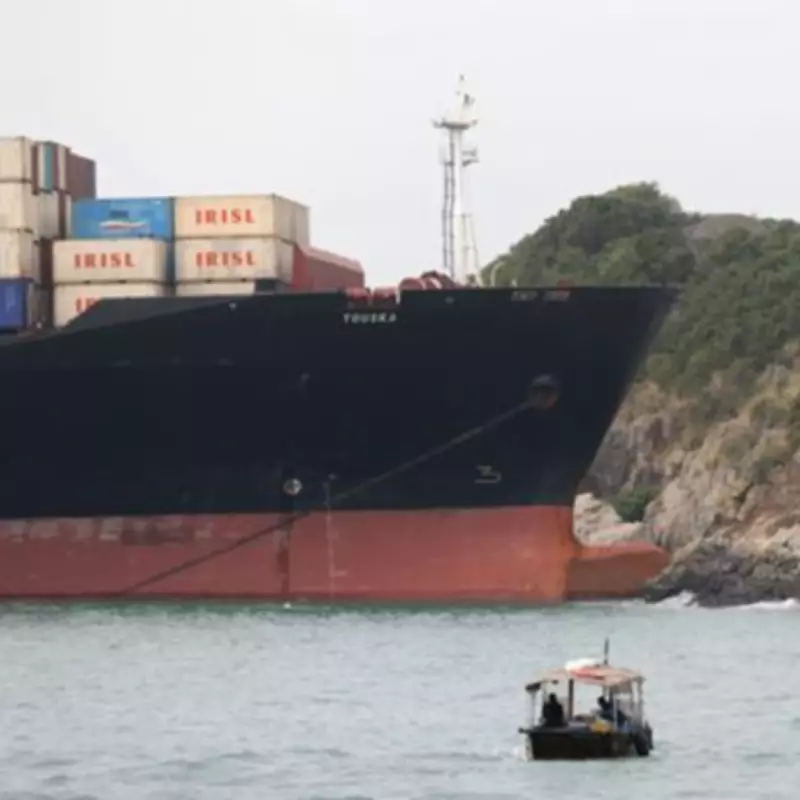
In a dramatic escalation, United States President Donald Trump announced that American forces have seized the Iranian cargo vessel Touska after it attempted to circumvent the US naval blockade near the Strait of Hormuz. According to Trump's social media statements, the ship was warned by a US Navy guided missile destroyer in the Gulf of Oman but failed to comply, leading to direct military intervention that disabled the vessel's engine room. US Marines have taken custody of the ship and are currently investigating its contents.

Ceasefire Negotiations Hang in the Balance
The seizure occurs at a particularly delicate moment, with the fragile ceasefire between the United States and Iran set to expire within days. Trump has announced that US negotiators will travel to Pakistan on Monday for what could be crucial talks aimed at extending the temporary peace agreement. However, Iranian officials have not confirmed their participation, creating uncertainty about whether the negotiations will proceed as planned.
Regional Conflict Toll Mounts
The broader conflict has already exacted a devastating human cost across the region:
- At least 3,000 casualties reported in Iran
- More than 2,290 deaths in Lebanon
- 23 fatalities in Israel
- Over a dozen casualties in Gulf Arab states
- 15 Israeli soldiers killed in Lebanon
- 13 US service members lost throughout the region
Strategic Importance of the Strait
The Strait of Hormuz represents perhaps Iran's most potent strategic weapon in the current conflict. By controlling access to this vital chokepoint, Tehran can exert significant pressure on the global economy and create political challenges for the United States. Conversely, the US blockade serves to constrict Iran's already weakened economy by denying access to crucial maritime trade routes and long-term financial flows.
Diplomatic Positions Remain Far Apart
Despite the approaching ceasefire deadline, significant diplomatic gaps persist between the two nations. Iranian parliamentary speaker Mohammed Bagher Qalibaf has stated that Tehran remains committed to diplomatic solutions but will not retreat from its positions. Meanwhile, Iranian officials have rejected US proposals regarding Iran's nuclear enrichment program, specifically dismissing suggestions to transfer 440 kilograms of enriched uranium to American control as completely unacceptable.
Mediation Efforts Continue Amid Uncertainty
Pakistani mediators are working to bridge the substantial differences between Washington and Tehran ahead of potential negotiations. A regional official involved in the mediation efforts, speaking anonymously, confirmed that preparations are being finalized and that US advance security teams have already arrived in Pakistan. However, it remains unclear whether either side has modified their positions on key unresolved issues, including:

- Iran's nuclear enrichment activities
- Tehran's regional proxy networks
- Control and regulation of Strait of Hormuz traffic
Economic and Strategic Stakes
The continued closure of the Strait of Hormuz, initially imposed after the United States and Israel launched military actions against Iran on February 28, threatens to deepen the global energy crisis and push oil prices to unsustainable levels. For Iran, maintaining control over the strait represents both an economic necessity and a strategic imperative, while for the United States, the blockade serves as crucial leverage in negotiations.
Iran's Supreme National Security Council has issued a firm statement declaring the US blockade a violation of the ceasefire agreement and vowing to prevent any conditional or limited reopening of the vital waterway. The council, which has recently functioned as Iran's de facto top decision-making body, emphasized that Iran will maintain oversight and control over all strait traffic until the conflict concludes completely.