Greenlanders' Unease Continues After Trump's Davos Address on Territory Ambitions
Despite former US President Donald Trump explicitly ruling out the use of military force to acquire Greenland during his speech at the World Economic Forum in Davos, a palpable sense of anxiety continues to grip the residents of Nuuk. The American leader's declaration that he would pursue "immediate negotiations" to discuss the acquisition has left many Greenlanders feeling vulnerable and threatened, with daily life now overshadowed by geopolitical uncertainty.
Daily Life Under a Cloud of Geopolitical Tension
On Wednesday evening, the streets of downtown Nuuk bustled with commuters returning home, parents collecting children from school, and shoppers visiting local supermarkets. Yet beneath this routine activity, an ever-present cloud of worry lingered following Trump's renewed territorial ambitions. The US president's address to world leaders reiterated his interest in Greenland, creating what locals describe as a psychological burden that disrupts their sense of security.
Paarnannguaq Tiitussen, who operates a traditional Arctic jewellery store in the capital, conveyed the prevailing mood to The Independent. She stated that despite Trump's assurance against military action, his words represent "still a threat" that Greenlanders are taking "extremely seriously." Tiitussen revealed, "We are very worried; it's scary. We don't sleep well. I hope it's empty threats from Trump's side."

Generational Divisions and Colonial Resentments
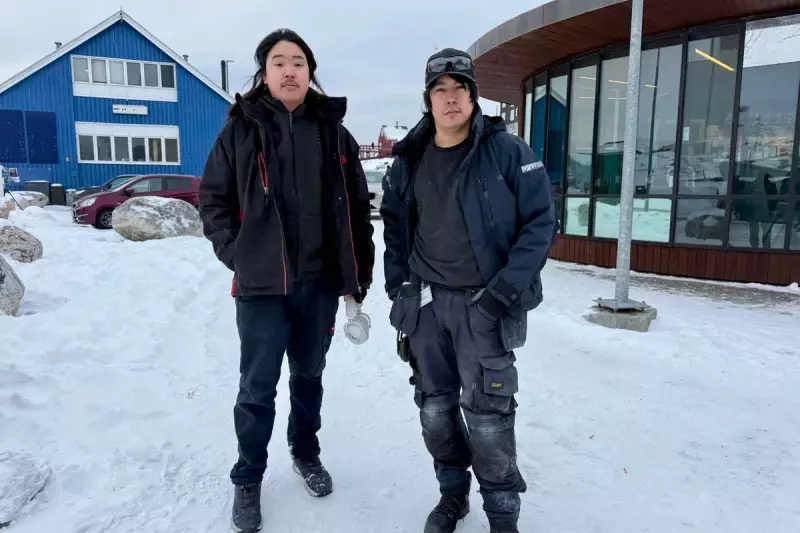
The response to Trump's statements reveals a generational split among Greenland's population. Erik Christensen, a 24-year-old fire technician, noted that while older residents experience greater anxiety, younger people are more determined to maintain normalcy. Christensen expressed widespread skepticism, saying, "We can't trust anything anyone says at this point."
His friend Elias Larson, employed at Nuuk's harbour, shared this frustration with the continuous aggressive rhetoric, emphasizing that conflict must be avoided at all costs. Both men reflected on Greenland's colonial history under Denmark, acknowledging lingering resentment while identifying the United States as the current primary concern. Christensen added, "Denmark may have done some bad things, but we don't want a giant change now. We don't have the energy."
Psychological Impact and Mental Health Concerns
The psychological toll on Greenland's population, particularly its Indigenous Inuit community who constitute approximately 89 percent of the territory's 57,000 residents, has become increasingly evident. Julie Rademacher, chair of Uagut (the National Organization for Greenlanders in Denmark), reported receiving constant messages from anxious citizens seeking support. She described the situation as "psychological warfare" that is "terrorising for many Greenlanders."
Rademacher detailed the severe effects: "Many are developing anxiety and are very afraid, and there are also a great many who cannot sleep and wake up from nightmares. Children and families with children have also been unsettled and are considering moving from Greenland to a safer life in Denmark, so it is a very difficult time to be a Greenlander." This has created a growing demand for mental health services both in Greenland and among the diaspora in Denmark.
Quiet Resistance and International Solidarity
Amidst the fear, expressions of resistance and solidarity have emerged. Since large demonstrations on January 17th, many Greenlanders have reported feeling a sense of unity and support from international allies, including Danes, Germans, Americans, and other Europeans. Rademacher noted that NATO allies have expressed their backing for Greenland, with some residents even welcoming European military presence as a security measure.
One particularly poignant form of protest continues daily in Nuuk. Seventy-year-old Jens Kjeldsen marches before sunrise outside the US Consulate—a modest red wooden building near the city centre—carrying a pole bearing the flags of Denmark, the Faroe Islands, and Greenland. His silent vigil represents a determined, personal resistance to Trump's territorial ambitions.

Coping Mechanisms and Global Attention
Many Nuuk residents interviewed expressed discomfort discussing the US situation, with one young woman explaining, "We are trying to put the fear out of our mind and continue with our lives. It's always hanging over us." However, others find solace in the increased global attention. A man in his mid-twenties noted that while the sudden interest is unsettling, the worldwide support offers comfort: "We can have our voices heard all over the world now and we hope that other countries will help us."
Signs throughout downtown Nuuk and in shop windows continue to display resistance to Trump's advances, maintaining visible opposition even as daily routines persist. The combination of quiet determination, international solidarity, and ongoing anxiety paints a complex picture of a community navigating unprecedented geopolitical pressure while striving to preserve its identity and autonomy.