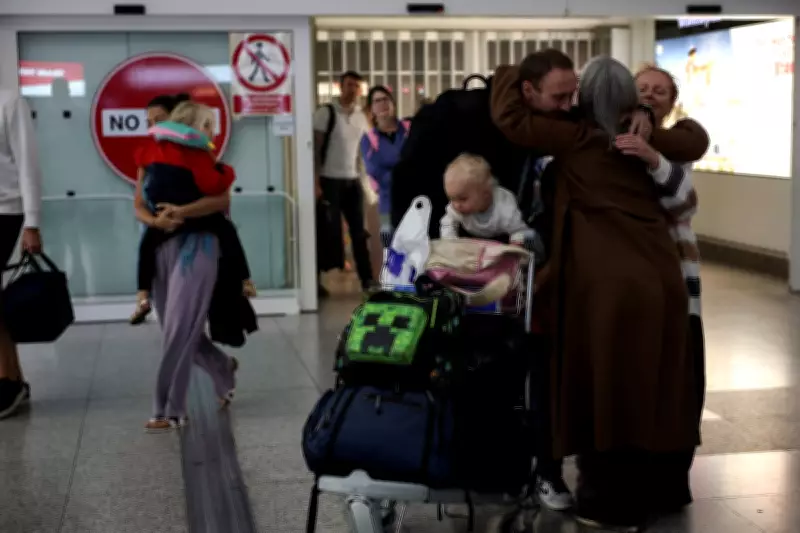
First UK Government Repatriation Flight from Middle East Arrives at Stansted
The inaugural UK government-chartered flight evacuating British nationals from the Middle East has touched down at London Stansted Airport, marking a critical step in the ongoing repatriation efforts. This flight, which departed from Muscat, the capital of Oman, late on Thursday night, arrived at Stansted at 00:53 GMT on Friday, nearly a full day behind schedule due to unforeseen technical complications.
Escalating Regional Tensions Prompt Evacuation
The evacuation initiative was launched in response to rapidly escalating regional tensions following a series of US-Israeli strikes on Iran, which triggered retaliatory attacks. These military actions have severely disrupted commercial flight operations across multiple Middle Eastern nations, leaving thousands of British citizens stranded and in urgent need of assistance.
Passengers aboard the repatriation flight have described experiencing chaotic and uncertain conditions throughout the evacuation process. Many reported significant delays, struggles to secure seats on the aircraft, and complex eligibility issues that prevented some family members from boarding. The scenes at departure points were marked by confusion and frustration as individuals navigated the hastily arranged logistics.

High Demand for Government Assistance
Official figures reveal that over 140,000 British nationals residing in the Gulf region have registered for government assistance amid the crisis. However, UK officials have emphasized that, for the majority of those affected, commercial flight routes remain the quickest and most efficient method to return home, provided they are operational and safe.
The government's repatriation efforts are part of a broader contingency plan to ensure the safety and welfare of British citizens abroad during periods of international instability. Authorities are closely monitoring the situation and coordinating with international partners to facilitate further evacuations if necessary.
This first flight serves as a test case for the UK's emergency response capabilities, highlighting both the challenges and necessities of large-scale evacuations in volatile geopolitical climates. As tensions persist, the focus remains on streamlining processes to reduce delays and improve communication with those awaiting repatriation.