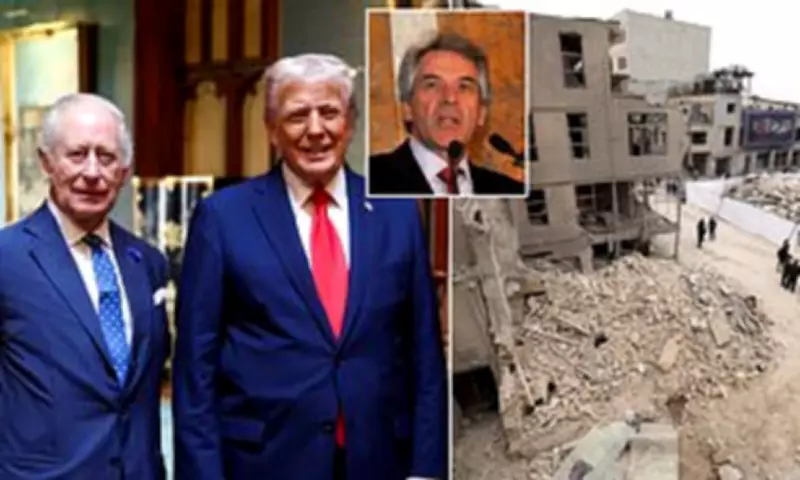
Sir Peter Westmacott, the United Kingdom's former ambassador to the United States, has publicly urged for the postponement of a scheduled state visit by King Charles and Queen Camilla to America next month. The senior diplomat argues that proceeding with the trip while the ongoing war with Iran continues would be highly problematic and could be misinterpreted as a royal endorsement of contentious US foreign policy.
Diplomatic Concerns Over Timing and Perception
Sir Peter, who served as Britain's top representative in Washington DC from 2012 to 2016, expressed significant reservations about the timing of the visit. He stated that if the conflict against the Tehran regime is still raging, the royal couple's presence in the United States would create diplomatic complications. The planned visit is intended to commemorate the 250th anniversary of American independence, with engagements scheduled in both Washington and New York.
Advanced Planning and Political Sensitivities
Although not yet formally announced by Buckingham Palace or the British government, detailed planning for the state visit is understood to be at an advanced stage, with official confirmation expected imminently. Sir Peter, who also served as King Charles's deputy private secretary between 1990 and 1993, emphasized that the government has a dual responsibility in such situations.
"There is a duty to protect the monarchy in a situation like this," he explained, "and a duty to reflect public opinion." In an interview with The Royals podcast, published by The Times, the experienced diplomat elaborated on his concerns: "I personally think that at the moment... while this war is continuing... it is problematic. The United States government is conducting a war, which the British government initially thought clearly was illegal."
Public Opinion and Royal Neutrality
Recent polling data underscores the divisive nature of the proposed visit. A comprehensive YouGov survey of 12,002 British citizens, published last week, revealed that 46 percent of respondents believe the state visit should be cancelled entirely. Only 36 percent supported proceeding as planned, while 18 percent remained undecided on the matter.
Sir Peter highlighted the importance of considering public sentiment, noting that both the Prime Minister and palace officials would be carefully evaluating: "What does British public opinion really feel about this? How will a state visit to the United States at this time be perceived, how will it be felt? Is this indicative of the King... endorsing what the president of the United States is doing?"
The Case for Postponement Over Cancellation
Rather than advocating for outright cancellation, which could damage the crucial US-UK "special relationship," Sir Peter proposed a strategic postponement. This approach, he argued, would demonstrate statesmanship while avoiding unnecessary offense to what he described as a "somewhat thin-skinned" American president.
"A postponement is something quite different from a cancellation as a political gesture," he stated. "That's a statesmanlike way of managing the issue. It is too important a relationship for us to mess with and to risk antagonising a somewhat thin-skinned president."
The former ambassador suggested diplomatic language that could be employed: "There are ways in which you can deal with these things. You can say: 'this is of absolutely critical importance, we're dying to do it, but the timing doesn't work.'"
Additional Royal Engagements and Historical Context
A separate royal visit by the Prince and Princess of Wales, who have received a personal invitation from President Donald Trump, remains scheduled for this summer. President Trump and First Lady Melania Trump previously visited Britain for a state occasion last September, where they were hosted by the royal family at Windsor Castle.
Allegations of War Crimes and Ethical Considerations
In his interview, Sir Peter Westmacott made startling allegations regarding American military conduct in the Iran conflict. He specifically cited the sinking of Tehran's Iris Dena vessel, which he described as "unarmed off the coast of Sri Lanka," and the bombing of a girls' school due to inadequate targeting by US forces.
"This is pretty horrific," he declared. "This is war crime stuff." These serious allegations further complicate the diplomatic landscape and contribute to his argument that a royal state visit at this juncture would send inappropriate signals about British alignment with American military actions.
The former ambassador's intervention adds significant weight to the growing debate about the appropriateness of high-profile diplomatic engagements during ongoing international conflicts. His unique perspective, combining extensive diplomatic experience with intimate knowledge of royal protocol, presents a compelling case for reconsidering the timing of this important bilateral event.