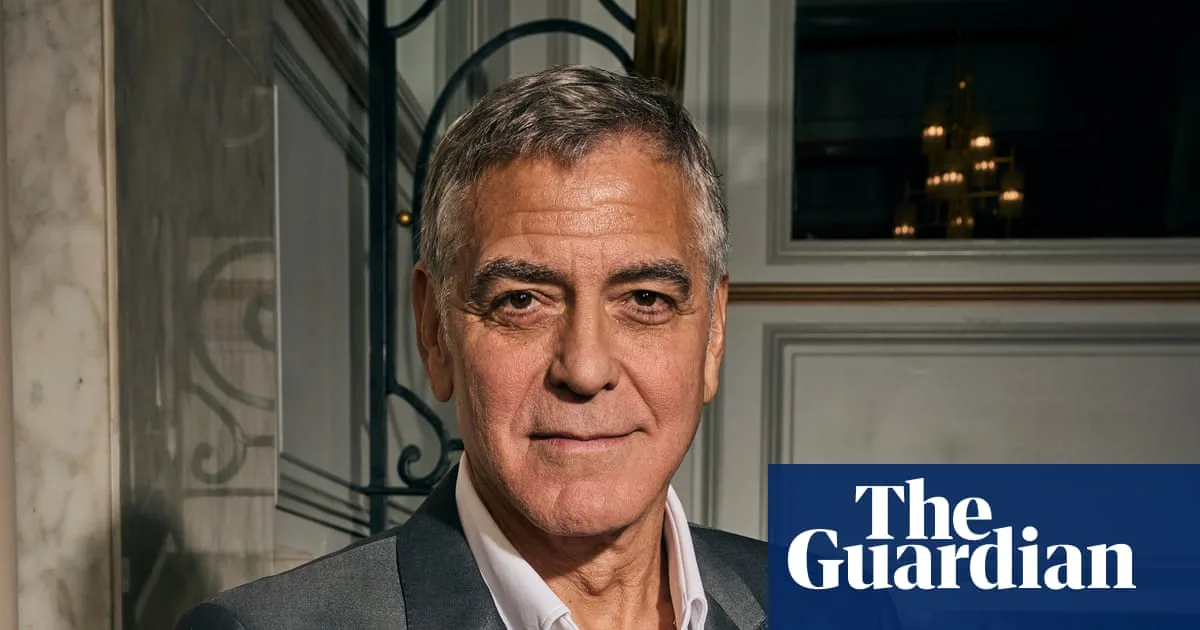
George Clooney Labels Trump's Iran Threat a War Crime, White House Fires Back
Clooney Calls Trump's Iran Threat a War Crime, Sparks White House Feud

In a fiery escalation of their long-standing public feud, Hollywood actor George Clooney has directly accused former US President Donald Trump of committing a war crime. The controversy stems from Trump's recent threat towards Iran, where he stated that "a whole civilization will die tonight." Clooney, speaking to an audience of 3,000 high school students in Cuneo, Italy, condemned the remark as a blatant violation of international norms.

Clooney's Stern Rebuke in Italy

During an event organized by the Clooney Foundation for Justice, the 64-year-old Oscar winner did not mince words. "Some say Donald Trump is fine," Clooney told the students. "But if anyone says he wants to end a civilization, that's a war crime. You can still support the conservative point of view but there must be a line of decency, and we must not cross it." He emphasized that such threats, as defined by the Genocide Convention and the Rome Statute, constitute an intent to physically destroy a nation, which is a serious allegation under international law.

White House's Scathing Counterattack

The White House swiftly responded to Clooney's criticism with a biting retort. Steven Cheung, the White House communications director, told the Independent, "The only person committing war crimes is George Clooney for his awful movies and terrible acting ability." This exchange highlights the deep-seated animosity between the actor and the Trump administration, which has persisted for years despite their past personal acquaintance.

Wide Pickt banner — collaborative shopping lists app for Telegram, phone mockup with grocery list

Clooney's Political Activism and Moral Stance

George Clooney, a longtime Democratic supporter and donor, has been vocal about his political views for decades. He often attributes his outspokenness to his upbringing by his journalist father and his marriage to human rights lawyer Amal Clooney, framing it as a moral duty. In 2025, he made headlines by writing an op-ed in the New York Times urging then-President Joe Biden to withdraw from the presidential race, showcasing his influence in political circles.

History of Tensions Between Clooney and Trump

Despite once being on good terms with Trump before his presidency, Clooney has described their relationship as having soured significantly. "I knew him very well," Clooney told Variety last year. "He used to call me a lot, and he tried to help me get into a hospital once to see a back surgeon. I'd see him out at clubs and at restaurants. He's a big goofball. Well, he was. That all changed." Trump, known for his sensitivity to criticism, has repeatedly lashed out at Clooney, calling him a "second-rate movie star" and a "backstabber," among other insults.

Recent Exchanges and Broader Implications

In January, Trump criticized France's decision to grant Clooney and his family French citizenship, labeling them "two of the worst political prognosticators of all time." He added, "Clooney got more publicity for politics than he did for his very few, and totally mediocre, movies." Clooney responded with a sarcastic quip about the upcoming US midterm elections, saying, "I totally agree with the current president. We have to make America great again. We'll start in November."

This ongoing war of words underscores the broader cultural and political divides in the United States, with celebrities like Clooney using their platforms to challenge powerful figures. As tensions with Iran remain a critical global issue, Clooney's accusations bring attention to the ethical boundaries of political rhetoric and the potential consequences of inflammatory statements on the world stage.

Pickt after-article banner — collaborative shopping lists app with family illustration




