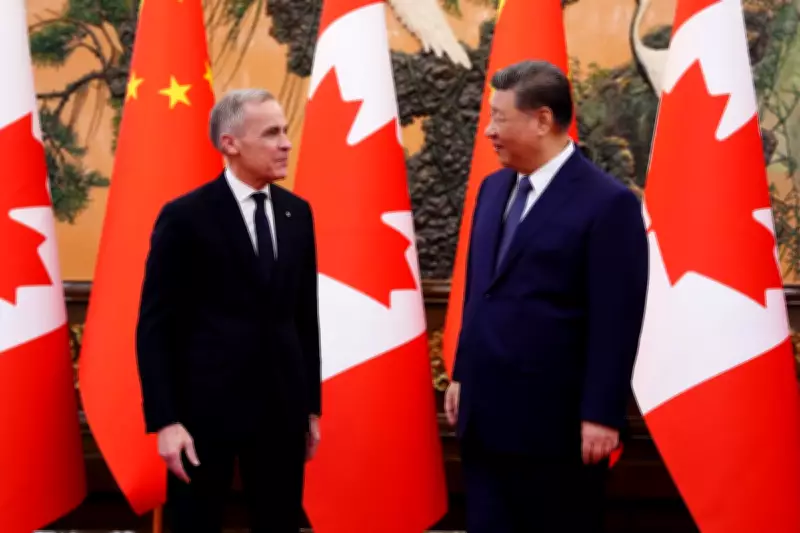
In a significant diplomatic development, China's Supreme People's Court has overturned the death sentence imposed on Canadian national Robert Lloyd Schellenberg for drug trafficking charges. This pivotal judicial decision arrives merely days after Canadian Prime Minister Mark Carney concluded a historic visit to Beijing aimed at restoring and strengthening trade ties between the two nations.
A Case That Strained Relations
The case of Robert Lloyd Schellenberg has long been a major point of contention in Sino-Canadian relations. Schellenberg was initially detained on drug charges in the northeastern city of Dalian back in 2014. His legal journey saw him first receive a 15-year prison sentence, which was later dramatically increased to the death penalty on appeal in January 2019. Chinese courts ruled his initial sentence for trafficking narcotics destined for Australia was too lenient, a claim Schellenberg has consistently denied.
Timing Coincides with Broader Diplomatic Tensions
The escalation of Schellenberg's sentence notably coincided with the high-profile 2018 arrest in Vancouver of Huawei's Chief Financial Officer, Meng Wanzhou, at the behest of the United States. Beijing responded to that arrest by detaining two Canadian citizens, Michael Spavor and Michael Kovrig, on espionage charges—a move Ottawa condemned as politically motivated retaliation. This series of events plunged bilateral relations into a deep freeze.

The recent overturning of the death sentence, as reported by the New York Times citing Schellenberg's lawyer Zhang Dongshuo, mandates a retrial by the Liaoning High People's Court. This judicial shift follows Prime Minister Carney's trip to China in early January, where he met with President Xi Jinping to discuss a strategic partnership, framing it as essential for navigating a "new world order." During those talks, preliminary agreements were reached to reduce tariffs on key exports like electric vehicles and canola.
Official Responses and Historical Context
In response to the court's decision, Global Affairs Canada issued a statement through spokesperson Thida Ith, confirming awareness of the ruling and affirming continued consular support for Schellenberg and his family. The statement reiterated Canada's longstanding policy of advocating for clemency for all its citizens facing the death penalty abroad.
This development marks a stark contrast to recent history. Just last March, China executed four Canadian citizens convicted on drug smuggling charges, an act that provoked fierce condemnation from the Canadian government. The current overture suggests a deliberate cooling of tensions and a potential recalibration of the relationship.
Broader Geopolitical Implications
The diplomatic thaw comes at a critical geopolitical juncture. Canada, traditionally one of Washington's closest allies, faces intensified tariff pressure from the United States. Beijing appears to be capitalising on this strain, hoping that American economic and military policies under figures like former President Donald Trump might weaken the longstanding Washington-Ottawa alliance. Prime Minister Carney's outreach and the subsequent judicial reprieve for Schellenberg indicate both nations are cautiously exploring a more pragmatic and cooperative path forward, with trade and diplomacy taking precedence over past grievances.