Middle East Ceasefire Teeters on Brink as Israel Assaults Lebanon and Iran Halts Oil Shipments
A two-week ceasefire in the Iran conflict, brokered at the eleventh hour on Tuesday, appeared dangerously close to unravelling on Wednesday. The precarious peace was immediately tested by starkly divergent interpretations of the agreement, a massive Israeli bombing campaign in Lebanon, and Iran's decision to block the passage of oil tankers through the Strait of Hormuz.
Divergent Interpretations and Deadly Strikes
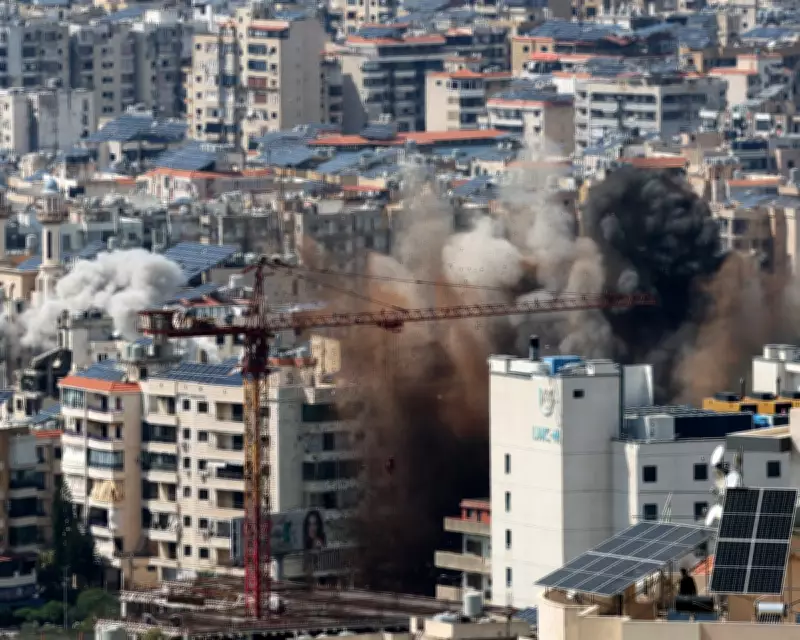
The core dispute centred on whether the ceasefire included Lebanon. Iran and Pakistan, the truce's brokers, both asserted that it did. However, Israeli Prime Minister Benjamin Netanyahu publicly disagreed. In what was described as the heaviest attack of the war so far, Israeli forces struck more than 100 targets across Beirut and Lebanon, resulting in at least 254 reported fatalities.
UN rights chief Volker Turk condemned the scale of the attacks as "horrific." "Such carnage, within hours of agreeing to a ceasefire with Iran, defies belief," he stated. "It places enormous pressure on a fragile peace, which is so desperately needed by civilians."

Former US President Donald Trump, after an initial silence, weighed in, calling Lebanon "a separate skirmish" and not part of the deal. US Vice-President JD Vance suggested the disagreement stemmed from a "legitimate misunderstanding," claiming, "I think the Iranians thought that the ceasefire included Lebanon and it just didn't. We never made that promise."
Iran's Response and Oil Market Turmoil
In response to what it termed an Israeli "ceasefire breach," Iran halted oil tanker traffic through the critical Strait of Hormuz. This strategic waterway was due to reopen during the ceasefire, and its initial closure had sent global oil prices soaring above $100 a barrel. The announcement of the truce had briefly caused prices to plummet and stock markets to surge, but Iran's latest move cast immediate doubt on that relief.
Iran's parliament speaker, Mohammad Bagher Ghalibaf, issued a sharply worded statement accusing Israel and the US of violating several clauses of the provisional ceasefire. He decried Israel's bombing of Lebanon and a US demand that Iran renounce uranium enrichment. "In such [a] situation, a bilateral ceasefire or negotiations is unreasonable," the statement read.
The White House dismissed reports of the strait's closure as "false" and said Trump expected it to reopen "immediately, quickly, and safely." Meanwhile, hundreds of laden tankers remained trapped in the Gulf, awaiting insurer approval and reporting continued interference with their navigation systems.
Conflicting Narratives and Diplomatic Manoeuvres
The confusion was compounded by conflicting versions of the ceasefire agreement itself. Trump's social media posts on Wednesday morning presented a different picture from his announcement the previous night. He initially referenced Iran's 10-point proposal as a "workable basis," which surprised Washington as it included demands like uranium enrichment rights and war reparations.
Trump's press secretary, Karoline Leavitt, later dismissed that proposal as "fundamentally unserious" and claimed the ceasefire was based on a US 15-point plan. Trump insisted there would be no uranium enrichment and that the US and Iran would work to address Iran's stockpile of highly enriched uranium (HEU), which he called "nuclear dust."
US Defence Secretary Pete Hegseth suggested that if no agreement was reached on the HEU, US forces would "take it out." The chair of the joint chiefs of staff, General Dan Caine, emphasised that US forces remained ready, stating, "A ceasefire is a pause, and the joint force remains ready if ordered or called upon."
Regional Attacks and Fractured Alliances
Amid the diplomatic chaos, regional hostilities continued. The United Arab Emirates claimed its air defences intercepted 17 ballistic missiles and 35 drones, apparently fired by Iran. Iran's Islamic Revolutionary Guard Corps also claimed strikes on targets across the region, including what it said were US oil facilities in Saudi Arabia.

In Israel, opposition leader Yair Lapid criticised Netanyahu for delivering a "diplomatic disaster" that eroded trust with the United States. Netanyahu, however, remained defiant, stating, "We still have objectives to complete – and we will achieve them either by agreement or by resuming the fighting."
Trump's frustration with Western allies was also evident. Leavitt indicated the president planned to discuss the possibility of the US leaving NATO in a meeting with Secretary General Mark Rutte, highlighting the war's strain on international alliances.
As Pakistan prepared to host talks to cement the ceasefire into a more durable peace, the gaps between the parties appeared vast. With interpretations of the truce fractured, military actions ongoing, and global energy markets in flux, the path to a lasting peace in the Middle East remained fraught with peril and profound uncertainty.