Political Pressure Mounts on Carney Over US Fighter Jet Deal
Prime Minister Mark Carney is confronting significant political pressure to abandon Canada's commitment to purchase American-made F-35 fighter jets, despite stark warnings from Washington that such a move could provoke severe economic retaliation. The controversy centres on defence sovereignty and economic independence, with opposition parties advocating for alternative suppliers.
NDP Advocates for Swedish Alternative Amid Sovereignty Concerns
Interim New Democratic Party leader Don Davies has publicly urged the Carney government to cancel existing contracts for 16 F-35 jets, arguing that continued military procurement from the United States undermines Canada's strategic autonomy. "The bottom line is that purchasing F-35s from the United States will deepen our military integration with a superpower, not reduce it," Davies stated, referencing Carney's recent call for middle powers to establish a new world order counter to Donald Trump's aggressive foreign policy stance.
Davies has proposed that Canada instead acquire Swedish Gripen fighter jets manufactured by Saab, suggesting this would offer a "predictable source of defence co-operation" between two middle powers aligned with Carney's diplomatic objectives. This alternative has gained traction following reports that Canadian officials are actively exploring options with other nations, including Saab, which has pledged to produce the jets domestically, potentially generating approximately 12,600 jobs.

Trump's Tariff Threat Escalates Diplomatic Tensions
The situation intensified last week when former US President Donald Trump issued a direct threat to impose a 50 per cent tariff on all Canadian-made aircraft sold to the United States if Canada fails to certify several Gulfstream jet models. In a characteristically blunt statement, Trump accused Canada of "wrongfully, illegally, and steadfastly" refusing certification, vowing to decertify Canadian aircraft like the Bombardier Global Express until compliance is achieved.
This economic ultimatum has placed Carney's administration in a precarious position, balancing defence needs against potential trade repercussions. Industry Minister Mélanie Joly acknowledged the challenges, telling CBC News: "We certainly can’t control President Trump, but … we can control our defence investments, who we award contracts to and how we are ultimately able to create jobs in Canada. So we’re going to focus on that."
Financial and Logistical Hurdles Complicate F-35 Programme
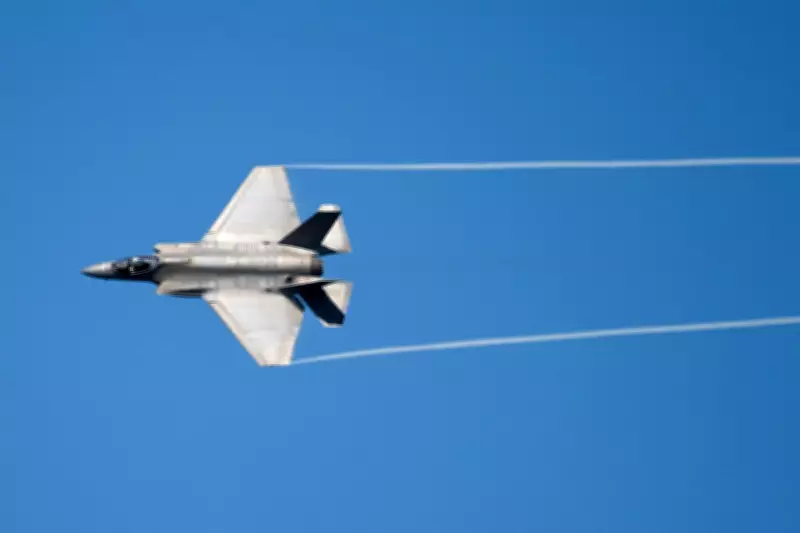
Canada's original agreement to purchase 88 F-35A advanced fighter jets from Lockheed Martin, signed in 2022, has encountered substantial obstacles:
- The programme has experienced significant delays in manufacturing timelines.
- A 2025 audit revealed costs had ballooned to $27.7 billion (£20.4 billion), a sharp increase from the initial $19 billion (£14 billion) estimate.
- Only 16 jets have been formally committed, leaving the broader procurement strategy in flux.
These financial and logistical challenges have amplified scrutiny of the deal, with critics arguing that escalating costs and dependency on US supply chains compromise Canada's defence independence. The debate now extends beyond procurement to encompass broader themes of economic resilience, job creation, and strategic sovereignty in an increasingly volatile geopolitical landscape.