
Cambodian Prime Minister Hun Manet has formally requested France's assistance in resolving an enduring border dispute with Thailand, a conflict that twice escalated into armed clashes last year. Mr Manet appealed directly to French President Emmanuel Macron for access to historical and technical documents relevant to the contested frontier.
According to a Cambodian foreign ministry statement dated 4 February, the prime minister also welcomed France's 'expertise and advisory support' and 'constructive engagement' in the matter. The 817-kilometre (508-mile) border was originally mapped by France in 1907, when Cambodia was a French colony, using the natural watershed as its basis.
Disputed territories include several significant historical sites, such as the 11th-century Hindu temple Preah Vihear, known to Thais as Khao Phra Viharn. Neither France's Embassy in Cambodia nor the Thai foreign ministry immediately responded to requests for comment regarding the appeal. Hun Manet had said Macron indicated a willingness to help in previous meetings.
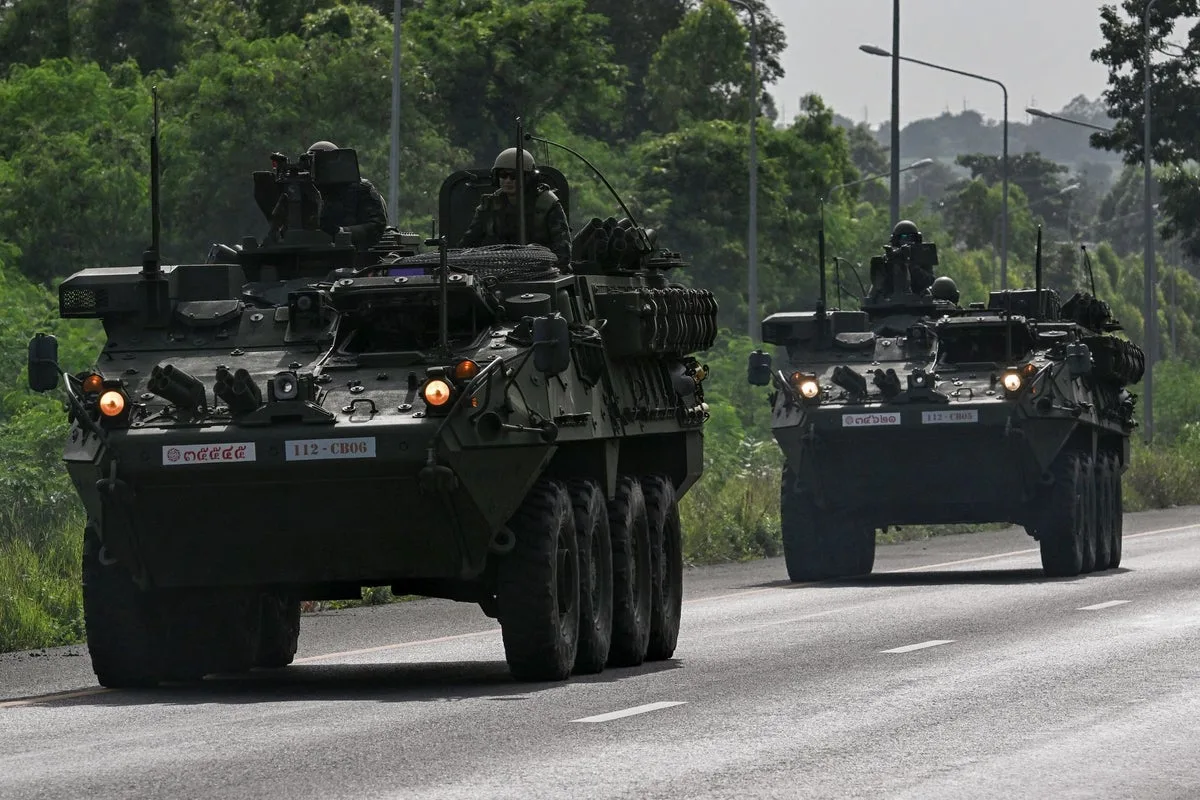
Fighting between the two southeast Asian neighbours broke out in July last year after weeks of tensions sparked by the death of a Cambodian soldier in a skirmish in late May. After five days of clashes that killed 43 people, the conflict ended in a fragile ceasefire brokered in Malaysia after an intervention by US President Donald Trump.
Hostilities resumed in December and lasted more than three weeks, with both sides accusing the other of violating the terms of the ceasefire. As many as 101 people were killed and more than half a million displaced on both sides before a new truce was declared on 27 December. Two days after the latest ceasefire, the top diplomats of China, Thailand and Cambodia met in the southwestern Chinese province of Yunnan, where the combatants agreed to rebuild mutual trust.
Cambodia has previously asked Thailand for a meeting of the Joint Boundary Commission, a two-way effort to demarcate the border, but Bangkok has not confirmed its participation, according to Prak Sokhonn. 'The occupied village (issue) will be a priority for us because we need to solve those problems in order to allow our people to go back home,' he said.




