BTS Documentary 'The Return' Unveils Comeback Journey After Military Service
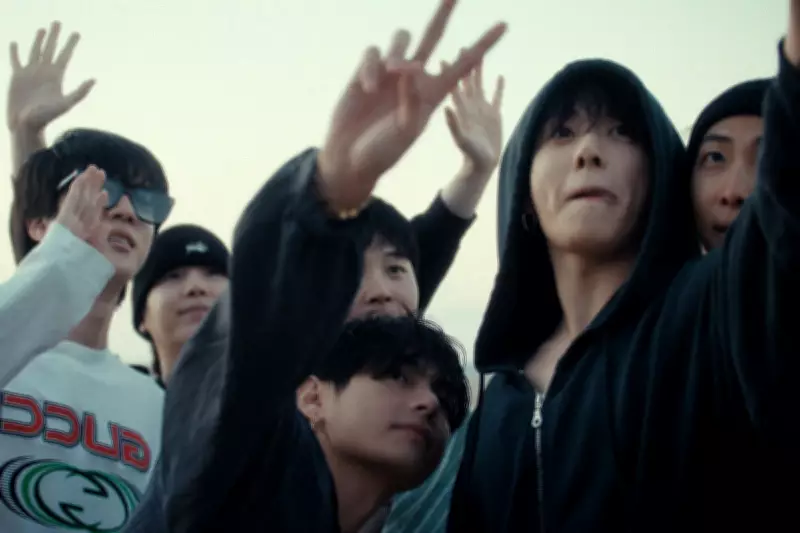
K-pop supergroup BTS have made a triumphant return to the global stage after a four-year hiatus, marked by the release of Netflix documentary BTS: The Return. Directed by Bao Nguyen, the film tracks the seven members—RM, Jin, Suga, J-Hope, Jimin, V, and Jung Kook—as they reunite in Los Angeles to resume a full group schedule following their mandatory military service in South Korea. The documentary premiered alongside a concert in Seoul that streamed on Netflix, attracting 18.4 million viewers and topping the platform's charts in over 70 countries.
Six Key Insights from BTS: The Return
The documentary delves into the group's creative and personal challenges during their comeback, offering fans an intimate look at their process. Here are six major revelations from the film.
The Significance of 'Arirang' and Its Cultural Roots
The title of BTS's comeback album, Arirang, is derived from a traditional Korean folk song with deep historical ties to periods of displacement and colonial rule, symbolising Korean identity and resistance. An early recording from 1896 at Howard University, where Korean students performed the song on a wax cylinder, is referenced in an animated teaser, linking past and present. Lee Bo Young, executive creative director at Big Hit Music, explained that the word conveys "longing for the beautiful people we love," drawing a parallel to BTS's relationship with their Army fanbase.

Internal Debates Over Korean Identity in Music
While Arirang provided the album title, it sparked division within the group regarding how prominently to feature Korean elements. V expressed concerns that sampling the folk song might be perceived as overly patriotic or alienating to non-Korean-speaking fans. J-Hope and Jimin were more receptive, but RM likened the idea to mixing disparate elements like "bread, pork cutlets, and kimchi." Despite this, Hybe chairman Bang Si Hyuk encouraged the group to embrace their heritage, leading to a more prominent use of the sample than initially planned, with the final decision left to the members.
Preference for Korean Lyrics Over English
Throughout the documentary, BTS members voice a desire to incorporate more Korean lyrics into their songs, citing authenticity and pronunciation challenges. Rappers RM and Suga advocate for revisiting tracks to add Korean elements, but face pushback from Big Hit Music vice-president Nicole Kim, who emphasises balancing authenticity with global appeal. Jin questions whether English translations fit the original beats, while RM worries about lyrics sounding "awkward and off-putting," and Jimin notes that "clunky" lyrics cannot be fixed through practice alone.
The Relentless Pace of K-pop Production
Instead of taking a break post-military discharge, BTS immediately travelled to Los Angeles to work on Arirang, their first studio album since 2020's Be. This rapid pace is typical in the K-pop industry, and the documentary captures the group's initial struggles. J-Hope describes studio sessions as working "like a factory," and Jimin notes they are "rushing" after their hiatus. RM acknowledges the short career span of K-pop artists, reflecting on BTS's unusual longevity of 12 years as a blessing.
Jin's Absence from Songwriting Credits
Jin's lack of writing credits on Arirang is attributed to timing constraints. He joined the group in Los Angeles a day after his solo tour ended, only to learn from Suga that the "album is almost done." He also departed earlier for solo work. While RM, Suga, J-Hope, Jimin, V, and Jungkook are credited as songwriters across the record, with RM on 13 of 14 tracks, Jin praises the songs as "absolute bangers" and explains that his role evolved naturally through the group's long-standing dynamic, requiring "even without words."

Military Service's Lasting Impact
South Korea's mandatory 21-month military service for able-bodied men aged 18-35 is a central theme, with scenes showing members shaving their heads and entering bases. RM contrasts his military experience, described as chronos—time passing through repetitive routines—with his creative time in Los Angeles, likened to kairos, where moments are shaped by meaningful creativity. In a light-hearted moment, RM plays the military wake-up call on a saxophone learned during service, eliciting groans from the group. The documentary has been available for streaming on Netflix since 27 March 2026.